60+ Reading Nook Ideas for Every Room, Budget, and Age: Cozy and Inspiring Guide for 2026
There is a special kind of comfort that comes from walking into a bedroom, living room, or quiet corner that genuinely feels like your own. Soft lighting, comfortable seating, inviting textures, and a few favorite books can turn an ordinary space into a place where you actually want to slow down. That is the appeal of reading nook ideas. The goal is not to create a perfect showroom or copy a staged photograph. It is to create a warm, practical space that feels comfortable every time you use it.
This guide covers reading nook ideas for kids, adults, classrooms, bedrooms, living rooms, small apartments, and awkward leftover spaces. You will also find practical suggestions for furniture, lighting, storage, DIY projects, materials, and different budgets so you can create a reading space that works for your home and lifestyle.
What Makes a Reading Nook Work?
A reading nook is a small, dedicated space designed primarily for comfortable reading. It can be a corner of a bedroom, a window seat, an area under the stairs, part of a closet, or simply a comfortable chair beside a bookshelf.
The most successful reading spaces usually include four basic elements.
Comfortable seating that supports your back and allows you to relax for an extended period is essential. A decorative stool may look attractive, but it is unlikely to remain comfortable after a few minutes.
Good task lighting is equally important. Overhead lighting alone can create glare and shadows across a page. A floor lamp, table lamp, wall light, or adjustable reading light positioned appropriately can make reading much easier.
A sense of enclosure can also make a small space feel more inviting. Three walls, a canopy, a bay window, curtains, or even a tall bookshelf can visually separate the reading area from the rest of the room.
Finally, keep basic storage within arm’s reach. A small shelf, basket, side table, or built-in storage area can hold books, blankets, glasses, and a drink without creating clutter.
Reading Nook Ideas for Small Spaces
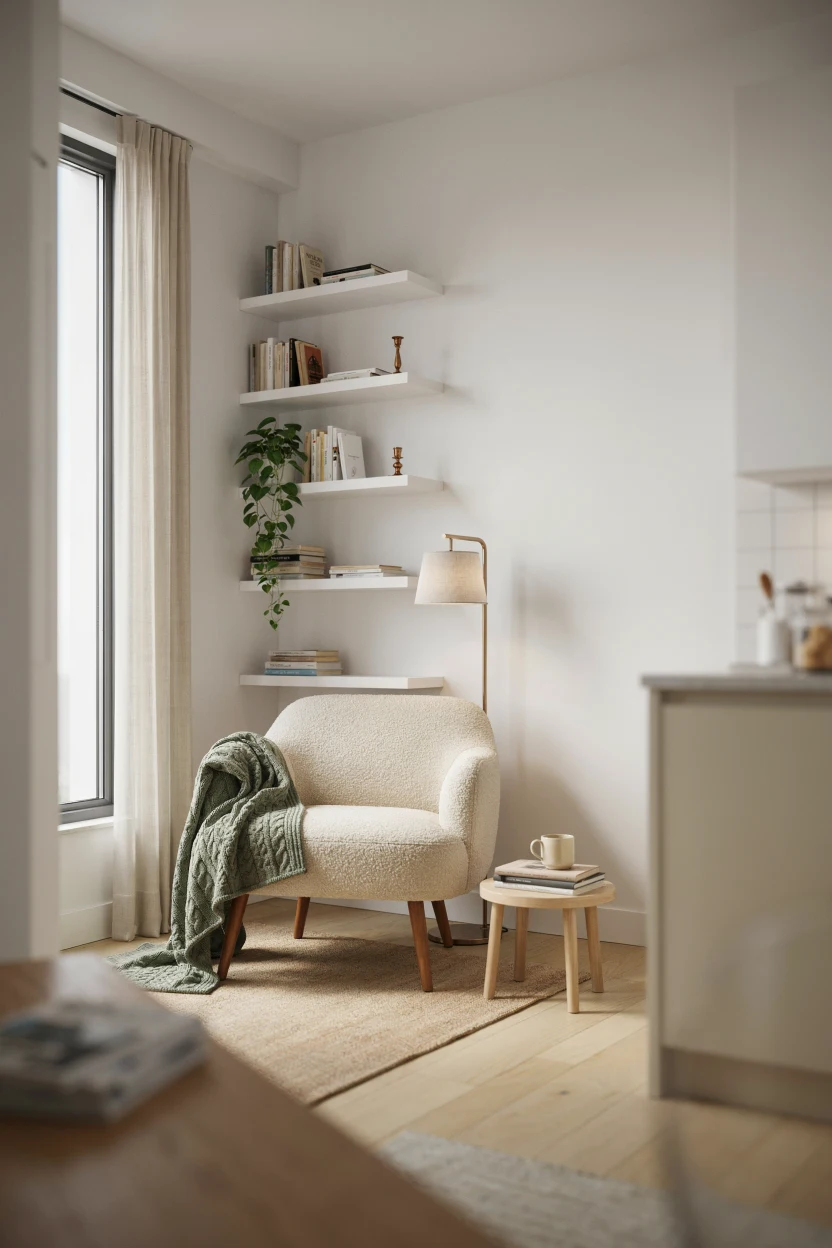
Not everyone has a spare room or a deep bay window, and that is perfectly fine. Small reading nook ideas work best when you focus on one defined area instead of trying to use too much floor space.
Small Window Nook Ideas
A window nook can work in a surprisingly small area. If your window has enough depth, you can create a simple padded seat. If not, place a slim armchair facing the window and pair it with a small round side table.
A tension-rod café curtain can provide privacy without completely blocking natural light. Add a small cushion, a lightweight throw, and a nearby lamp for evening reading.
Corner Reading Nook Ideas
Corners are some of the most overlooked areas in a home. A compact bench, comfortable accent chair, or two floor cushions can transform an unused corner into a practical reading space.
A floor lamp positioned near the corner can provide light without taking up much table space. If the corner is particularly small, choose furniture with narrow proportions and avoid oversized side tables.
Reading Nook Ideas for Small Spaces DIY
When floor space is limited, look upward. Vertical storage can make a small reading area more useful without reducing the available walking space.
Consider a wall-mounted shelf for books, a slim floating shelf that works as a side table, or a compact chair that can be moved when the space is needed for another activity.
For renters, freestanding furniture, removable rugs, tension rods, and clip-on lamps are practical alternatives to permanent installations.
Reading Nook Ideas for Kids and Toddlers

Children’s reading spaces have different requirements from adult spaces. Durability, easy cleaning, safety, and accessibility are generally more important than creating a perfectly coordinated color palette.
Kids Reading Nook Ideas
For elementary-age children, create a space where they can sit, lie down, or change positions while reading. A low bean bag, floor cushion, or small platform with a washable rug can work well.
Open bookshelves that display book covers can also make it easier for children to choose books independently. Keep shelves low enough for children to reach safely without climbing.
Reading Nook Ideas for Toddlers
Toddler reading areas should remain close to the floor and free from sharp edges, unstable furniture, and unsecured shelving.
A soft mat, a small basket of board books, and a comfortable cushion can provide everything a toddler needs. Keep the area simple and easy for a parent or caregiver to supervise.
Small enclosed spaces can also feel appealing to young children, which is one reason tents and canopy-style reading areas remain popular.
Reading Nook Tent and Circle Reading Nook
A play tent or teepee can easily become a dedicated reading area. Add a comfortable floor cushion, a washable rug, and a small basket of books.
Another option is a circle reading nook built around a round rug or cushion. The defined shape can make the area feel like a separate little zone without requiring permanent construction.
A basic play tent may cost around $40 to $150, while more substantial wood-frame options can cost more depending on materials and construction.
DIY Reading Nook Canopy
A canopy is one of the simplest ways to make an ordinary children’s reading corner feel special.
A curved curtain rod or suitable ceiling-mounted frame can support lightweight fabric or a canopy. If you use string lights, make sure they are installed safely and kept away from anything that could create a hazard.
For a simple fabric canopy, the materials may cost roughly $30 to $80 depending on the fabric and hardware you choose.
Reading Nook Ideas for Adults
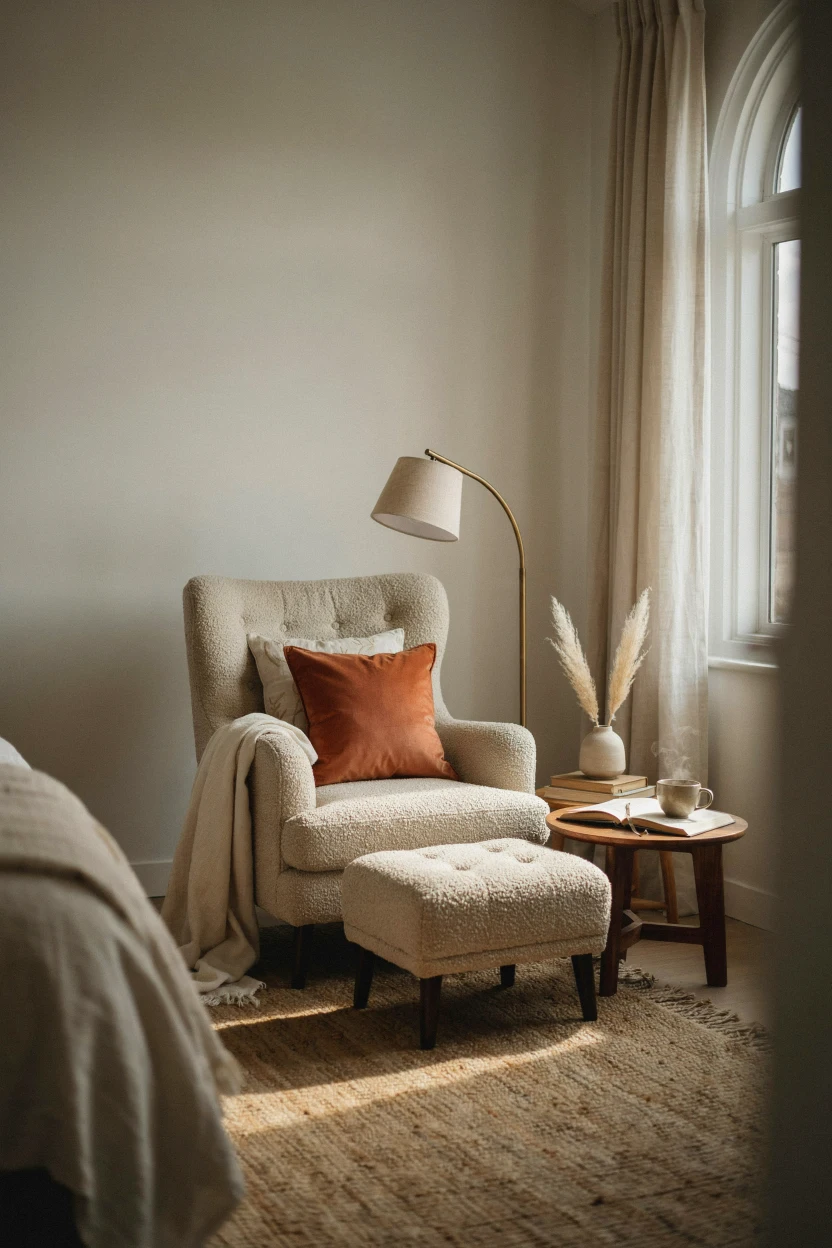
Adult reading spaces generally focus more on comfort, ergonomics, lighting, and atmosphere. Before buying furniture, think about how you naturally sit when you read.
Many people prefer a slightly reclined position with their feet supported rather than sitting upright like they would at a desk.
Reading Nook Chair
The chair is usually the most important piece of furniture in an adult reading space. Look for a chair that provides proper back support and enough room to sit comfortably.
Useful features include:
A seat depth of around 20 inches or more can provide comfortable support for many adults, although the ideal depth depends on your body size.
A high-back or wingback chair can create a stronger sense of enclosure, especially when the reading area is located in an open room.
A swivel or glider can be useful near a window because it allows you to change your position as the natural light changes.
A reclining chair with a matching ottoman can work well when the available floor space allows it.
Popular furniture choices include the IKEA POÄNG chair and a wide range of accent chairs from major furniture retailers. Prices vary considerably depending on materials, construction, and retailer.
Master Bedroom Nook Ideas
An unused corner of a primary bedroom can become a peaceful personal reading space without taking over the room.
A comfortable slipper chair, small side table, and floor lamp may be enough. If the bedroom has a bay window, that area can naturally provide the enclosure and daylight needed for a relaxing reading spot.
Cozy Bedroom Nook Ideas
Layering is what makes a bedroom reading area feel warm instead of looking like a chair placed randomly in a corner.
Try combining a soft throw, two comfortable pillows, a textured rug, and a warm-toned light source. A bulb around 2700K can create a warmer atmosphere for evening use.
Avoid relying entirely on bright overhead lighting. A floor or table lamp can create a softer and more focused environment.
Window and Bay Window Reading Nooks

Window Reading Nook
A window reading nook can take advantage of natural daylight while creating a comfortable place to relax.
If the window recess is deep enough to safely support a seating platform, you can create a padded window seat. If the sill or recess is too narrow, place a comfortable chair facing the window instead.
Consider the direction of the sunlight as well. Strong afternoon sunlight can create glare, so light-filtering curtains can make the space more comfortable.
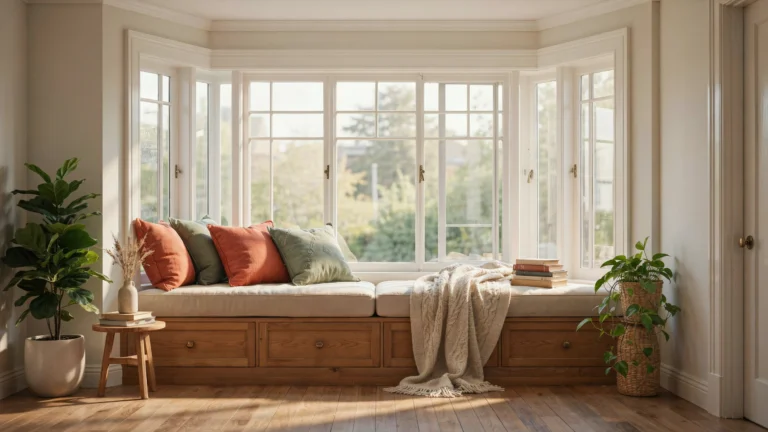
Bay Window Reading Nook Ideas
Bay windows are particularly suitable for reading spaces because their three-sided shape naturally creates a feeling of enclosure.
A built-in bench with storage underneath is a popular option. Custom carpentry can cost roughly $800 to $3,000 or more depending on the size, materials, finish, and labor. A simpler DIY bench may cost considerably less.
Choose durable upholstery because bay windows often receive significant sunlight. Performance fabrics and outdoor-rated materials can be useful where fading and daily wear are concerns.
Built-In and DIY Reading Nooks

Built-In Reading Nook
A built-in reading nook can become a permanent architectural feature of a home. A custom bench combined with bookshelves can make good use of an otherwise awkward space.
Depending on the design, materials, carpentry, electrical work, and finish, a custom built-in can cost $1,500 to $5,000 or more.
Renters should generally focus on freestanding alternatives rather than permanent construction.
Reading Nook DIY
You do not need advanced construction skills to create a comfortable DIY reading space.
Start by choosing the location and measuring the available floor area.
Add a rug to define the footprint of the space.
Bring in the main seating, such as a chair, bench, or floor cushion.
Add suitable lighting, including a dedicated reading light.
Place a small table, shelf, or basket within easy reach.
Finish with practical textiles such as a throw, cushions, or curtains.
A simple DIY setup using existing furniture may cost around $150 to $400. More elaborate projects involving shelving, a custom bench, or additional materials can cost $500 to $1,200 or more.
Reading Nook Bench and DIY Reading Nook Bench
A bench can be more space-efficient than a chair because it can accommodate two people or allow one person to stretch out.
A basic DIY bench can be built from a plywood platform, a support frame, and a properly sized foam cushion. The platform can also be designed with a hinged top to provide hidden storage.
Before building any permanent seating, make sure the structure is properly supported and suitable for the expected load.
Reading Nook IKEA
IKEA offers several modular pieces that can work well in reading areas. Options include the KALLAX shelving unit, POÄNG chair, floor poufs, and modular seating systems.
Because many of these pieces are available in different sizes and configurations, they can work in bedrooms, corners, window areas, and larger reading spaces.
Under-Stairs and Closet Reading Nooks

Reading Nook Under Stairs
The unused area beneath a staircase can be an excellent location for a compact reading space.
A typical setup may include a custom or pre-cut bench, shelving for books, a reading light, and a cushion designed around the shape of the space.
A simple cushion-and-shelf solution might cost around $300, while a fully finished built-in with custom millwork and electrical work can cost $2,500 or more.
Always consider head clearance, ventilation, electrical safety, and access before converting an under-stairs area.
Closet Reading Nook Ideas
An unused closet can sometimes be converted into a compact reading area.
Remove the hanging rod if appropriate, add a floor cushion or narrow bench, and use a clip-on or wall-mounted lamp where safe and permitted.
A small shelf can hold a few favorite books. For rental properties, reversible changes are generally the safest option.
How to Make a Reading Nook in a Closet
Start by measuring the closet carefully and checking that there is enough room for comfortable seating.
Clear unnecessary storage and make sure the floor and walls are clean.
Add a comfortable floor cushion or narrow bench.
Use a safe lighting solution that does not create excessive heat.
Add a small shelf or basket for books.
If the closet has a door, consider whether removing it or replacing it with a curtain is permitted.
Reading Nook Ideas by Room
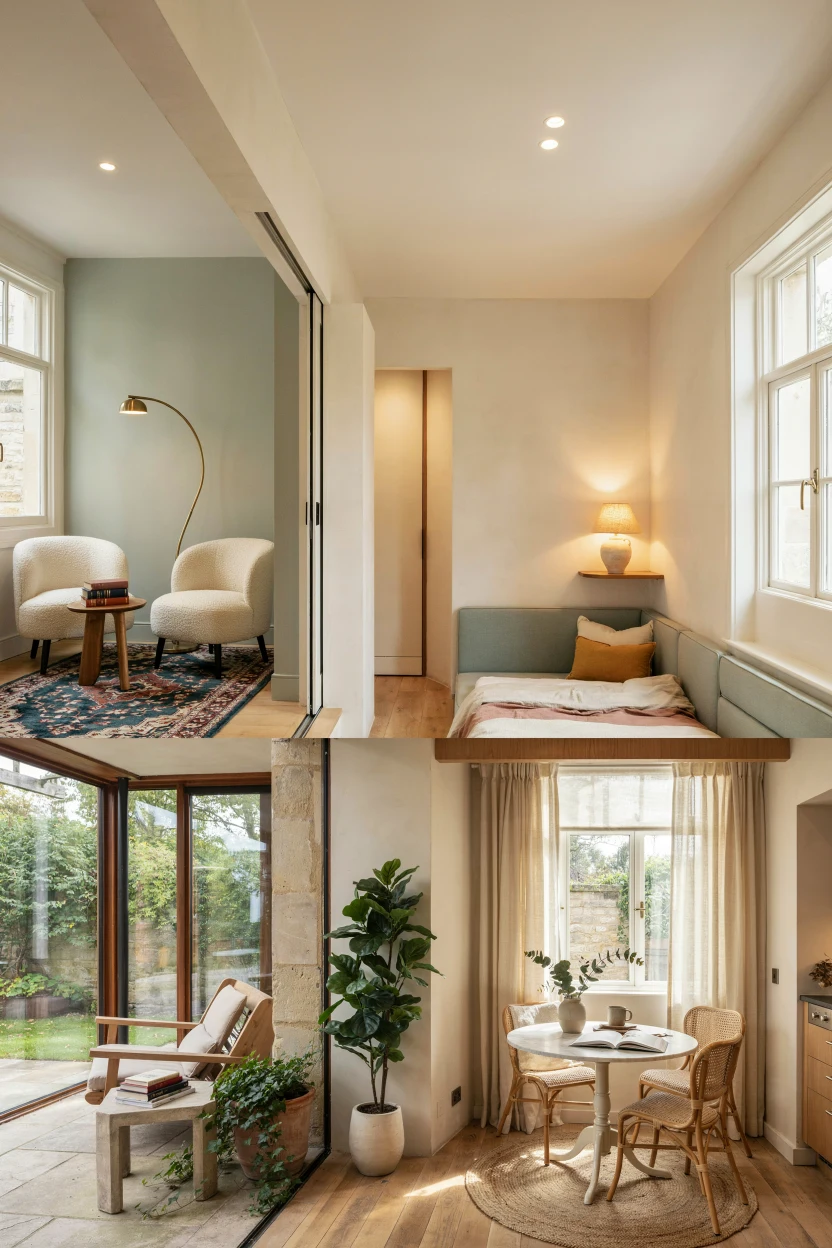
Living Room Nook Decorating Ideas
A living room reading space works best when it feels visually separate from the main seating arrangement.
Try angling an accent chair slightly away from the television or sofa. A small rug underneath the chair can define the reading area without requiring a wall or room divider.
A nearby lamp and side table can make the purpose of the space immediately clear.
Kitchen Reading Nook
Kitchen reading areas often work best as part of a breakfast nook or bay window.
A banquette-style bench with a small table can serve multiple purposes, including casual dining, morning coffee, and reading.
Choose easy-to-clean upholstery because food and drinks are naturally more likely to be present in this area.
Outdoor Reading Nook Ideas
Outdoor reading spaces need materials that can withstand the weather.
Useful choices include a hammock chair, resin wicker chair, outdoor-rated bench, or teak seating.
Add a polypropylene outdoor rug, suitable shade such as an umbrella or pergola, and battery-powered or solar lighting for evening use.
A simple patio reading corner may cost around $200 to $600, while a larger furnished pergola area can cost $1,500 or more.
Hanging and Canopy Reading Nooks
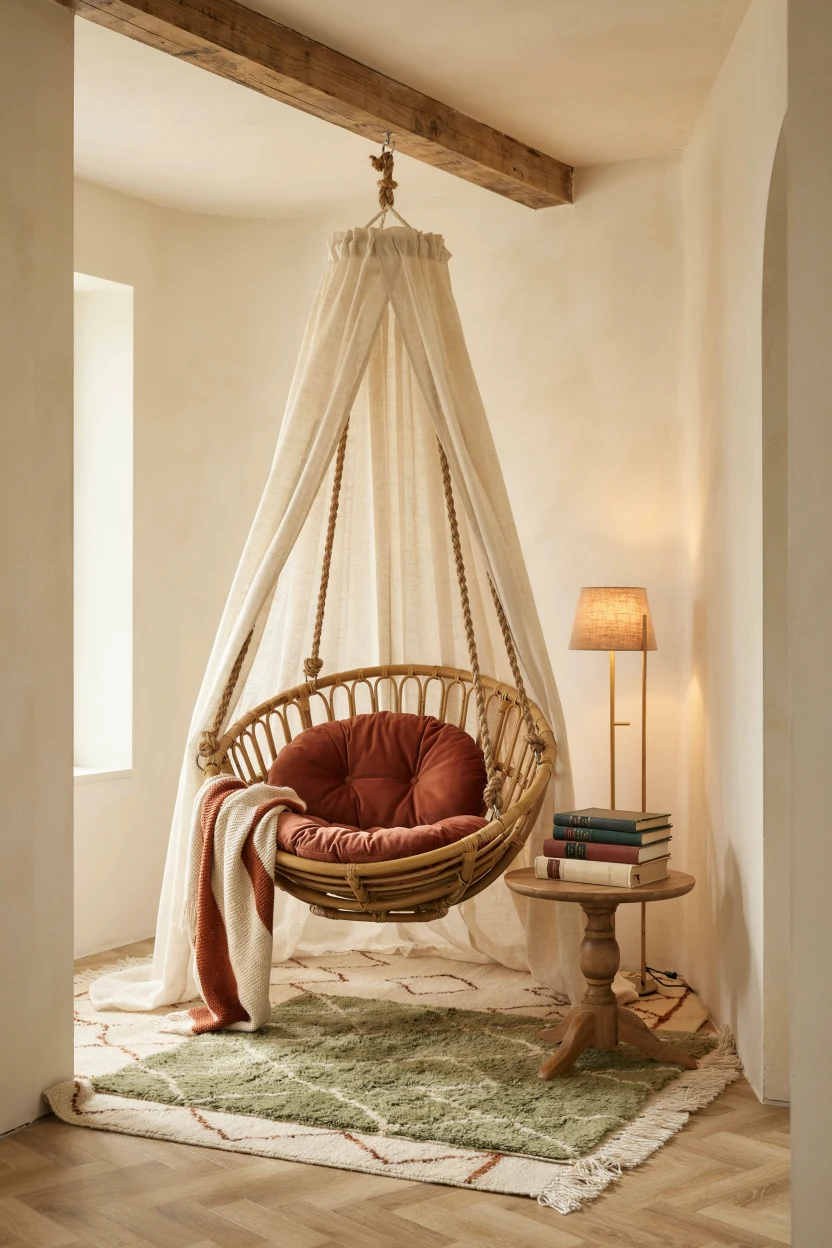
Hanging Reading Nook
A hanging chair can create a relaxing reading space and add visual interest to a bedroom, sunroom, covered patio, or other suitable area.
The most important consideration is safe installation. A hanging chair should be attached to a structural ceiling joist or another properly engineered support point. Drywall alone should never be treated as sufficient support.
Always follow the manufacturer’s weight and installation requirements and consult a qualified professional if you are unsure about the structure.
Rattan and macramé hanging chairs commonly range from around $80 to $300, depending on the design and materials.
Reading Nook Curtains
Curtains can make a reading space feel more private and visually defined.
Sheer curtains work well for bright canopy-style spaces, while heavier curtains can provide more privacy and reduce evening glare.
For a small reading area, curtains can also create a sense of enclosure without requiring permanent walls.
Rug for Reading Nook
A rug helps define the reading area and visually connects the seating, table, and lighting.
Choose a size that extends beyond the main seating rather than using a rug that only fits beneath the chair. A low-pile rug is generally easier to maintain and works well beneath most chairs and benches.
For children’s spaces, washable or stain-resistant rugs can make everyday maintenance easier.
Classroom and School Reading Nooks
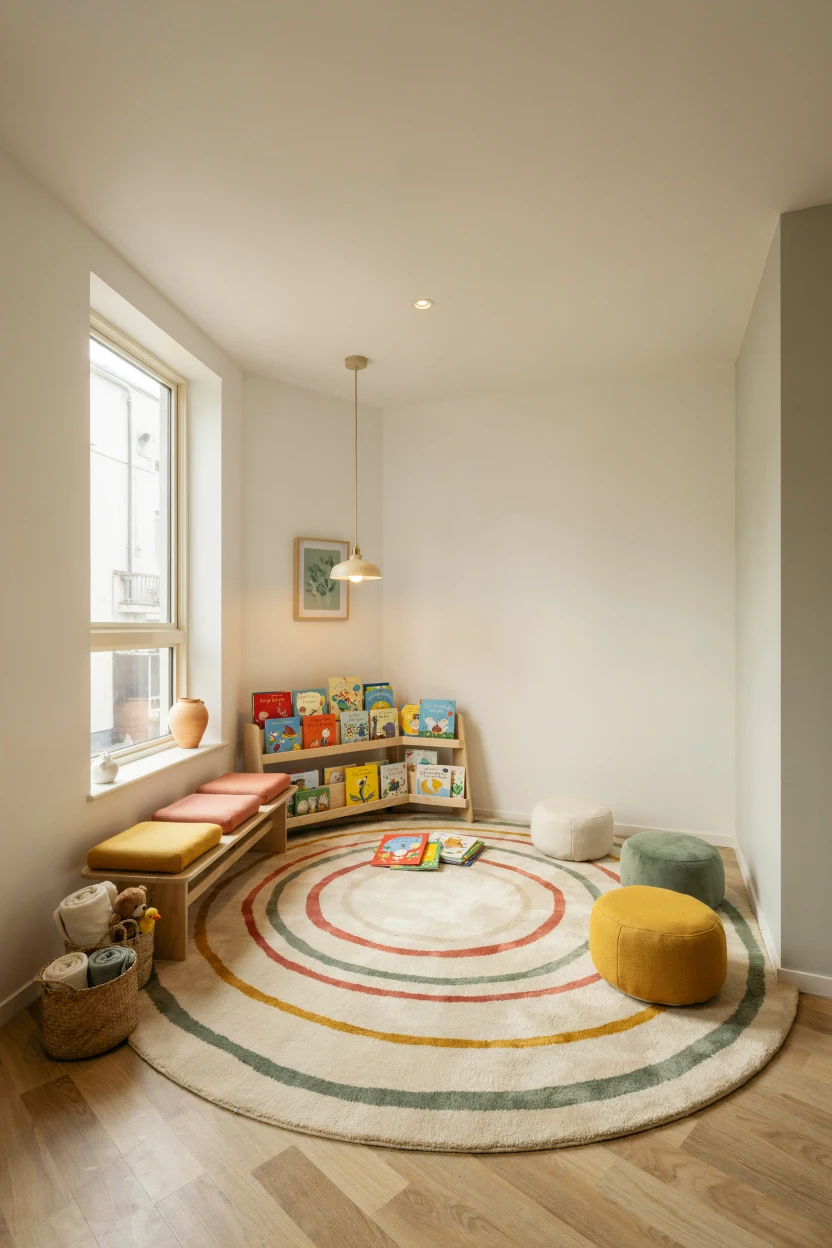
Reading Nook Classroom Ideas
Classroom reading spaces need to accommodate several students while maintaining clear teacher sightlines.
Useful elements include low benches or floor cushions, open bookshelves, a clearly defined rug, and supplementary lighting where appropriate.
The furniture should be sturdy, easy to clean, and appropriate for the age of the students using the space.
Reading Nook Ideas for Kindergarten
Kindergarten reading areas should be simple, accessible, and safe.
Low shelving allows children to reach books independently. Picture labels on baskets can also help young children identify different book categories without relying entirely on written labels.
Soft floor cushions and washable rugs can make the space more comfortable while keeping furniture at a child-friendly height.
Book Nook Ideas Classroom
A classroom book nook can become more useful with a rotating featured-book display.
You can also include a small listening station for audiobooks, labeled storage baskets, and a simple system for returning books.
The goal should be to make books easy to see, reach, choose, and return.
Outdoor Reading Area School
Schools with courtyards or garden spaces can create outdoor reading areas with benches, stump-style seats, picnic tables, or shaded seating.
Choose durable materials that require minimal maintenance and provide adequate shade during warmer weather.
Reading Nook vs. Reading Room vs. Home Reading Room Design
A reading nook and a dedicated reading room can both create comfortable reading environments, but they serve different needs.
| Feature | Reading Nook | Home Reading Room |
| Typical size | 15 to 40 square feet | 80+ square feet |
| Best for | Apartments, bedrooms, shared spaces, one or two readers | Spare rooms, home offices, dedicated libraries |
| Typical budget | $150 to $1,500 | $2,000 to $10,000+ |
| Seating capacity | 1 to 2 people | 2 to 4+ people |
| Common locations | Corners, windows, closets, under stairs | Spare bedrooms, basements, larger rooms |
| Storage | Small shelf or basket | Full bookshelves and additional storage |
If you have a full spare room available and want a dedicated library-style space, a reading room may make sense. If space is limited, a well-planned nook can provide most of the same comfort without requiring an entire room.
Decorating Corners and Nooks
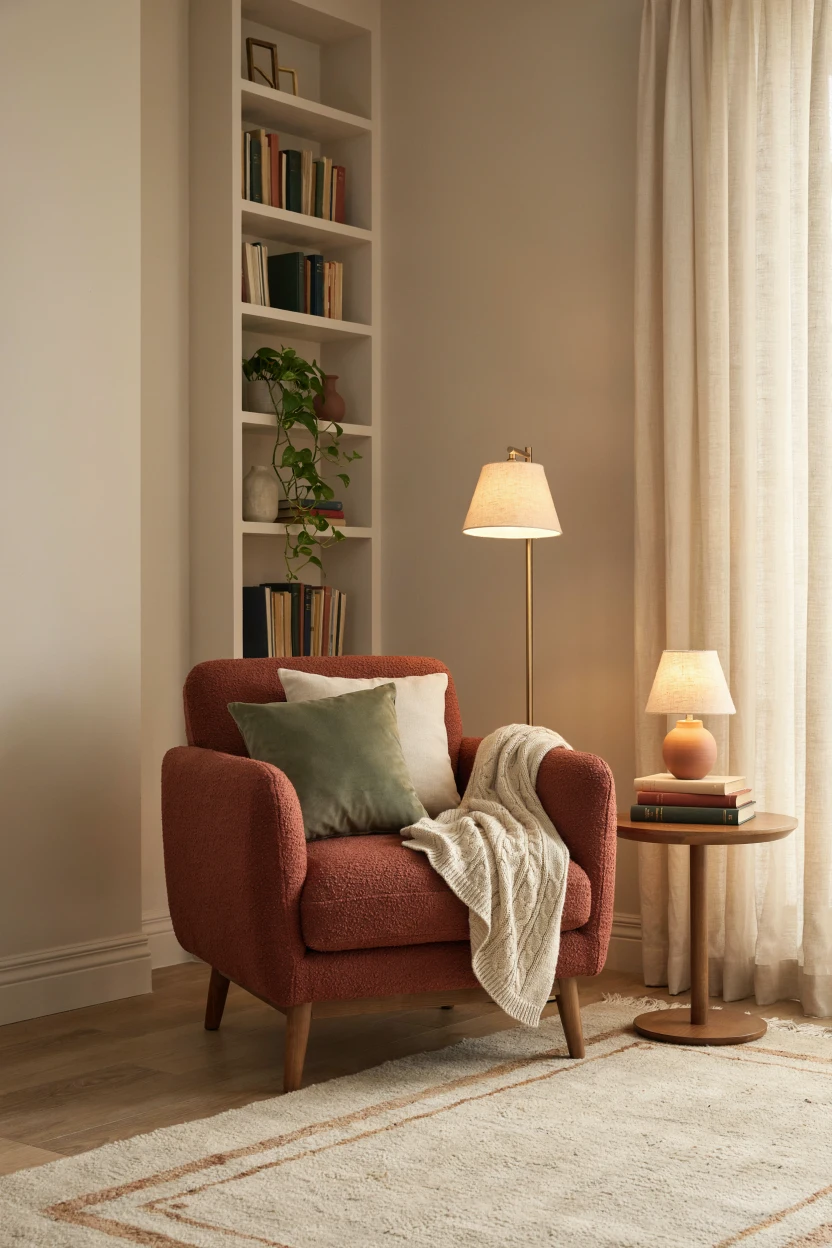
Decorating Nooks and Corners
A nook is simply a small recessed, partially enclosed, or visually separated area within a larger room. It can be a corner, alcove, window recess, closet, or space beneath stairs.
You do not need a special architectural feature to create one.
Three principles work particularly well when decorating small spaces.
First, choose furniture that matches the scale of the area. Oversized furniture can make a small nook feel cramped.
Second, repeat a color, material, or texture from the surrounding room. This helps the nook feel connected to the rest of the home.
Third, combine different types of lighting. Natural light, ambient light, and task lighting can work together to create a comfortable environment throughout the day.
Pinterest Reading Corner and Reading Nook Trends
Current decorating trends often favor warm neutral palettes, curved furniture, textured fabrics, layered rugs, and a single stronger accent color.
Canopy-style spaces and hanging chairs can also create a distinctive visual focal point.
However, trends should support comfort rather than replace it. A reading space should still be designed around how you actually use it.
Common Reading Nook Mistakes to Avoid
Choosing Style Over Comfort
A beautiful chair is not useful if it becomes uncomfortable after a few minutes. Test the chair whenever possible and pay attention to back support, seat depth, and overall comfort.
Skipping Task Lighting
Overhead lighting alone may create glare or shadows. Add a dedicated lamp that provides focused light for reading.
Choosing a Rug That Is Too Small
An undersized rug can make the reading area feel disconnected from the rest of the room. Choose a size that visually anchors the main furniture.
Forgetting Storage
Books, blankets, glasses, and drinks can quickly create clutter. Even a small basket or shelf can keep frequently used items organized.
Ignoring Window Direction
A west-facing window may receive strong afternoon sunlight. Light-filtering curtains or adjustable shades can help reduce glare when necessary.
Adding Too Many Pillows
Pillows can make a nook look inviting, but too many become impractical. Two or three comfortable pillows are often enough for a compact seating area.
Best Practices and Expert Recommendations
Measure the space before purchasing furniture. A chair that looks compact online can take up much more room than expected.
Test lighting at the time of day when you are most likely to use the nook.
For rental homes, prioritize freestanding furniture, removable rugs, tension rods, and other reversible solutions.
If children and adults will share the same space, choose seating that accommodates different body sizes.
Refresh textiles seasonally. Warmer fabrics can make a nook feel inviting during colder months, while lighter materials can work better during warmer weather.
Actionable Takeaways
Start with the chair or bench because it determines how comfortable the entire space will be.
Choose a rug that properly defines the seating area instead of simply filling whatever floor space remains.
Add a dedicated task light positioned to provide comfortable reading illumination.
Keep books, blankets, and drinks within easy reach.
Match materials to the environment. Washable fabrics are useful for children’s and kitchen spaces, weather-resistant materials suit outdoor areas, and softer textiles work particularly well in adult bedroom nooks.
Most importantly, design the space around your real habits rather than trying to recreate a photograph.
Frequently Asked Questions About Reading Nook Ideas
What Is Considered a Reading Nook?
A reading nook is a small, dedicated area designed specifically for comfortable reading. It can be a corner, window recess, closet, space beneath stairs, or another partially separated area. Most include comfortable seating, suitable lighting, and convenient book storage.
How Much Does It Cost to Build a Reading Nook?
A simple DIY setup using existing furniture and adding a rug or cushion can cost around $150 to $400. A custom built-in bench with storage can cost approximately $800 to $3,000 or more depending on materials, size, and labor.
What Size Should a Reading Nook Be?
Many reading nooks work well within approximately 15 to 40 square feet. A single-chair setup can fit into a relatively small area, while a bench-style space for two people generally needs more room.
Can I Make a Reading Nook Without a Window?
Yes. Natural light is helpful during the day, but it is not essential. A suitable floor lamp, table lamp, or wall-mounted reading light can provide comfortable illumination in an interior space without a window.
What’s the Best Chair for a Reading Nook?
Look for a chair with good back support, comfortable seat depth, and enough room for your preferred reading position. Wingback chairs, accent chairs, gliders, and reclining chairs can all work well depending on the available space.
Is a Hanging Chair Safe for a Reading Nook?
A hanging chair can be safe when it is installed correctly according to the manufacturer’s instructions and attached to an appropriate structural support point. Never attach a hanging chair to drywall alone. If you are uncertain about the ceiling structure, consult a qualified professional.
How Do I Make a Small Bedroom Reading Nook Without Losing Space?
Use an unused corner rather than a full wall. Choose a slim chair, floor cushion, or compact bench and use a wall-mounted or clip-on reading light where appropriate. A small floating shelf can also provide storage without taking up floor space.
What Rug Works Best for a Reading Nook?
A low-pile rug that extends beyond the main seating area generally works well. For children’s reading spaces, washable or stain-resistant materials can make maintenance easier.
How Do I Create a Reading Nook in a Rental Apartment?
Focus on freestanding furniture, removable rugs, tension-rod curtains, clip-on lamps, and portable shelves. Avoid permanent alterations unless your lease allows them.
What’s the Difference Between a Reading Nook and a Reading Corner?
The terms are often used interchangeably. A reading nook may suggest a slightly more enclosed or defined area, such as a window bay, closet, or under-stairs space, while a reading corner can refer to almost any dedicated reading spot within a larger room.
Final Thoughts
The best reading spaces are not necessarily the most expensive or elaborate. They are the ones that make you want to sit down and stay for a while. Whether you are creating a small corner in an apartment, a cozy bedroom space, a children’s book area, or a built-in window seat, the same fundamentals matter: comfortable seating, good lighting, accessible storage, and a clear sense of place.
Start with an unused corner of your home and build around the way you actually read. Choose practical furniture, add comfortable lighting, keep your favorite books nearby, and finish the space with a few personal touches. With the right approach, these reading nook ideas can turn even an overlooked corner into one of the most inviting spaces in your home.