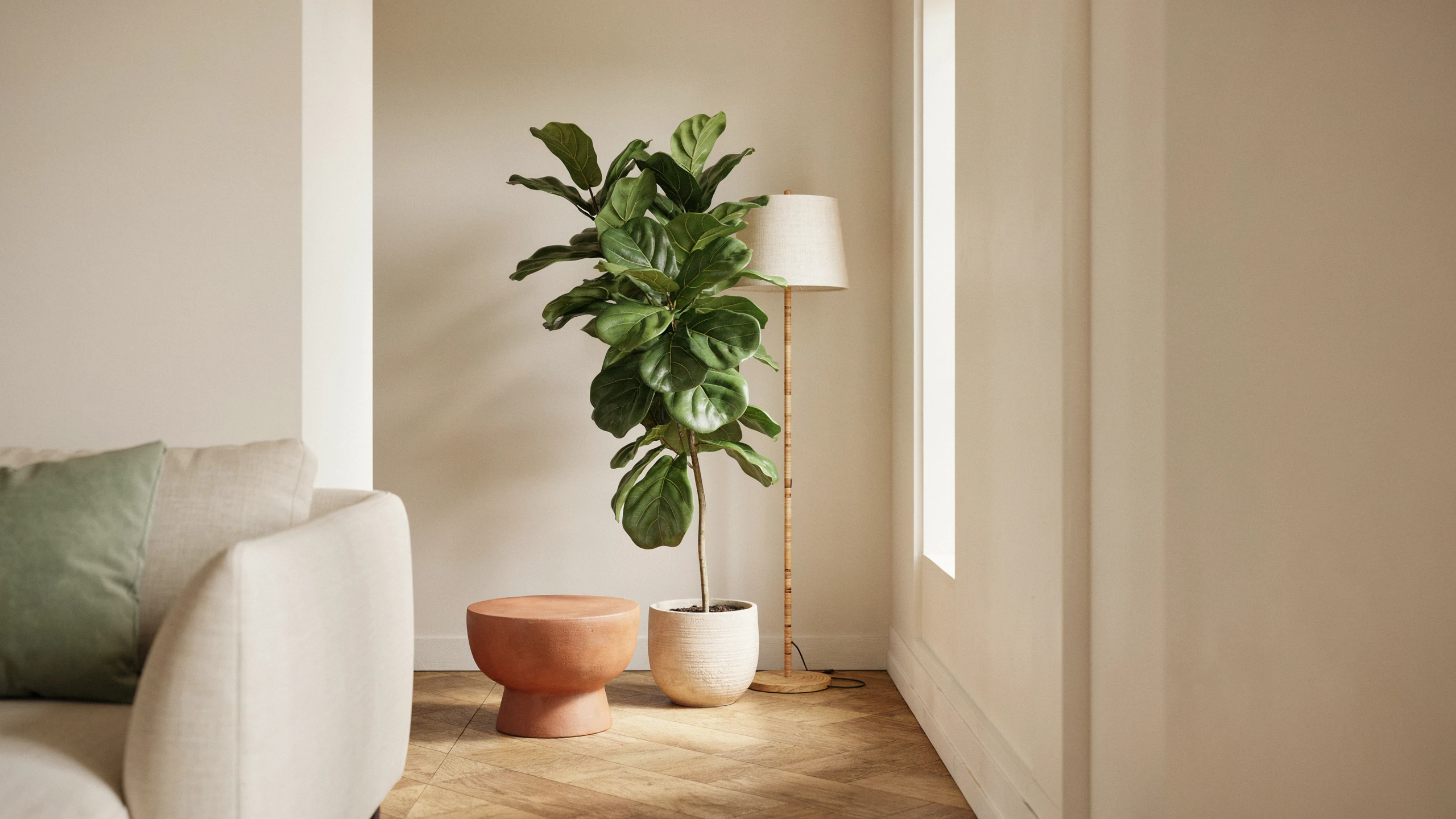
Corner Decor Ideas: 43 Stylish Ways to Transform Every Empty Space
Every home has an empty corner that seems difficult to decorate. It might be the space beside a sofa, an unused bedroom corner, or an awkward angle in a small apartment. The right corner decor ideas can turn these overlooked areas into attractive, practical parts of your home without requiring a major renovation or an expensive shopping trip.
The key is to choose decorations that suit the available space, complement your existing furniture, and serve a clear purpose. Some corners need a tall plant or a floor lamp, while others can accommodate a reading nook, a compact desk, or extra storage.
This guide covers 43 corner decor ideas for living rooms, bedrooms, home offices, dining rooms, kitchens, hallways, bathrooms, and the area behind the couch. You’ll also find styling advice for different interior design styles and small spaces, along with practical tips for avoiding common decorating mistakes.
How to Decorate a Corner: A Simple Formula
Before exploring specific corner decor ideas, consider three elements: height, function, and visual balance. This simple approach helps you create a finished look without overcrowding the space.
- Add height: Use a tall indoor plant, floor lamp, standing mirror, or vertical shelving unit to draw the eye upward.
- Introduce a purpose: Choose something useful, such as a storage basket, reading chair, bookshelf, or compact table.
- Create visual balance: Add a small rug, floor cushion, low basket, or another grounding element if the corner needs more definition.
You don’t need all three elements in every corner. A narrow hallway might look best with a single plant and wall art, while a spacious living room corner could benefit from a chair, lamp, and side table.
Measure the available width and depth before buying anything. Also consider door swings, electrical outlets, natural light, and the walking paths around the furniture. A beautiful arrangement won’t work if it makes the room difficult to navigate.
Bold Red Reading Nook
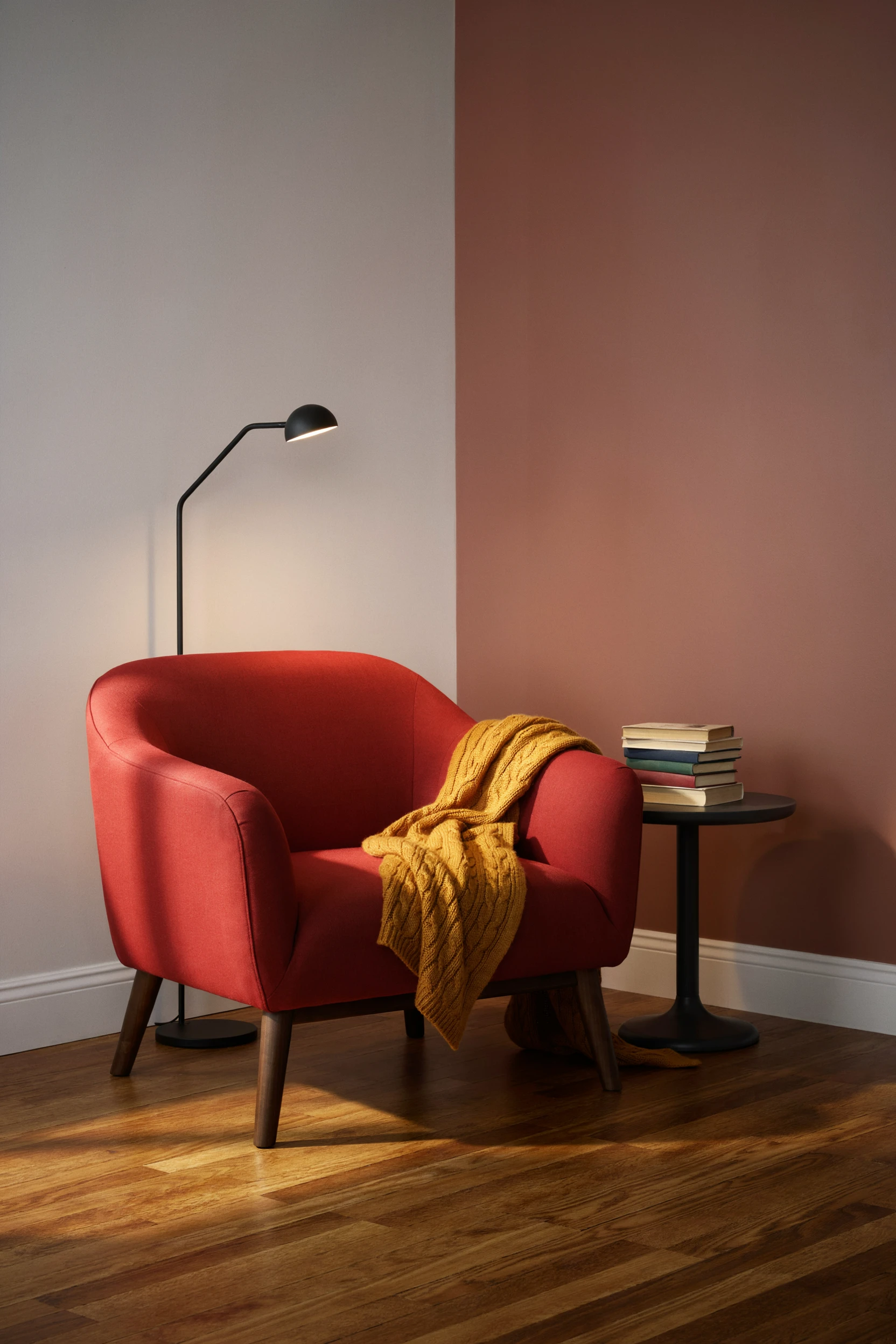
Living rooms offer plenty of corner decor ideas, from a single statement chair to a full reading nook like the one above. The best solution depends on the room’s layout, available light, and how you use the space.
1. Add a Tall Indoor Plant
A tall indoor plant can fill an empty corner without making the room feel crowded. Consider a fiddle-leaf fig, snake plant, rubber plant, or indoor olive tree, depending on the available light and your maintenance preferences.
Choose a planter that complements your furniture. A woven basket adds natural texture, while a simple ceramic pot creates a cleaner, more contemporary look.
If the corner receives limited sunlight, select a plant suited to those conditions or use a realistic artificial alternative. Avoid placing a light-hungry plant in a dark corner simply because it looks good there.
2. Introduce a Stylish Floor Lamp
A floor lamp provides both decoration and useful lighting. Place one beside a sofa, accent chair, or reading area to brighten a corner that feels dark in the evening.
Arc lamps work well when you want light to extend over a seating area, while tripod and slim metal lamps suit different modern and traditional interiors.
Choose a lamp with a shade that directs light appropriately for the task. A soft, diffused glow creates a relaxed atmosphere, whereas a focused reading light is better for books and other close-up activities.
3. Install Corner Shelving
Corner shelves make use of vertical space while keeping the floor relatively clear. Floating shelves create a light appearance, while a freestanding corner bookcase offers more storage.
Arrange books, small framed photographs, decorative bowls, and plants at different heights. Leave some shelves partially empty so the arrangement doesn’t look overcrowded.
Before drilling into the wall, check for electrical wiring and pipes, use suitable fixings, and confirm that the wall can support the intended load.
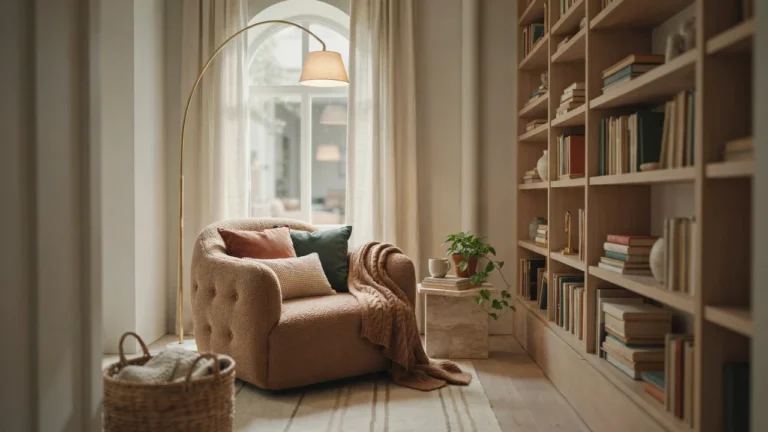
4. Create a Cozy Reading Nook
Transform a spacious living room corner into a reading nook with an accent chair, a small side table, and a floor lamp. Add a comfortable cushion and a throw blanket to make the area inviting.
If space permits, include a compact bookcase or a basket for magazines and blankets. Position the chair so you can comfortably see into the room rather than facing directly into the corner.
A nearby window can make the nook more pleasant during the day, but adequate task lighting will keep it useful after sunset.
5. Design a Corner Gallery Wall
Use the two adjoining walls to create a gallery arrangement that wraps naturally around the corner. Combine framed prints, photographs, illustrations, or small pieces of artwork to add personality.
For a cohesive appearance, repeat one or two frame finishes or colors. You can mix different frame sizes, but plan the arrangement on the floor before hanging anything.
Keep the artwork at a comfortable viewing height and maintain enough space around nearby furniture. In a small room, a few carefully selected pieces may work better than covering both walls completely.
6. Position an Accent Chair
An accent chair can turn an unused corner into additional seating without requiring a complete furniture rearrangement.
Choose a chair with a compact frame for a small living room or a more substantial upholstered design for a larger space. Angling the chair slightly toward the center of the room can make the arrangement feel more connected.
Add a small side table if you need somewhere to place a drink or book. If the room already contains several patterned pieces, choose a chair in a complementary solid color to maintain visual balance.
7. Style a Slim Console Table
A narrow console table can create a decorative display area in a spacious corner. Rather than forcing a rectangular table tightly against both walls, try placing it at a slight angle if the shape and available clearance allow.
Style the surface with a table lamp, a framed photograph, and a small vase. Keep everyday items in a tray or drawer so the arrangement remains tidy.
Check the table’s depth before purchasing it, particularly if the corner is near a doorway or the main walking route.
8. Use Woven Baskets for Storage
Woven baskets provide an easy way to combine practical storage with natural texture. Use one to hold spare cushions, folded blankets, children’s toys, or other frequently used items.
A large basket works well beside a sofa, while two smaller baskets can create a layered arrangement in a wider corner. Choose a material and color that complement the room rather than introducing too many competing textures.
For homes with pets or young children, select baskets that are sturdy, easy to clean, and appropriate for the items being stored.
9. Frame a Fireplace with Shelving
If your living room has a fireplace, the adjoining corners can provide extra display or storage space. Matching bookcases create a symmetrical arrangement, while different but visually balanced pieces can make the room feel more relaxed.
Display books, framed artwork, ceramics, and a few decorative objects. Avoid filling every shelf, and follow the fireplace manufacturer’s clearance requirements for combustible materials.
If a television is also part of the arrangement, consider viewing height, cable management, and heat exposure before deciding where to place it.
10. Create a Corner TV Setup
A corner television setup can work in a small or unusually shaped living room where a central wall is better used for seating or artwork.
Use a suitable corner media console or a properly installed swivel mount. Arrange the screen so that it can be viewed comfortably from the main seating area without awkward neck movement or excessive glare.
Hide cables where practical and leave enough ventilation around electronic equipment. This solution is most useful when the room’s layout genuinely benefits from a corner position rather than simply moving the television out of the way.
Bedroom Vanity with Hexagonal Mirror
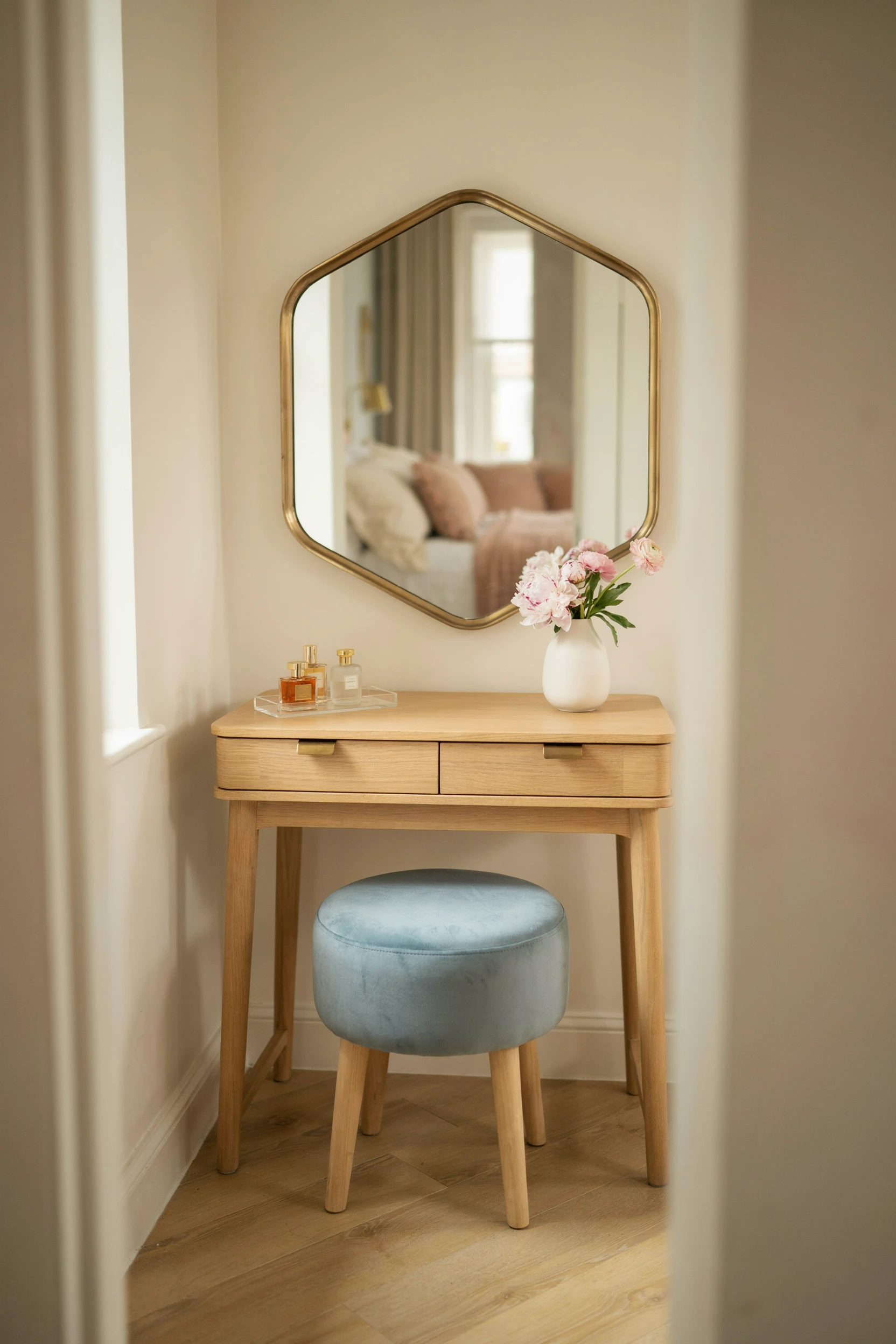
Bedroom corner decor ideas should support relaxation, storage, or your everyday routines. Instead of letting these corners become places for laundry and bags, choose a setup that makes the room more functional, such as the vanity shown above.
11. Set Up a Compact Vanity
A small vanity table with a mirror and a comfortable stool can turn a bedroom corner into a practical getting-ready area.
Choose a narrow table with drawers if you need storage for cosmetics and accessories. A wall-mounted mirror can save surface space, while a small tabletop organizer keeps frequently used items within reach.
Position the vanity near suitable lighting. If natural light is limited, add a lamp that provides clear, flattering illumination without creating harsh shadows.
12. Create a Bedroom Reading Corner
A comfortable chair, a reading lamp, and a small table can turn a quiet bedroom corner into a personal retreat.
Choose furniture that leaves enough room to move around the bed and open nearby drawers or wardrobe doors. A soft cushion or throw can introduce color and texture without requiring additional furniture.
If the corner is too small for a full chair, consider a compact upholstered stool or floor cushion with a wall-mounted reading light.
13. Add a Corner Wardrobe or Armoire
A corner wardrobe or freestanding armoire can provide extra clothing storage when a bedroom lacks sufficient closet space.
Measure the available depth carefully and check that the doors can open fully. A tall unit may use vertical space efficiently, but it should not block windows, ventilation, or access to other furniture.
Choose a finish that complements the bed frame and other storage pieces. If the room is small, a lighter finish or a design with a less bulky profile can help maintain an open appearance.
14. Soften the Room with a Large Plant
A suitable indoor plant can soften the straight lines of a bed, wardrobe, and bedside furniture. Place it in an unused corner where it receives the light and airflow it needs.
Consider the plant’s mature size, watering requirements, and potential toxicity to pets before making a selection. A smaller plant on a sturdy stand may be more practical than a large floor plant in a narrow bedroom.
If plant care isn’t convenient, choose a realistic artificial plant that suits the room’s style.
Modern Home Office
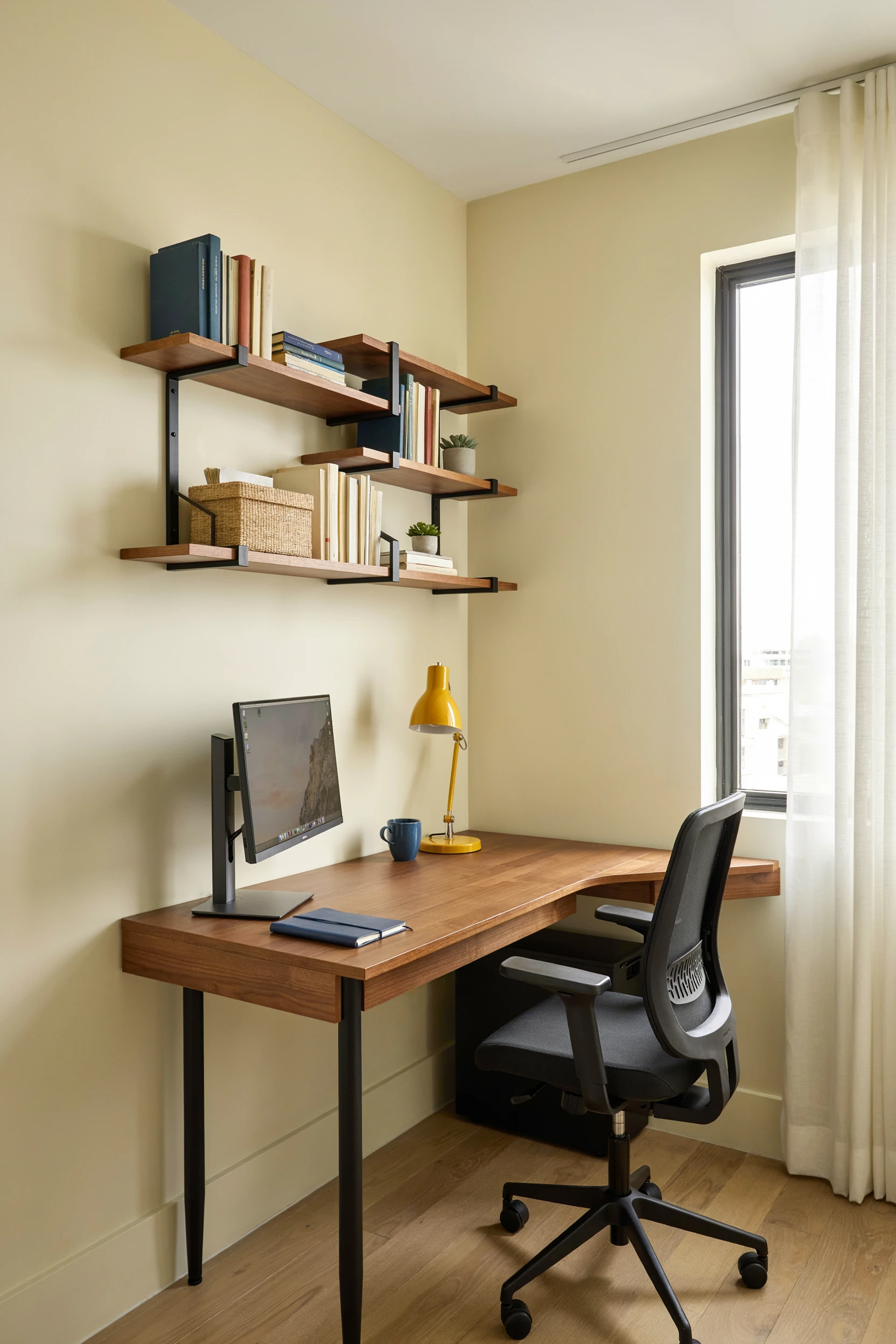
Home office corners are particularly useful when you need a workspace without dedicating an entire room to it. These corner decor ideas prioritize comfort, lighting, and storage before decorative accessories, as in the modern setup above.
15. Install a Compact Corner Desk
A corner desk can make an efficient workspace in a spare bedroom, apartment, or multipurpose room. An L-shaped desk provides more surface area, while a compact triangular or straight-sided design may fit a tighter space.
Check that the desk leaves enough room for your chair to move freely. Position the monitor at a comfortable viewing height and keep frequently used supplies within easy reach.
If you work long hours, prioritize an ergonomic setup over a design that looks attractive but feels uncomfortable.
16. Add Floating Shelves Above the Desk
Floating shelves provide space for books, stationery, small storage boxes, and a few decorative objects without occupying the floor.
Keep heavier items on shelves with appropriate support and place frequently used materials at an accessible height. Use matching containers to reduce visual clutter.
Avoid filling every available section. A combination of useful supplies and a few personal items creates a more comfortable workspace than a crowded display.
17. Improve Lighting with a Task Lamp
A dedicated task lamp can make a home office corner more practical, particularly if overhead lighting creates shadows on the desk.
Choose an adjustable lamp that directs light onto your work surface. Position it to minimize glare on your monitor and reduce shadows from your writing hand.
If the corner has limited natural light, combine suitable ambient lighting with task lighting instead of relying on one bright bulb.
18. Create a Corner Pinboard
A corkboard, magnetic board, or fabric-covered pinboard can keep reminders, schedules, photographs, and project notes organized.
Mount it within easy reach of your desk, using fixings appropriate for the wall. If drilling isn’t possible, consider a freestanding board or another renter-friendly option.
Arrange notes into clear sections and remove outdated items regularly. The goal is to support your workflow rather than create another surface that collects clutter.
Farmhouse Dining Room
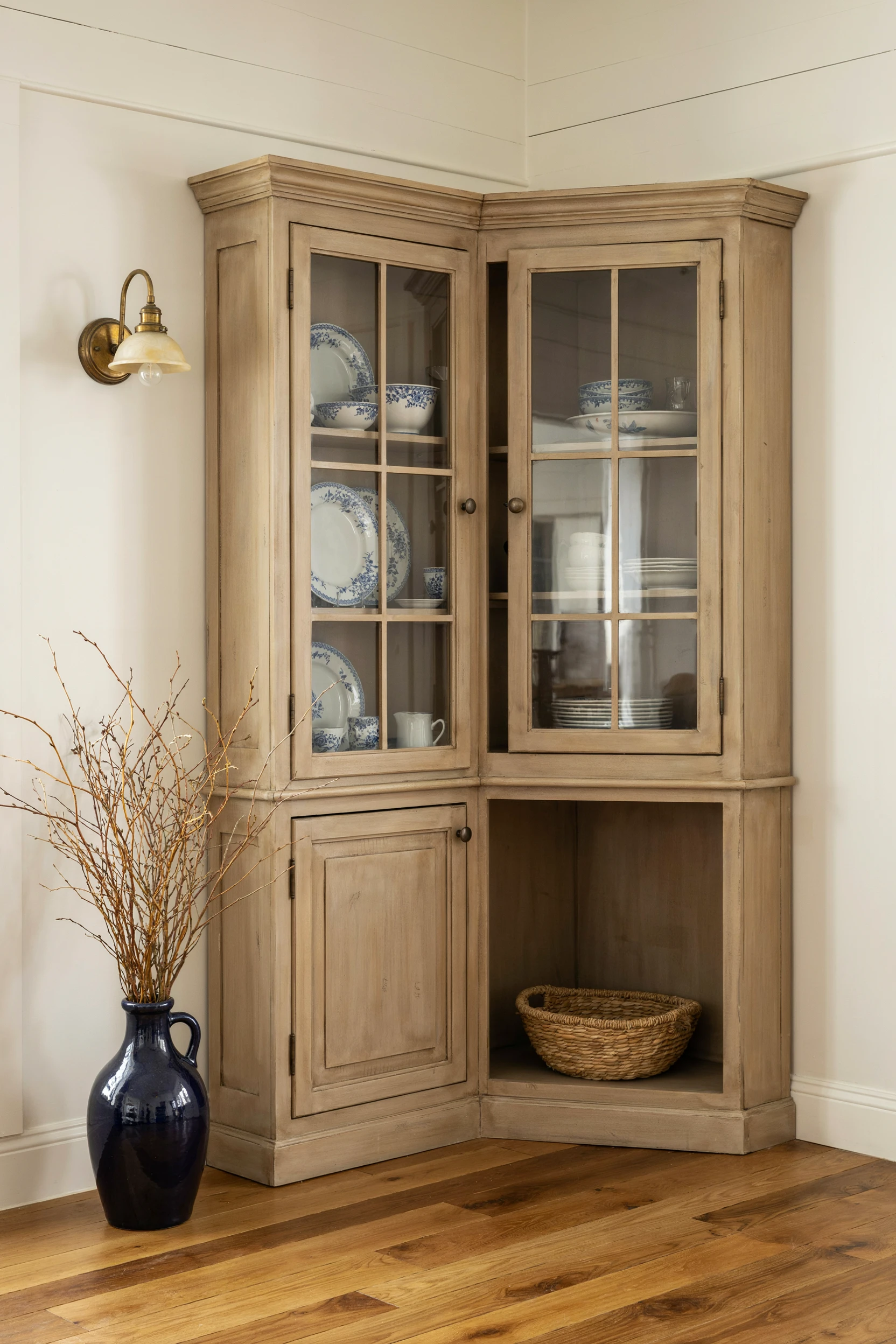
Dining room corners can provide additional storage, display space, or seating. Dining room corner decor ideas work best when the furniture complements the dining table and leaves enough room for chairs to move, as the farmhouse-style hutch above shows.
19. Add a Corner Hutch or China Cabinet
A corner hutch can store dishes, glassware, serving pieces, and other dining essentials. Glass-front doors allow selected items to be displayed, while closed cabinets hide less attractive everyday supplies.
Measure the unit carefully, especially in a small dining area. Check that cabinet doors can open without hitting the dining table or nearby chairs.
For a balanced look, display a few coordinated pieces rather than trying to show everything you own.
20. Style a Compact Bar Cart
A small bar cart can provide a convenient serving station for gatherings. Use the shelves for glassware, serving accessories, a water carafe, or other entertaining essentials.
Style the top with a small tray and a decorative object, leaving enough clear space to use the cart comfortably.
If you don’t serve alcohol, the same setup works well as a beverage station for tea, coffee, sparkling water, or nonalcoholic drinks.
21. Create a Sideboard Display
A narrow sideboard or buffet can turn an empty dining room corner into useful storage and a decorative focal point.
Style the surface with a lamp, framed artwork, a ceramic vase, or a shallow tray. Keep the tallest item toward one side and leave enough open surface for serving dishes when needed.
If the sideboard sits close to the dining table, make sure there is enough clearance for people to walk past comfortably.
22. Add Corner Bench Seating
A corner bench can create additional seating in a spacious dining nook or breakfast area. Pair it with a suitable table and cushions that are easy to remove and clean.
Built-in benches can use space efficiently, while freestanding benches offer greater flexibility if you rearrange the room.
Measure the table height and seating depth before buying anything. A bench that looks good but leaves diners sitting too low or too far from the table won’t be comfortable for everyday meals.
Colorful Kitchen Herb Garden
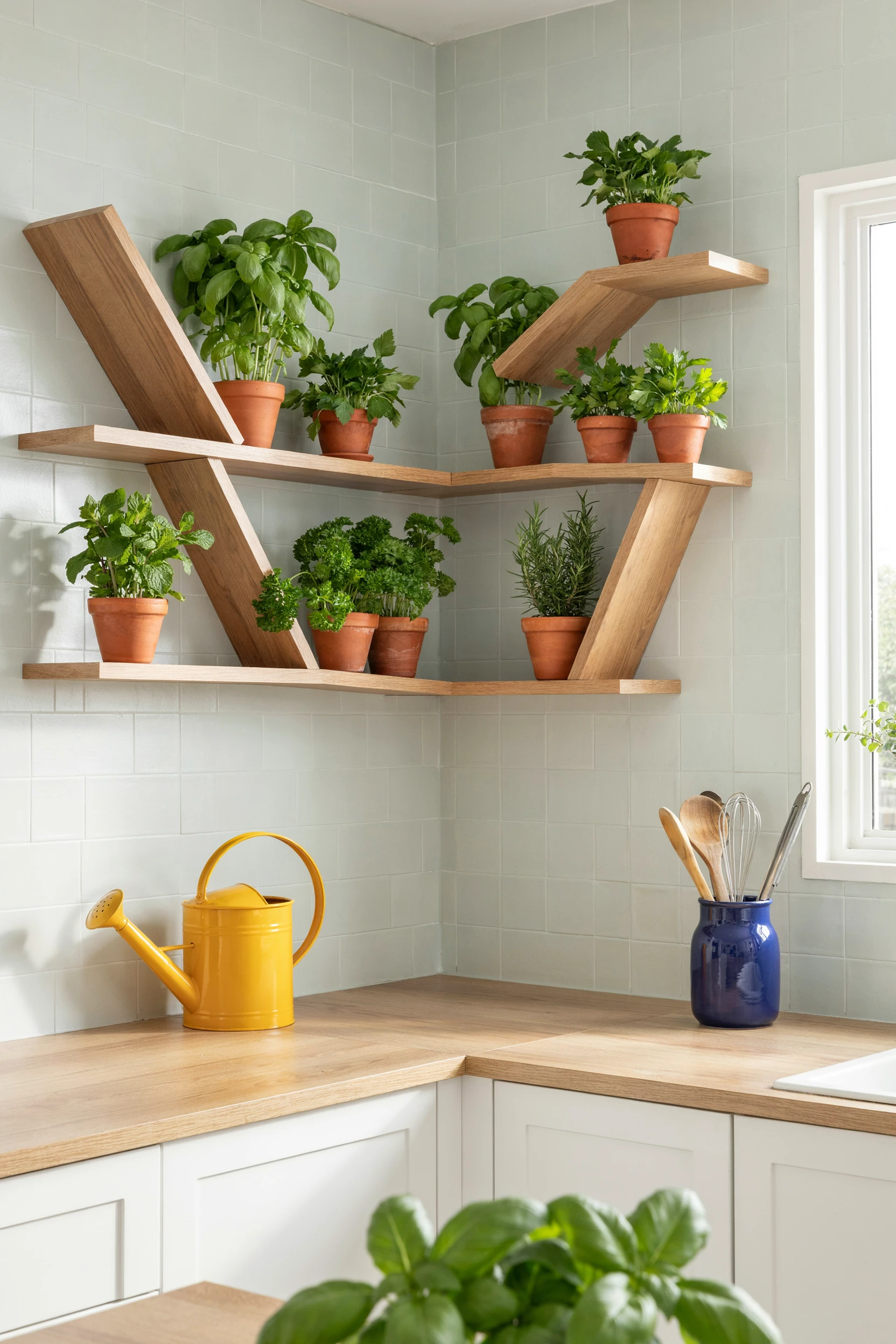
Kitchen corners often need to solve storage or preparation problems. Kitchen corner decor ideas should use materials that are easy to clean and suitable for the moisture, heat, and activity levels in the room, and a bright herb corner is one of the most rewarding options.
23. Install a Corner Pantry Cabinet
A corner pantry cabinet can provide additional storage for dry goods, small appliances, and kitchen supplies.
Use adjustable shelves or labeled containers to make items easier to find. Store frequently used ingredients at accessible heights and place heavier items on sturdy lower shelves.
Before installing a large cabinet, check door clearance and make sure it doesn’t obstruct counters, appliances, or the main route through the kitchen.
24. Create a Small Breakfast Nook
If the kitchen has enough room, a compact table and two chairs can create a casual breakfast area. A built-in corner bench may provide more seating while using space efficiently.
Choose furniture that fits the available area without blocking cabinets or appliance doors. A washable cushion or a small pendant light can help define the nook without requiring extensive decoration.
For a very small kitchen, a wall-mounted drop-leaf table may be more practical than a permanent dining set.
25. Use Open Corner Shelves
Open corner shelves can hold everyday dishes, mugs, cookbooks, or a small selection of decorative pieces.
Keep frequently used items within easy reach and store less attractive supplies elsewhere. Choose shelves that can support the intended weight and are suitable for the wall and kitchen environment.
Because open shelves collect grease and dust, avoid displaying too many items and clean them regularly.
26. Grow Herbs in a Sunny Corner
A sunny kitchen corner can accommodate a small herb garden with basil, parsley, thyme, or other herbs suited to the available light.
Use pots with drainage and waterproof saucers, and choose a shelf or stand that can support the containers safely. Check each herb’s sunlight and watering requirements before grouping plants.
If the kitchen receives little natural light, consider a suitable grow light or choose a different use for the corner rather than expecting herbs to thrive in poor conditions.
Hallway Console and Oval Mirror
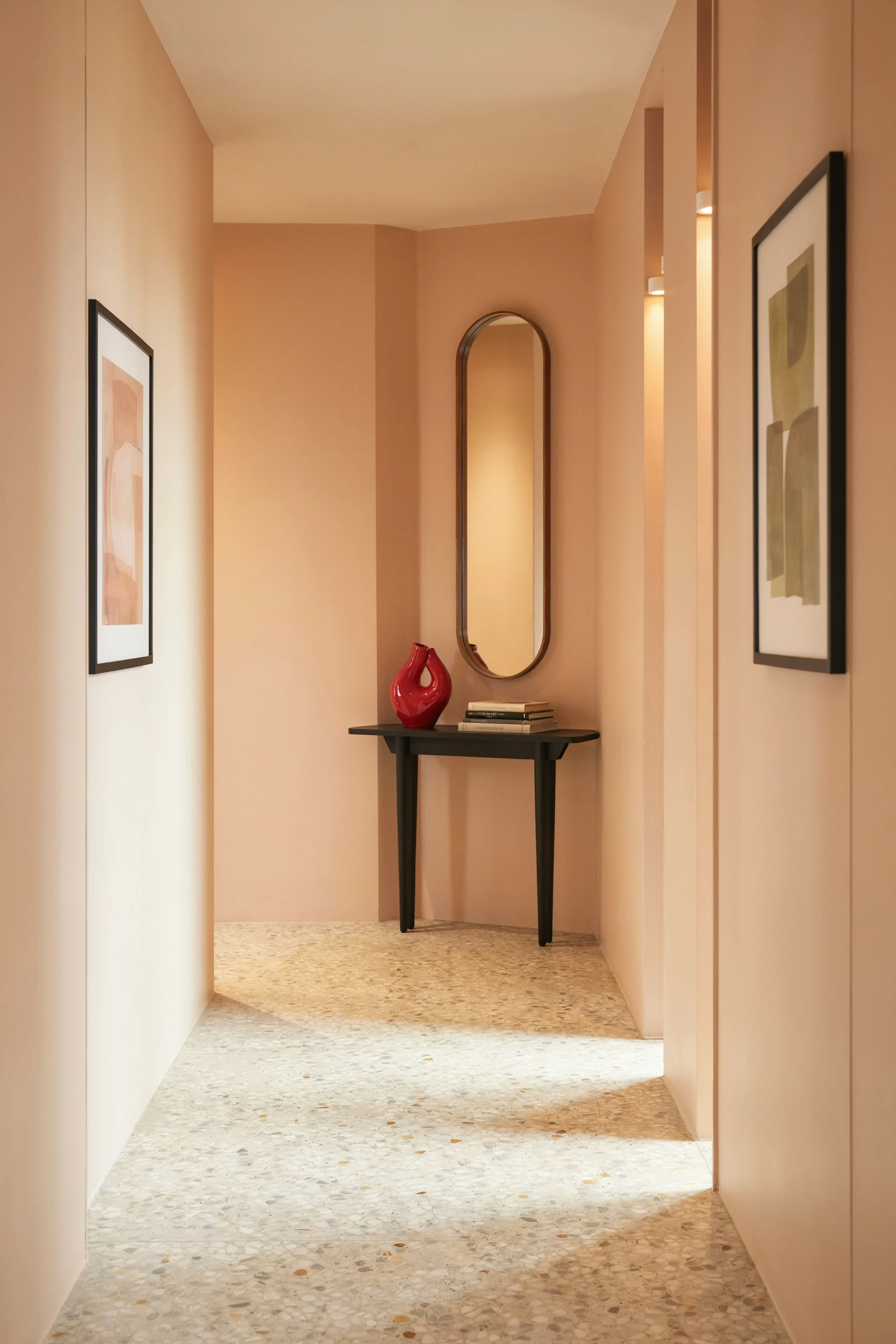
Hallways are often narrow and busy, so hallway corner decor ideas should improve the space without obstructing movement. Slim furniture, wall-mounted accessories, and useful storage, like the console and oval mirror above, are generally the most practical choices.
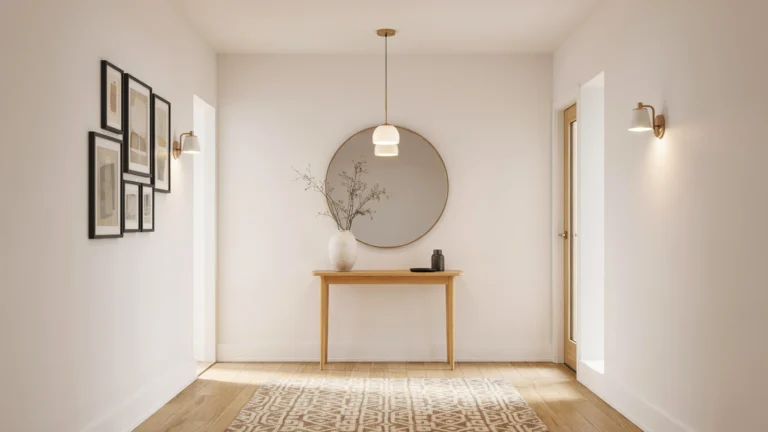
27. Position a Slim Console Table
A narrow console table can provide a place for keys, mail, or a small decorative arrangement near an entrance.
Choose a model with a shallow depth and, if useful, a drawer for everyday essentials. A mirror above the table can reflect available light and make the area feel more open.
Keep the tabletop simple and leave enough clearance for people to pass without bumping into the furniture.
28. Add a Coat or Umbrella Stand
A freestanding coat or umbrella stand can help organize outerwear near the entrance. Choose a stable design that suits the household’s needs and doesn’t take up too much floor space.
For a busy family, a wall-mounted row of hooks may be more efficient than a large stand. Keep frequently used items accessible and remove excess coats to prevent the entryway from becoming crowded.
29. Extend a Gallery Wall Around the Corner
A gallery wall can bring personality to a plain hallway. Use framed family photographs, artwork, or prints that share a consistent color palette or theme.
If the arrangement continues around a corner, plan both walls together so the display feels connected. Keep frames away from areas where bags, doors, or furniture could knock into them.
Use secure wall fixings and avoid placing fragile frames where they might become a hazard in a narrow passage.
30. Create a Compact Drop Zone
A small bench with wall hooks can make a hallway corner more functional. Use it for putting on shoes, storing bags, or organizing items needed when leaving the house.
Choose a bench with built-in storage if space is limited. A few hooks and a small tray can provide enough organization without adding a bulky cabinet.
Make sure the setup leaves the hallway’s walking path clear, especially near stairs and entrance doors.
Compact Bathroom Storage
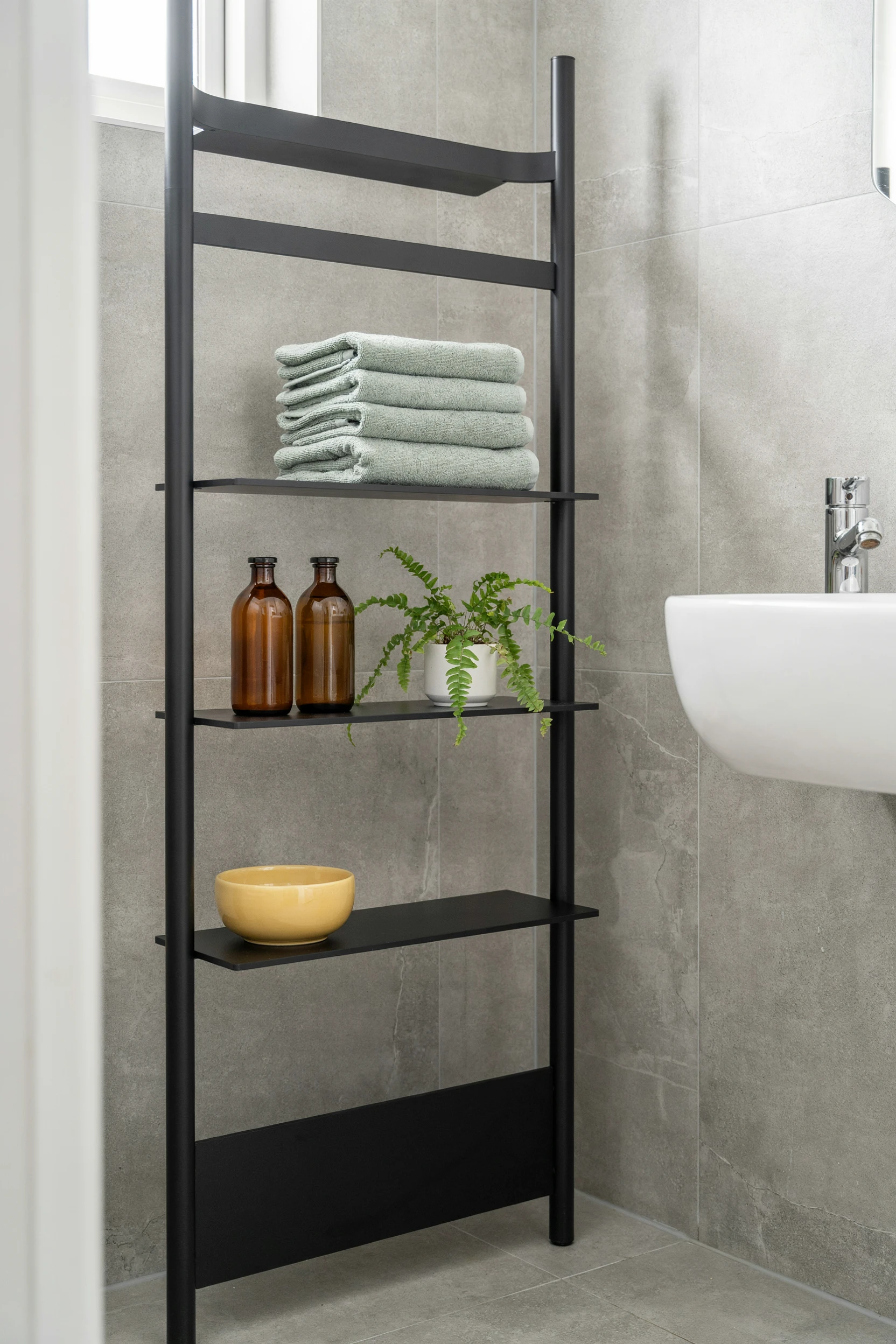
Bathroom corners can be useful for storing essentials, hanging towels, or adding a small decorative touch. Because these spaces are exposed to moisture, bathroom corner decor ideas should rely on materials and plants that suit the environment, such as the slim storage rack above.
31. Add a Corner Shelving Unit
A corner shelving unit can hold folded towels, toiletries, spare toilet paper, or small decorative accessories.
Choose moisture-resistant materials such as appropriately finished metal, plastic, glass, or treated wood. Secure taller units where necessary and avoid placing heavy objects on unstable shelves.
Keep everyday products within easy reach while storing less frequently used items higher up.
32. Install a Corner Shower Caddy
A shower caddy makes better use of an otherwise awkward corner inside the shower. It keeps shampoo, conditioner, soap, and other bathing products organized without requiring a large shelf.
Choose a rust-resistant model designed for the shower’s surface and installation method. Check that it drains properly and doesn’t interfere with the shower door or your movement.
Clean the caddy regularly to prevent soap buildup and mildew.
33. Introduce a Bathroom-Friendly Plant
A small plant can add natural color to a bathroom corner if the room provides suitable light and humidity.
Ferns and other humidity-tolerant plants may work well in the right conditions, but not every bathroom has enough natural light for living plants. Choose a variety suited to the actual environment rather than humidity alone.
Use a waterproof saucer and keep the plant away from areas where it could obstruct access or become damaged by splashes.
34. Use a Freestanding Towel Ladder
A towel ladder provides vertical storage while adding warmth and texture to a bathroom. Lean it securely in an available corner and use it for towels that need to dry between uses.
Choose a material and finish suitable for a humid room, and keep the ladder away from direct water exposure unless it is specifically designed for that environment.
If the bathroom is particularly small, a wall-mounted towel rail may be a safer and more space-efficient option.
Behind the Sofa
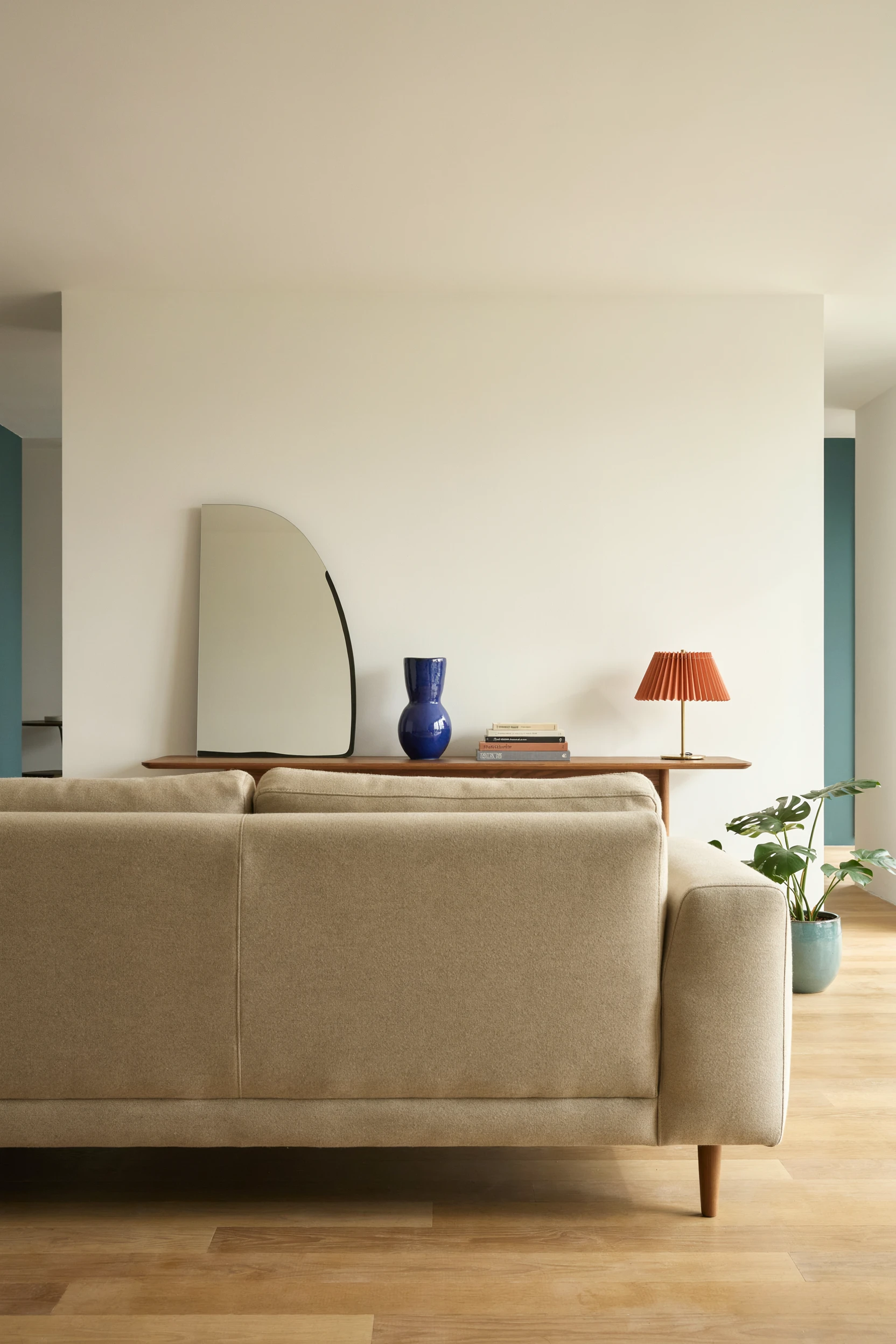
The area behind a sofa can be difficult to arrange, especially in open-plan living rooms. The best corner decor ideas for this spot depend on whether the sofa sits against a wall or separates the living area from another part of the home.
35. Style a Console Table Behind the Sofa
A slim console table behind the sofa can create a useful display and storage surface. Add a table lamp, a small stack of books, or a decorative bowl, keeping the arrangement low enough to preserve the room’s sightlines.
Choose a table that fits the sofa’s length and doesn’t protrude into the main walkway. If the sofa sits in the middle of the room, check that the table looks finished from both sides.
36. Place a Tall Plant Behind the Sofa
A tall plant can soften the back of a sofa and visually separate the seating area from the rest of an open-plan room.
Choose a plant with a suitable mature size and place it where it receives appropriate light. A stable planter is especially important if the plant sits near a walking route or household pets.
Avoid grouping too many large plants, as the arrangement may make the room feel crowded rather than connected.
37. Use a Large Floor Mirror
A full-length mirror placed behind or beside a sofa can reflect natural light and create a greater sense of openness.
Choose a stable, properly secured mirror and position it to reflect an attractive view rather than clutter or an awkward part of the room. If the sofa is close to the wall, confirm that there is enough room for the mirror’s frame and any required mounting hardware.
Mirrors are particularly useful in smaller living rooms, but their placement matters more than their size alone.
38. Create a Small Beverage Station
A bar cart or compact cabinet behind a sofa can work as a beverage station in an open-plan living room.
Use a tray to organize glasses, mugs, coasters, and a water carafe. Leave enough space to serve drinks comfortably and keep breakable items away from busy walking routes.
For a family-friendly setup, consider a coffee or tea station instead. The same arrangement can serve a practical purpose without introducing unnecessary clutter.
Luxury Contemporary Corner
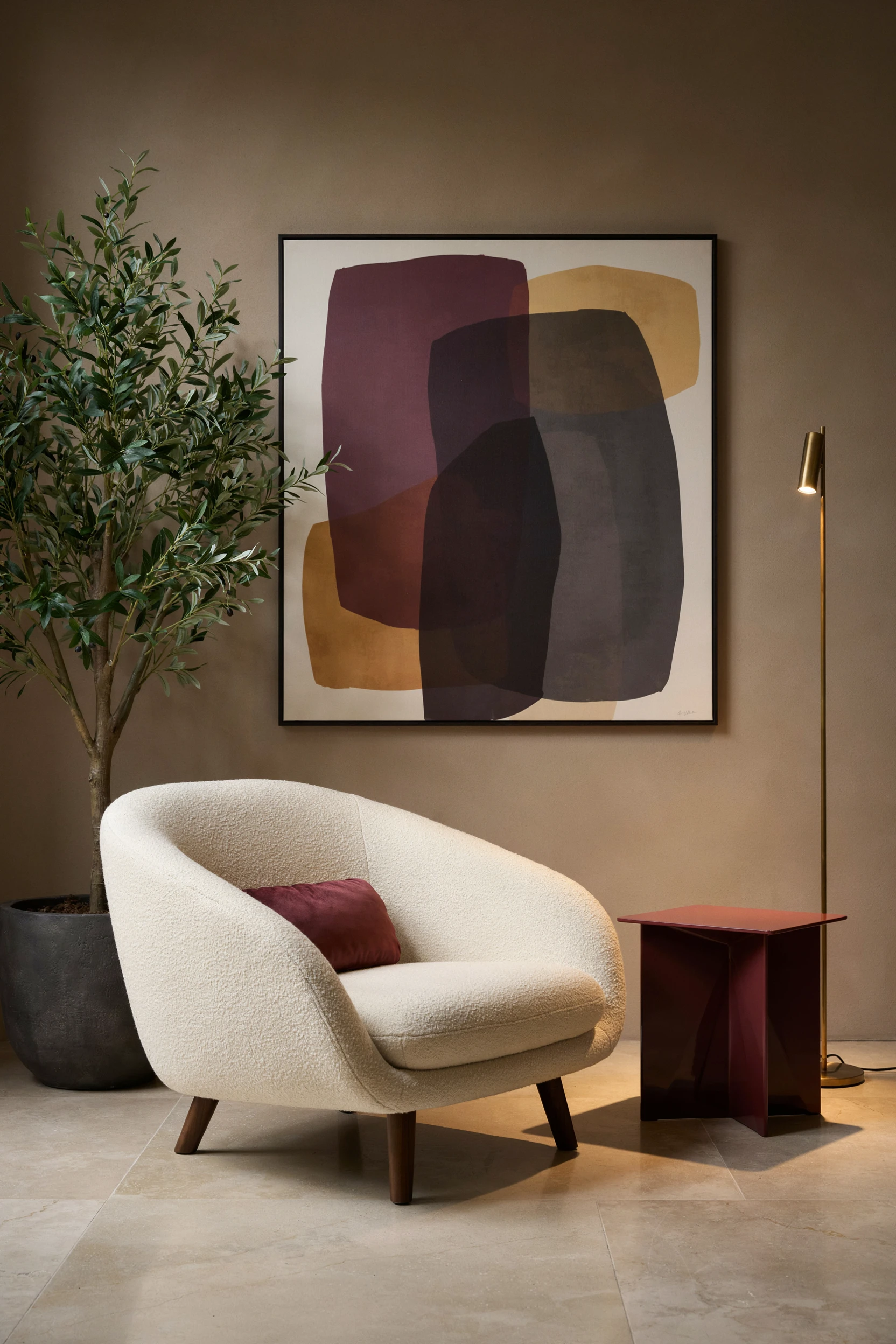
Once you’ve decided how a corner should function, choose finishes and accessories that complement your home’s existing design. Style-specific corner decor ideas, from minimalist to luxurious, help one corner feel intentional without redesigning the entire room.
39. Keep a Minimalist Corner Simple
Minimalist interiors benefit from restraint. Choose one or two pieces, such as a sculptural floor lamp and a simple planter, rather than filling the corner with several competing accessories.
Use a limited color palette and focus on shape, proportion, and material. A single well-positioned item can be more effective than a collection of decorations.
Leave some space around the objects so the corner feels calm rather than unfinished.
40. Create a Farmhouse-Style Corner
Farmhouse interiors often combine natural materials, practical storage, and comfortable textures. A wooden ladder for folded blankets, a woven basket, or a ceramic vase with seasonal branches can create this look without requiring a full furniture makeover.
Choose weathered wood or muted finishes if they already appear elsewhere in the room. Avoid using too many rustic accessories at once, as the corner can quickly look staged or cluttered.
A mixture of wood, woven fibers, and soft textiles usually provides enough variation.
41. Choose Modern and Contemporary Accents
Modern and contemporary corners often look best with clean lines, purposeful shapes, and a controlled color palette.
Consider a black metal floor lamp, a geometric side table, or one piece of abstract artwork. Combine different materials, such as metal and wood, to introduce contrast without relying on numerous accessories.
Keep the arrangement proportional to the corner. A dramatic statement piece may suit a large room, while a smaller space generally benefits from lighter-looking furniture.
42. Create a Luxurious Corner Arrangement
A luxurious corner doesn’t necessarily require expensive furniture. The effect comes from thoughtful proportions, quality-looking materials, layered lighting, and a limited number of well-chosen objects.
Pair an upholstered accent chair with a side table, a sculptural lamp, and one striking piece of artwork. Velvet, marble-look surfaces, polished metal, or textured ceramics can add visual richness when used selectively.
Prioritize comfortable seating, good lighting, and durable finishes before spending money on decorative accessories.
43. Maximize an Apartment or Small-Space Corner
Small apartments benefit from furniture that performs more than one function. A narrow desk can double as a console, a storage bench can provide seating, and a compact shelving unit can hold books as well as plants.
Use vertical space through wall-mounted shelves, tall lamps, or hanging decorations. Furniture with visible legs can also make the floor feel less crowded because more of the floor remains visible.
Before buying anything, consider whether an item you already own could serve the same purpose. Rearranging a chair, lamp, or basket from another room may be enough to complete the corner.
Choosing the Right Corner Solution for Your Space
Not every corner can accommodate the same furniture. Use the available floor area, ceiling height, and walking clearance to decide which approach is most practical.
| Available space | Suitable options | What to avoid |
| Very small corner | Wall shelf, small plant, slim floor lamp | Bulky chairs and deep cabinets |
| Medium corner | Accent chair, compact table, narrow bookcase | Several large pieces competing for space |
| Large corner | Reading nook, corner shelving, seating arrangement | Leaving useful space unplanned when additional function is needed |
These categories are general guidelines rather than strict measurements. A tall lamp may fit in a small floor area, while a wide chair may require more clearance than the corner itself appears to offer.
How Much Should You Spend on Corner Decor?
Your budget for corner decor ideas should depend on the corner’s purpose and the items you actually need. These approximate US-dollar ranges are planning estimates, not verified current retail prices.
| Budget | Possible purchases |
| Under $50 | Small plant, basket, cushion, or secondhand accessory |
| 50–150 | Floor lamp, floating shelf, or compact side table |
| 150–400 | Accent chair, larger bookcase, or area rug |
| $400 and above | Higher-quality furniture, extensive shelving, or custom built-ins |
You can also refresh a corner without buying anything. Move an existing lamp, rearrange artwork, relocate a basket, or repurpose a small table from another room.
Spend more carefully on furniture used every day, such as a reading chair or work desk. Decorative accessories are easier to change later, so they rarely need to consume the largest part of your budget.
Corner Decorating Checklist
Before considering your corner finished, check the following:
- Measure the available width and depth.
- Identify the main purpose: seating, storage, lighting, or display.
- Check natural light and electrical outlet locations.
- Choose furniture that suits the room’s scale.
- Keep doors, drawers, and walking paths clear.
- Secure shelves, mirrors, and tall furniture where necessary.
- Use a few complementary colors and textures.
- Leave enough space to prevent visual clutter.
- View the arrangement from the room’s main entrance.
- Make sure the setup is practical to clean and maintain.
Common Corner Decorating Mistakes to Avoid
Choosing Furniture That Is Too Large or Too Small
Scale matters more than the number of decorative items. A tiny accessory may disappear in a large corner, while an oversized chair can overwhelm a small room.
Measure first and consider how each item relates to nearby furniture. When in doubt, use painter’s tape to mark the proposed footprint on the floor before purchasing a large piece.
Forgetting About Lighting
Corners often receive less natural light than the center of a room. Even attractive furniture can look uninviting if the area becomes too dark in the evening.
A floor lamp, table lamp, or suitable wall light can improve the atmosphere. Choose lighting that serves the corner’s purpose rather than adding a fixture solely for appearance.
Adding Too Many Accessories
Filling every available surface creates visual noise. Three carefully chosen objects can look more intentional than a large collection of unrelated decorations.
Start with the main piece, step back, and add accessories only when they improve the arrangement. Leave some shelves and tabletop areas empty.
Blocking Doors and Walking Paths
A chair or console may fit physically but still make the room difficult to use. Check the movement around the corner, including access to windows, cupboards, and nearby seating.
This is especially important in hallways, kitchens, and small apartments, where every inch of floor space matters.
Matching Every Item Too Closely
A corner can feel flat if every object has the same color, finish, and texture. Introduce contrast through a woven basket, a ceramic planter, a different frame finish, or a textured cushion.
The aim is to create variety that connects with the rest of the room, not a completely unrelated arrangement.
Ignoring Maintenance and Safety
Dust can accumulate behind furniture, plants may need regular care, and loose cables can become tripping hazards. Choose items you can clean and maintain without moving heavy furniture every week.
Secure tall furniture and mirrors, use suitable electrical equipment, and keep fragile objects away from busy routes. In homes with children or pets, stability and safe placement should take priority over appearance.
Expert Tips for Better Corner Decor Ideas
- Start with function. Decide whether the corner should provide seating, storage, light, or decoration before choosing individual pieces. This prevents unnecessary purchases.
- Vary the heights. A tall lamp or plant paired with a medium-height table and a smaller accessory can create a more balanced arrangement. You don’t need all three elements if the corner already has enough visual interest.
- Try angling furniture. A chair or console placed slightly away from the walls can soften a rigid layout, provided the arrangement doesn’t reduce walking space.
- Work with the existing palette. Repeat one or two colors already present in the room, then introduce a different texture for contrast. This helps the corner feel connected to the overall design.
- Choose renter-friendly solutions when needed. Freestanding lamps, baskets, plants, and furniture can transform a space without permanent changes. For wall-mounted shelves or artwork, use an installation method permitted by your lease.
- Consider seasonal changes. Swap a throw, cushion cover, or small decorative arrangement when you want a fresh look. Replacing a few accessories is usually more economical than redesigning the entire corner.
- Think about pets and children. Choose stable furniture, secure tall objects, conceal loose cables, and check whether any plants are toxic to household pets. Avoid placing breakable accessories where they can be knocked over easily.
- Don’t decorate just to fill space. An empty corner isn’t automatically a problem. If furniture would obstruct movement or make the room feel crowded, leaving the area open may be the better design decision.
Frequently Asked Questions
What are the best corner decor ideas for a living room?
A tall indoor plant, floor lamp, accent chair, corner bookshelf, or woven storage basket can work well. Choose according to the available space and whether you need additional seating, lighting, storage, or decoration.
How do I decorate an awkward corner?
First, identify the corner’s purpose and measure its dimensions. Use a tall plant or lamp for height, add a functional piece if needed, and keep the arrangement proportional to the room. If furniture would obstruct movement, consider wall-mounted decorations instead.
What size plant works best in a living room corner?
A plant around four to six feet tall can suit many standard living rooms, but the ideal size depends on ceiling height, floor space, and the plant’s mature growth. Choose a variety that suits the available light and keep enough clearance around nearby furniture.
How can I decorate a corner without buying furniture?
Rearrange artwork, move an existing lamp, relocate a plant, or repurpose a basket or small table from another room. Wall art and suitable wall-mounted shelves can also add interest without using floor space.
What should I avoid putting in a living room corner?
Avoid furniture that blocks walking paths, accessories that overwhelm the available space, and unstable objects that could fall. Also consider lighting, cleaning access, and whether the chosen materials and colors suit the rest of the room.
How can I make a small apartment corner look less empty?
Use vertical space and choose multifunctional pieces. A compact shelf, slim floor lamp, storage bench, or small plant can make the corner useful without filling the entire floor area.
Are corner shelves a good choice for living rooms?
Yes. Corner shelves can provide storage and display space while using an area that might otherwise remain empty. Floating shelves create a lighter look, while freestanding corner bookcases generally offer more capacity. Make sure the shelves are securely installed and appropriately rated for the items they hold.
How do I create a reading nook in a small corner?
Start with a compact chair, a small side table, and a suitable reading light. Add a cushion or throw if space permits. If a full-size chair won’t fit comfortably, use a smaller seat and a wall-mounted light instead.
How do I brighten a dark corner?
A floor lamp is often the simplest option because it doesn’t require wall installation. A table lamp or suitable wall light can also work. If you want to add a living plant, select one that tolerates the actual light conditions or consider a realistic artificial plant.
Can I decorate corners in a rented apartment?
Yes. Freestanding furniture, floor lamps, plants, baskets, and leaning artwork can refresh a rented space without permanent alterations. Before drilling holes or mounting heavy shelves, check your lease and use appropriate fixings.
Conclusion
The most effective corner decor ideas are the ones that improve how your home looks and functions. A tall plant or floor lamp may be enough for a small living room corner, while a larger area could accommodate a reading nook, a compact desk, or extra storage.
Start by measuring the space, identifying what it needs, and looking at the furniture and accessories you already own. Then choose from the corner decor ideas above and introduce a few complementary elements without overcrowding the area.
You don’t have to decorate every empty corner, and you don’t need to spend a lot to make a noticeable difference. Whichever corner decor ideas you pick, choose a solution that fits your lifestyle, complements the rest of your home, and makes the space more useful or enjoyable.