50+ Brilliant Mudroom Ideas for a Smart, Stylish Entryway
Walk into many American homes through the garage or side door, and you’ll often find the same problem: shoes by the mat, coats on chairs, backpacks on the floor, and outdoor gear scattered everywhere. The right mudroom ideas can turn that everyday entryway chaos into an organized, functional space that works for the entire household.
A well-designed mudroom is more than a pretty storage area. It creates a practical buffer between the outdoors and the rest of your home, giving wet boots, muddy paws, sports equipment, coats, bags, and school gear a dedicated place to stay. Whether you have a full mudroom addition, a narrow hallway, or only a small coat closet, thoughtful planning can make a surprisingly big difference.
This guide covers more than 50 practical mudroom ideas, including small-space layouts, built-in benches, storage solutions, DIY projects, IKEA hacks, flooring choices, laundry combinations, farmhouse and modern styles, dog-friendly features, and realistic cost considerations.
What Is a Mudroom?
A mudroom is a transitional entry space, usually located near a garage, side door, or back door, designed to catch dirt, moisture, and clutter before they reach the main living areas of a home.
Traditionally associated with colder climates, rural homes, and farmhouse properties, mudrooms have become increasingly useful in modern houses of all sizes. A well-planned mudroom typically includes durable flooring, a place to sit and remove shoes, hooks or closets for outerwear, and dedicated storage for shoes, bags, and seasonal equipment.
Unlike a general entryway, a mudroom is specifically designed to handle everyday mess. Think of it as the practical transition point between “outside” and “inside.”
Why Mudroom Ideas Work in Homes of Every Size
You don’t need a large house or a dedicated addition to benefit from a mudroom. One of the biggest advantages of today’s mudroom ideas is their flexibility. A narrow hallway, unused corner, or existing coat closet can become a functional drop zone with the right storage.
A practical mudroom can:
- Keep dirt, salt, and moisture away from hardwood floors and carpet
- Give every family member a dedicated place for shoes, bags, and coats
- Create a landing zone for keys, mail, and everyday essentials
- Reduce clutter in kitchens, hallways, and living rooms
- Make mornings easier by keeping frequently used items together
- Provide useful storage for seasonal clothing and outdoor equipment
- Add practical functionality that can appeal to future buyers
The goal isn’t to create a showroom-perfect space. It’s to create a system that your household can realistically maintain.
Mudroom Design Layouts: Finding the Right Fit
Before choosing paint colors, benches, or decorative baskets, start with the layout. The best mudroom ideas begin with understanding how much space you have and how people move through it.
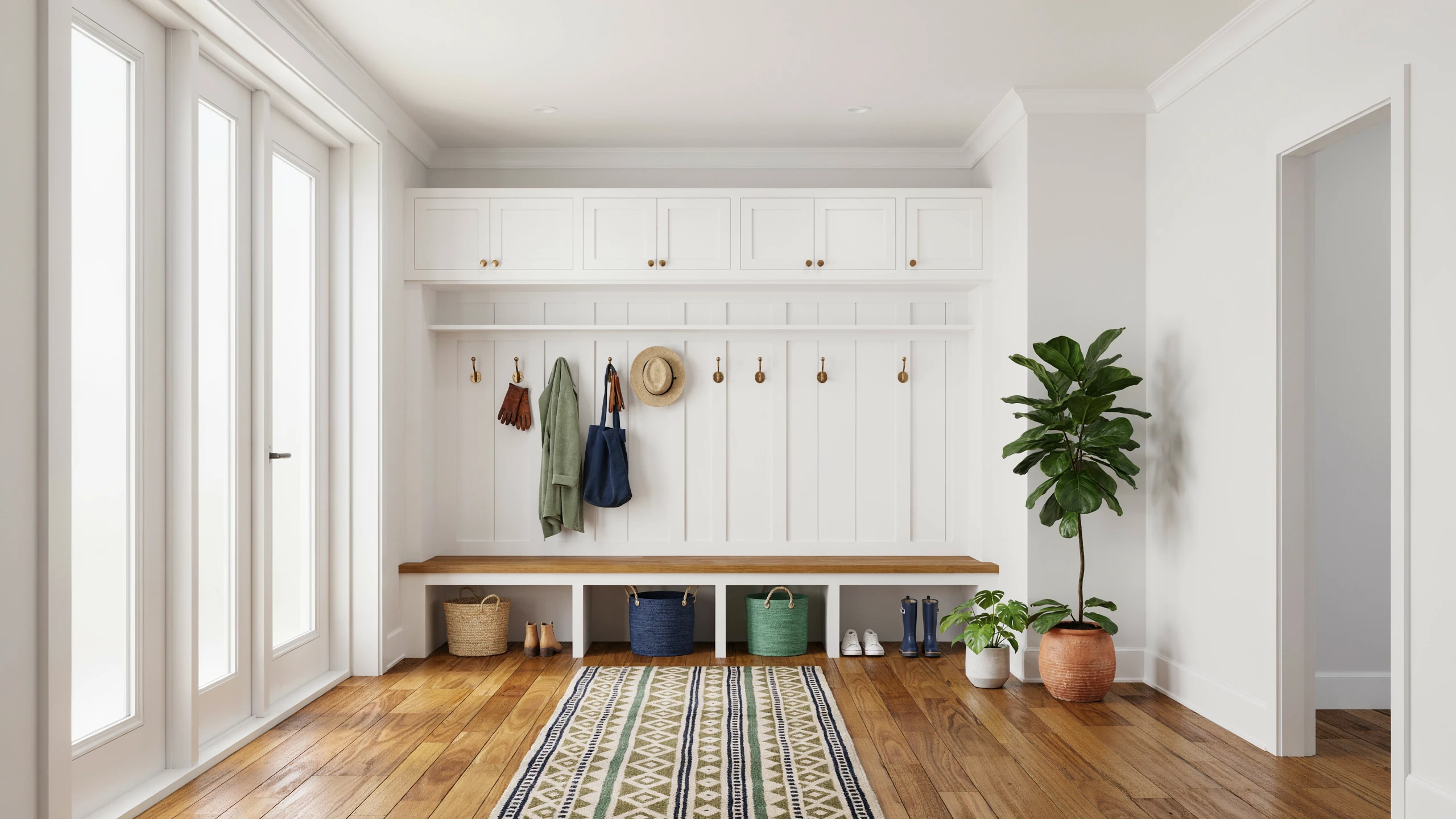
Built-In Bench and Locker Wall
This is one of the most recognizable mudroom layouts. Individual lockers or cubbies sit above a bench, with hooks between or underneath upper shelving.
It works particularly well for families because each person can have an assigned area for coats, shoes, backpacks, and personal items. A shelf above the hooks can hold baskets, hats, and seasonal accessories.
Drop Zone Console
For smaller homes, a narrow console paired with a slim bench and several wall hooks can provide most of the functionality of a full mudroom without taking up an entire room.
This setup works especially well in apartments, condos, and older homes without a dedicated back entry.
Closet Conversion
An existing coat closet can become a compact mudroom with very little structural work. Remove the doors if you want an open system, or keep them for a cleaner appearance.
Add low shoe shelving, hooks at different heights, baskets, and a small bench or stool just outside the closet.
Laundry Mudroom Combo
Combining laundry and mudroom functions is popular because both spaces already deal with household mess. Keeping them near a garage or back entrance can create an efficient work zone.
A larger laundry mudroom can accommodate a washer, dryer, folding counter, bench, hooks, and storage. Smaller spaces can work with stacked appliances and wall-mounted storage.
| Layout Type | Minimum Recommended Size | Best For |
| Closet mudroom | 2 ft x 4 ft | Apartments and small entries |
| Narrow hallway mudroom | 3 ft x 8 ft | Side doors and back hallways |
| Standalone drop zone | 4 ft x 6 ft | Homes without a dedicated mudroom |
| Laundry mudroom combo | 8 ft x 10 ft | New construction and garage entries |
| Full mudroom addition | 10 ft x 12 ft or larger | Families and larger homes |
Small Mudroom Ideas for a Tiny Footprint
Small spaces don’t have to become cluttered spaces. The best mudroom ideas for narrow areas focus on vertical storage, shallow furniture, and multifunctional pieces.
Try these strategies:
- Choose a slim bench around 12 to 16 inches deep.
- Mount hooks at different heights for adults and children.
- Use tall, narrow cabinets instead of wide furniture.
- Install a wall-mounted folding seat where floor space is limited.
- Choose a storage bench with a lift-up lid.
- Use a small mirror above the console rather than a full-length mirror.
- Install shelves above existing hooks to take advantage of vertical space.
- Keep a washable runner near the entrance for additional protection.
For a hallway mudroom, an approximately 18-inch-deep cabinet with shoe cubbies, wall hooks, and a narrow runner can be more useful than a larger but poorly organized space.
Mudroom Bench Ideas: The Heart of the Entry
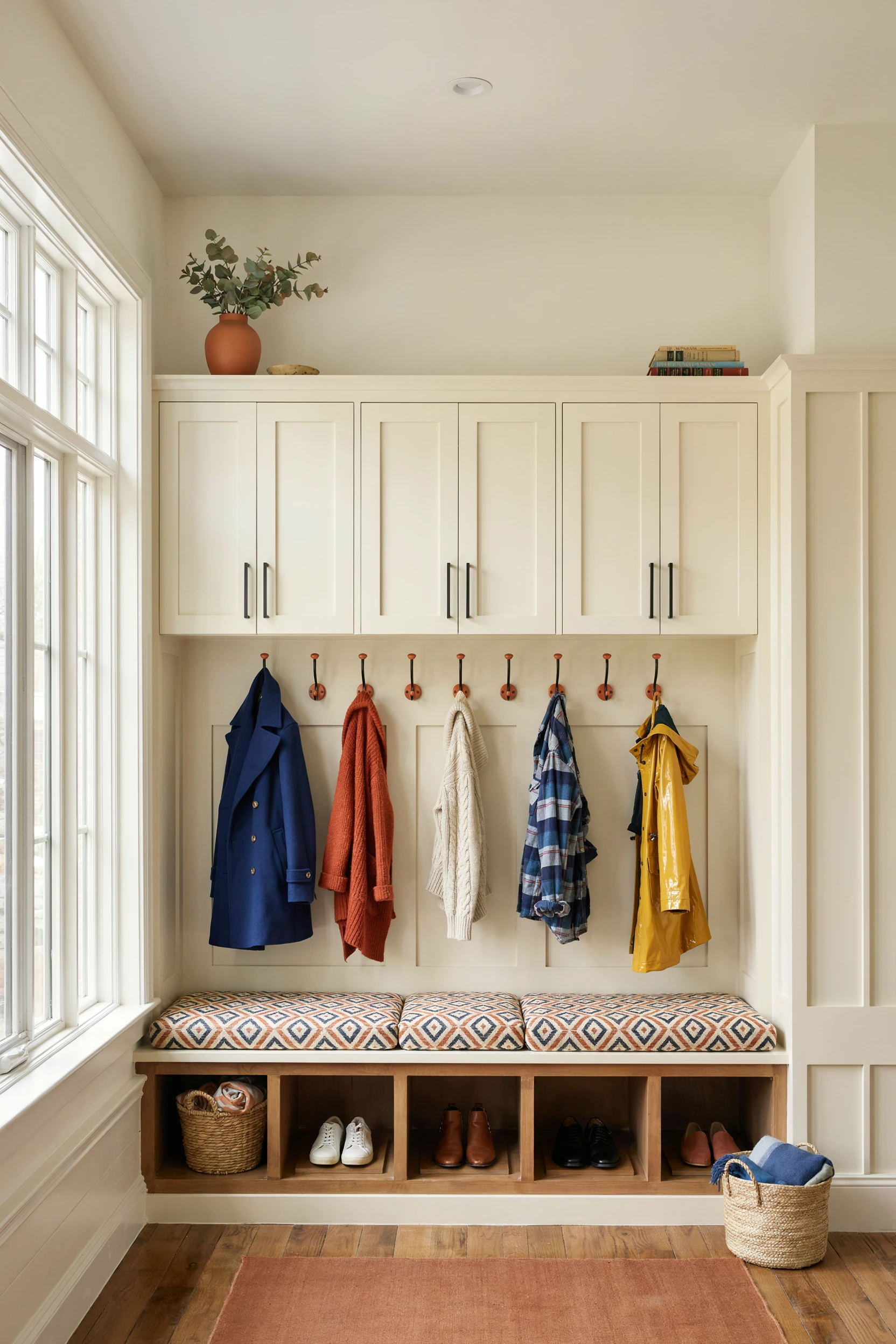
A bench is one of the most useful features in a mudroom. It provides a comfortable place to sit while removing boots and shoes and can also add valuable storage.
Storage Bench With Lift-Up Lid
A hinged lid creates hidden storage for winter boots, sports equipment, pet supplies, or seasonal accessories.
Bench With Open Cubbies
Open cubbies make shoes easy to see and grab. They’re particularly useful for children because there are no doors or drawers to operate.
Bench With Baskets
Baskets placed inside open cubbies provide a balance between accessibility and visual organization. Use one basket per family member for smaller personal items.
Built-In Locker Bench
A built-in bench combined with lockers, hooks, and upper shelving creates a complete organization system and works especially well in larger mudroom additions.
Freestanding Shoe Storage Bench
A furniture-style bench can be ideal for renters because it provides seating and storage without requiring permanent installation.
DIY Mudroom Storage Bench
A basic DIY bench can be an approachable weekend project. A simple plywood-and-pine version may cost considerably less than custom cabinetry, depending on materials and local prices.
A straightforward build can include:
- Frame a box from 3/4-inch plywood to fit the available space.
- Aim for a comfortable seating height of around 18 inches.
- Add a face frame using 1×2 boards for a finished appearance.
- Install a solid wood or plywood seat.
- Add a hinged top if you want hidden storage.
- Sand, prime, and paint or stain the bench.
- Secure the unit to wall studs if it will receive regular weight.
If carpentry isn’t your strength, stock cabinets topped with butcher block or painted plywood can create a similar built-in effect with less custom work.
Mudroom Storage Ideas That Actually Get Used
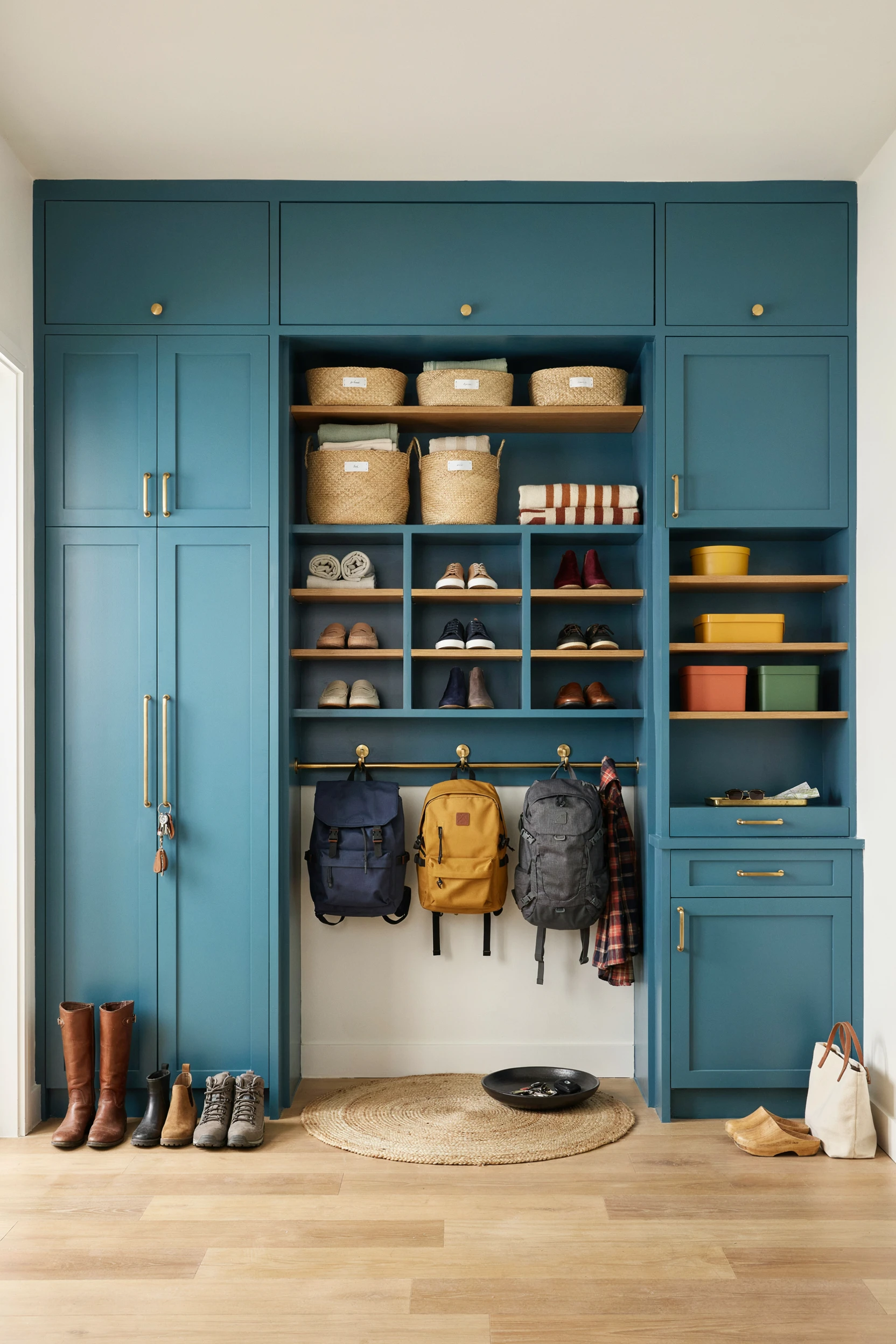
The best storage system isn’t necessarily the most expensive one. It is the one people will actually use every day.
Shoe Storage Solutions
Shoes are one of the biggest sources of entryway clutter. Useful options include:
- Angled shoe shelves for easy visibility
- Open cubbies for children
- A boot tray for wet footwear
- Over-the-door organizers for closet conversions
- Separate storage for daily shoes and seasonal footwear
- Low cubbies that children can reach without help
A combination of open and closed storage usually works better than relying on one type alone.
Cabinets and Closed Storage
Closed cabinets are useful when the mudroom is visible from the kitchen or living area. They hide seasonal items, sports equipment, towels, gloves, and other things that don’t need to remain visible.
Modular storage systems can also provide flexibility without the cost of fully custom cabinetry.
Hooks: A Small Detail That Matters
Hooks may seem simple, but their placement can determine whether the organization system works.
Consider:
- Installing hooks at different heights for adults and children
- Leaving enough space between hooks so coats don’t overlap
- Using double hooks for backpacks and dog leashes
- Matching hardware finishes with other fixtures in the home
Common finishes include matte black, brass, brushed metal, and oil-rubbed bronze.
Mudroom Flooring Ideas: Durability Comes First

Mudroom flooring experiences more moisture, dirt, grit, and foot traffic than many other areas of the home. Durability should therefore come before appearance, although you can have both.
Porcelain or Ceramic Tile
Tile is one of the most practical choices because it resists water, scratches, and stains. Hexagon, checkerboard, and stone-look patterns can also make the floor a major design feature.
Luxury Vinyl Plank
LVP offers a wood-inspired appearance while providing strong moisture resistance. It is also generally warmer and more forgiving underfoot than tile.
Natural Stone
Slate and travertine can create a classic rustic or farmhouse appearance. Natural stone usually requires more maintenance, including appropriate sealing.
Sealed Concrete
Sealed concrete is particularly useful near garages and in contemporary homes. It is durable and relatively straightforward to maintain.
Rubber Flooring
Rubber or commercial-grade flooring can be worth considering for households with heavy traffic, large dogs, or significant outdoor equipment.
Solid hardwood and standard carpet are generally poor choices for areas that regularly receive wet shoes, salt, sand, and mud.
Mudroom Ideas for Garage Entries

Garage entrances often need different planning because they may experience temperature changes, road salt, dirt, and limited natural light.
For a garage-entry mudroom, prioritize:
- Water-resistant and easy-to-clean flooring
- A boot tray directly inside the door
- Closed storage for sports equipment and seasonal gear
- Strong overhead lighting
- A coat rack or hooks positioned away from the door swing
- A durable washable mat at the threshold
- Adequate ventilation
A garage mudroom should be practical first and decorative second. Once the storage and traffic flow work properly, you can add design details.
Farmhouse, Modern, and Rustic Mudroom Styles

Choosing a design direction early helps prevent the room from looking like a collection of unrelated furniture and storage pieces.
Farmhouse Mudroom Ideas
Farmhouse designs often combine shiplap or beadboard walls, black hardware, open shelving, woven baskets, warm wood, and neutral colors.
A vintage-inspired bench or a simple decorative sign can provide character without overwhelming the storage system.
Modern Mudroom Ideas
Modern spaces tend to use flat-panel cabinets, simple hardware, integrated benches, floating shelves, and restrained color palettes.
The goal is a clean appearance where storage feels like part of the architecture.
Rustic and Country Mudroom Ideas
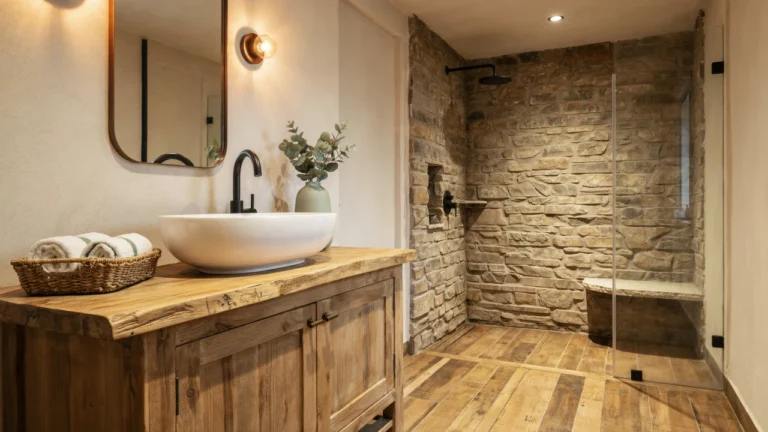
Rustic designs can use reclaimed wood, natural stone, wrought-iron hardware, and vintage-inspired details.
Country-style spaces can soften the look with sage green, muted blue, gingham fabrics, woven baskets, and painted furniture.
Simple Mudroom Ideas
Sometimes the most effective solution is the simplest: one bench, matching hooks, a durable runner, and a basket for each family member.
Simple systems are often easier to maintain and can remain useful even when your family’s needs change.
IKEA Mudroom Ideas: Budget-Friendly and Flexible
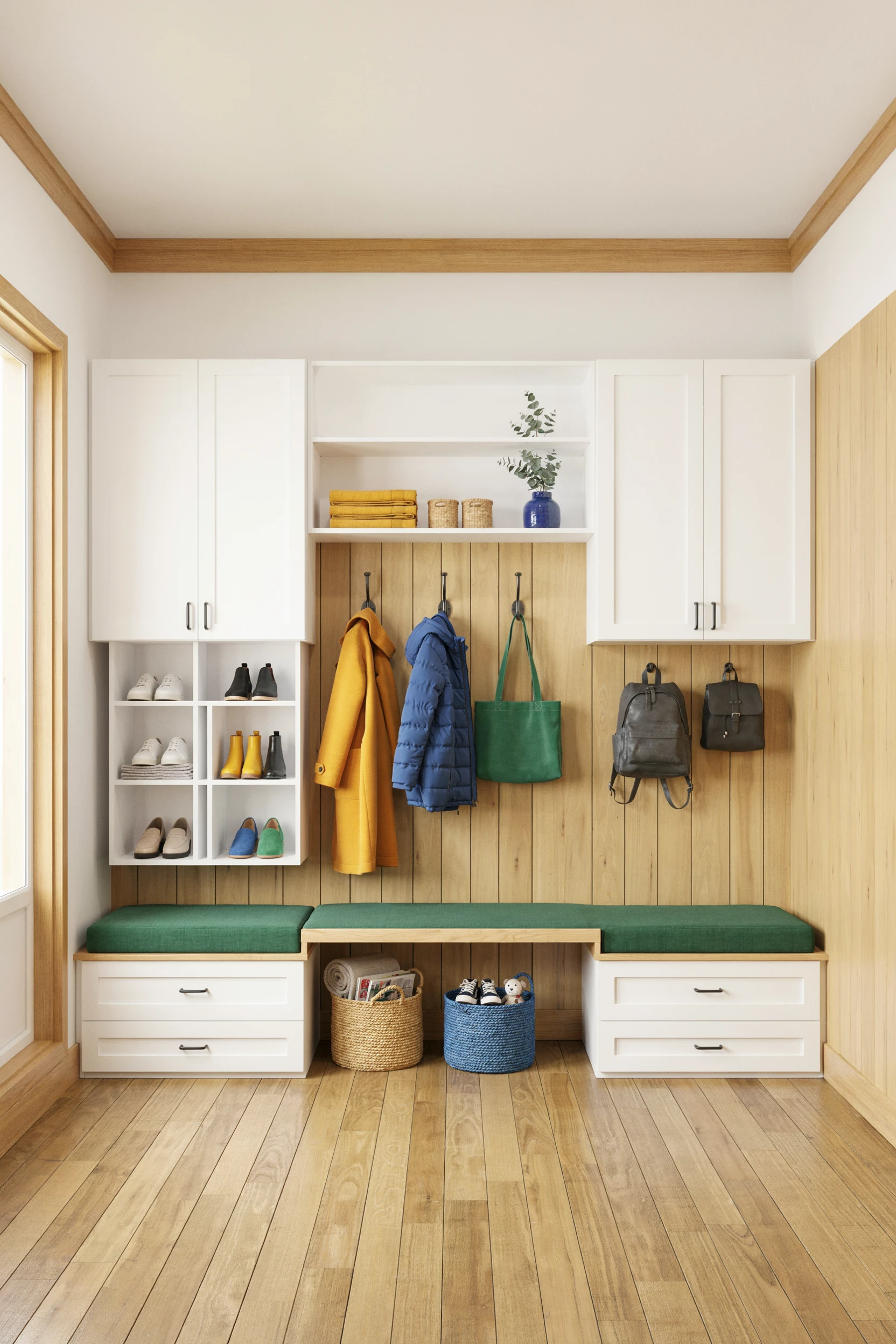
IKEA is popular for mudroom organization because modular furniture can provide useful storage without the cost of fully custom cabinetry.
Options worth considering include:
- HEMNES benches and shoe storage for traditional-style entries
- IVAR shelving for customizable storage
- BOAXEL systems for flexible wall storage
- ENHET components for utility and laundry areas
- TROFAST storage for child-accessible organization
An IKEA bench or storage unit can also work well for renters because furniture-based solutions can move with you.
Prices change over time, so check current pricing before planning a project around a specific product.
DIY Mudroom IKEA Hacks
Combining modular furniture with a few custom details can create a more built-in appearance.
Try these upgrades:
- Add trim or crown molding around taller units.
- Paint cabinet fronts to coordinate with your home’s trim.
- Replace standard hardware with brass or matte-black pulls.
- Build a simple plywood surround around a bench.
- Add a continuous shelf above several separate storage units.
- Use matching baskets to make different IKEA pieces look like one system.
The goal isn’t to disguise the furniture completely. It is to make the individual pieces feel intentional within the room.
Mudroom Wall Art and Decor Ideas

A mudroom is primarily a functional space, but that doesn’t mean it has to feel cold or unfinished.
Consider:
- Botanical prints
- Black-and-white photography
- Family artwork
- A simple monogram
- A restrained farmhouse-style sign
- A round or arched mirror
- A washable patterned runner
- Woven rattan, canvas, or wire baskets
Keep decorative items away from the areas that receive the most dirt and moisture. A beautiful piece of wall art above the bench can have more impact than filling every available wall.
How to Organize a Mudroom Laundry Room

When laundry and entry storage share one room, the biggest challenge is preventing the two functions from competing for the same space.
A practical system includes:
- Separate zones: Keep laundry appliances and folding areas on one side and entry storage on another whenever possible.
- A multifunctional counter: A folding surface can also provide a temporary landing zone for bags or mail.
- Labeled laundry bins: Simple labels make sorting easier for the whole household.
- Closed cabinets: Keep detergent and cleaning supplies stored safely and out of sight.
- Drying space: A wall-mounted rod or retractable drying line can provide useful air-drying space without taking over the bench area.
How to Keep a Mudroom Clean and Organized
Even the best mudroom ideas won’t stay effective without a simple maintenance routine.
Try these habits:
- Give each family member a designated hook, cubby, or basket.
- Do a five-minute weekly reset.
- Keep a small trash or recycling bin nearby for unwanted mail.
- Rotate seasonal coats and footwear.
- Separate wet footwear from clean, dry shoes.
- Wipe the bench and high-touch surfaces regularly.
- Shake out or wash the entry rug as needed.
The easier the system is to follow, the more likely everyone will use it consistently.
Common Mudroom Mistakes to Avoid
Undersizing the Bench
A bench that is too shallow may be uncomfortable and therefore rarely used. Allow enough depth for comfortable sitting without blocking the walkway.
Choosing Porous Flooring
Unsealed wood and some natural stone surfaces can absorb moisture and stains. Choose flooring appropriate for the level of water and dirt the space receives.
Ignoring Children’s Height
If every hook and cubby is positioned for adults, children may simply leave their belongings on the floor.
Overdesigning a Small Space
Too many cabinets, compartments, and decorative pieces can make a small mudroom feel cramped rather than organized.
Skipping Ventilation
Wet coats, boots, and outdoor equipment need airflow. A poorly ventilated space can develop unpleasant odors and excess moisture.
Ignoring Door Swing and Traffic Flow
Furniture placed too close to an entry door can create an everyday annoyance. Maintain a comfortable walking path and check door clearance before installing permanent storage.
Mudroom Ideas for Dogs
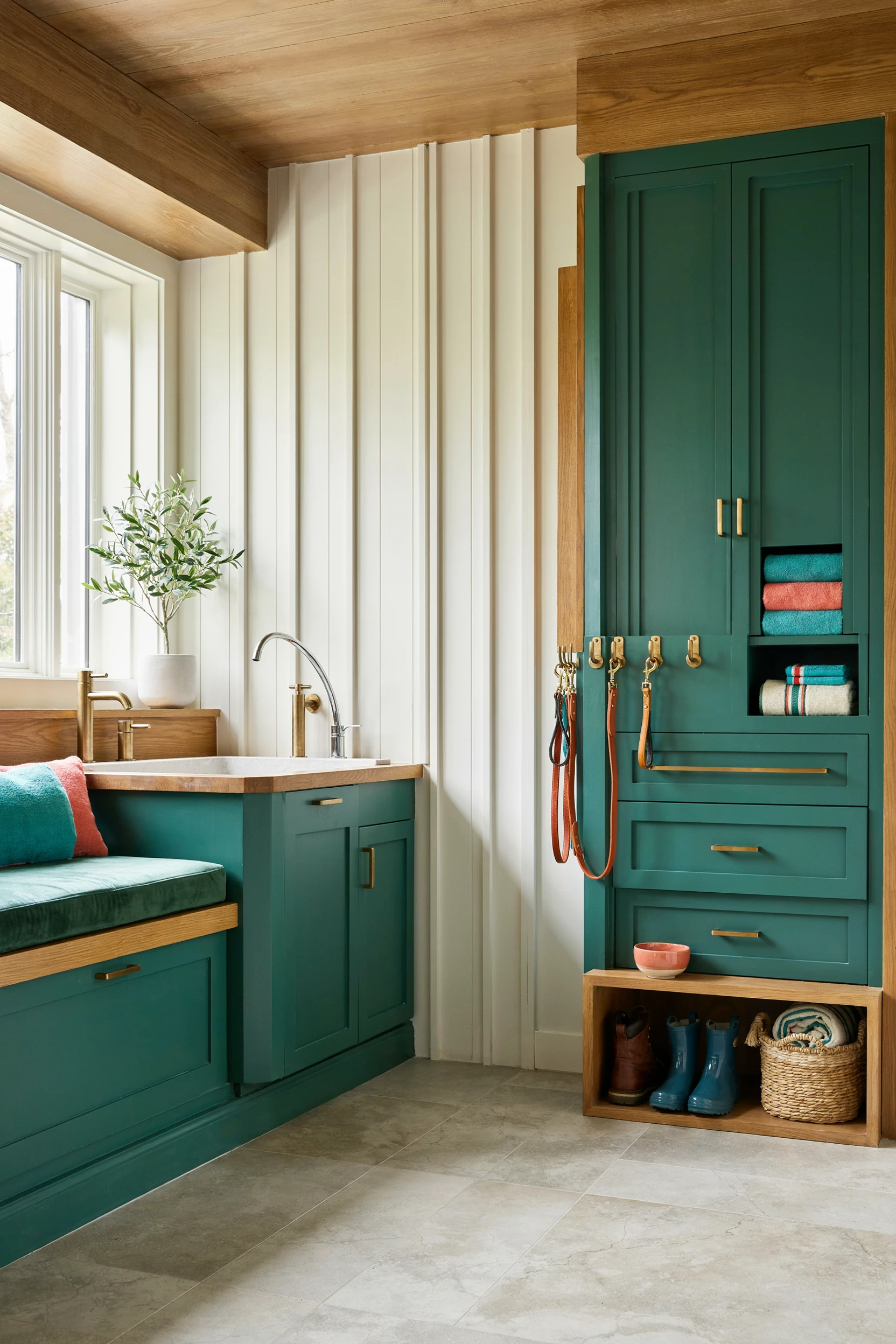
A mudroom can also become a practical pet zone, especially for households with active dogs.
Useful additions include:
- A dedicated dog-washing station
- A leash and collar hook near the exit
- A pull-out drawer or basket for dog towels
- Sealed storage for pet food
- A washable floor
- A towel station near the door
- A dedicated space for grooming supplies
A built-in dog wash can be particularly useful for muddy paws, but plumbing and installation can add significantly to the project cost.
Mudroom Addition Cost: What to Expect
The cost of a mudroom varies greatly depending on whether you’re improving an existing area or constructing a new addition.
| Project Type | Typical Cost Range | Notes |
| Closet-to-mudroom conversion | $200–$1,500 | Often DIY-friendly |
| Existing entry makeover | $500–$3,000 | Storage, bench, and flooring |
| Built-in bench and lockers | $1,000–$5,000 | Depends heavily on materials |
| Laundry mudroom remodel | $5,000–$15,000 | May include plumbing and electrical work |
| Full mudroom addition | $15,000–$50,000+ | Includes major construction |
These are broad planning ranges rather than fixed quotes. Local labor rates, project size, materials, plumbing, electrical work, and structural requirements can change the final price significantly.
For a larger project, get at least two or three local estimates before committing.
Best Practices for Planning Your Mudroom
Before buying storage bins or ordering cabinets, work through these steps:
- Audit your real needs. List what actually gets dropped near the door every day.
- Measure carefully. Account for door swings, walking clearance, wall length, and ceiling height.
- Choose flooring first. It is one of the more difficult elements to change later.
- Plan for growth. Adjustable shelves can adapt as children and storage needs change.
- Use vertical space. Tall cabinets and upper shelves can dramatically increase capacity.
- Plan lighting early. Combine overhead lighting with task lighting near the bench when possible.
- Keep frequently used items accessible. Don’t put everyday shoes or backpacks behind doors that nobody wants to open.
Expert Recommendations by Space Type
For Renters
Choose freestanding furniture, a shoe storage bench, a leaning coat rack, removable hooks, and portable organizers.
For Growing Families
Give each child an assigned area at a reachable height and leave some additional storage capacity for future needs.
For Small Apartments
A narrow console, mirror, key bowl, two or three hooks, and compact shoe storage can provide most of the functionality you need.
For Homes With Dogs
Prioritize washable flooring, a leash station, towels, and easily accessible pet storage.
For New Construction or Major Remodels
If you think you may eventually combine the mudroom with laundry, discuss plumbing and electrical requirements with your builder early. Planning these systems during construction can be easier than retrofitting them later.
Frequently Asked Questions
What Is a Mudroom Used For?
A mudroom acts as a transition space near a garage, side door, or back door where shoes, coats, bags, and outdoor gear can be removed and stored before entering the main living areas.
How Big Should a Mudroom Be?
A mudroom can be surprisingly small. A closet conversion may use only a few square feet, while a family-friendly dedicated space is often more comfortable at around 6 by 8 feet or larger.
What Is the Best Flooring for a Mudroom?
Porcelain tile and luxury vinyl plank are strong choices because they offer good resistance to moisture, dirt, and everyday foot traffic.
Can a Small Closet Be Turned Into a Mudroom?
Yes. Add low shoe storage, hooks at different heights, baskets, and a small stool or bench nearby. This can create a functional mudroom without major structural changes.
Do I Need a Bench in My Mudroom?
A bench isn’t essential, but it can make the space considerably more useful by giving people a comfortable place to sit while removing shoes.
How Much Does a Mudroom Addition Cost?
A full addition can range from roughly $15,000 to $50,000 or more, depending on size, materials, labor, plumbing, electrical work, and local construction costs. Smaller conversions can cost much less.
What’s the Difference Between an Entryway and a Mudroom?
An entryway is a general transitional area near a door. A mudroom is specifically designed to handle dirt, moisture, shoes, coats, bags, and outdoor equipment.
How Do I Organize a Mudroom That Doubles as a Laundry Room?
Separate laundry and entry functions into different zones whenever possible. Keep appliances and folding space together while placing hooks, shoes, bags, and outdoor gear near the entrance.
What Are Affordable Mudroom Storage Options?
IKEA furniture, wall-mounted hooks, over-the-door shoe organizers, baskets, freestanding benches, and repurposed closet space can all provide affordable storage without requiring custom cabinetry.
How Do I Keep My Mudroom From Getting Messy Again?
Give every family member a defined storage area, keep wet footwear separate from dry storage, rotate seasonal items, and establish a short weekly reset routine.
Bringing It All Together
The best mudroom ideas don’t depend on having a huge room or an unlimited budget. They work because they match the way your household actually enters and leaves the home every day.
Start with durable flooring, provide a comfortable place to sit, and create a specific home for shoes, coats, bags, outdoor gear, and pet supplies. Use vertical storage when floor space is limited, keep everyday items easy to reach, and choose materials that can handle real-life mess.
Whether you’re converting a small hallway this weekend or planning a full addition beside the garage, the same principles apply: durability, practical storage, clear organization, and a simple system that everyone can follow.
With the right mudroom ideas, even the busiest entry can become one of the most useful and organized spaces in your home.