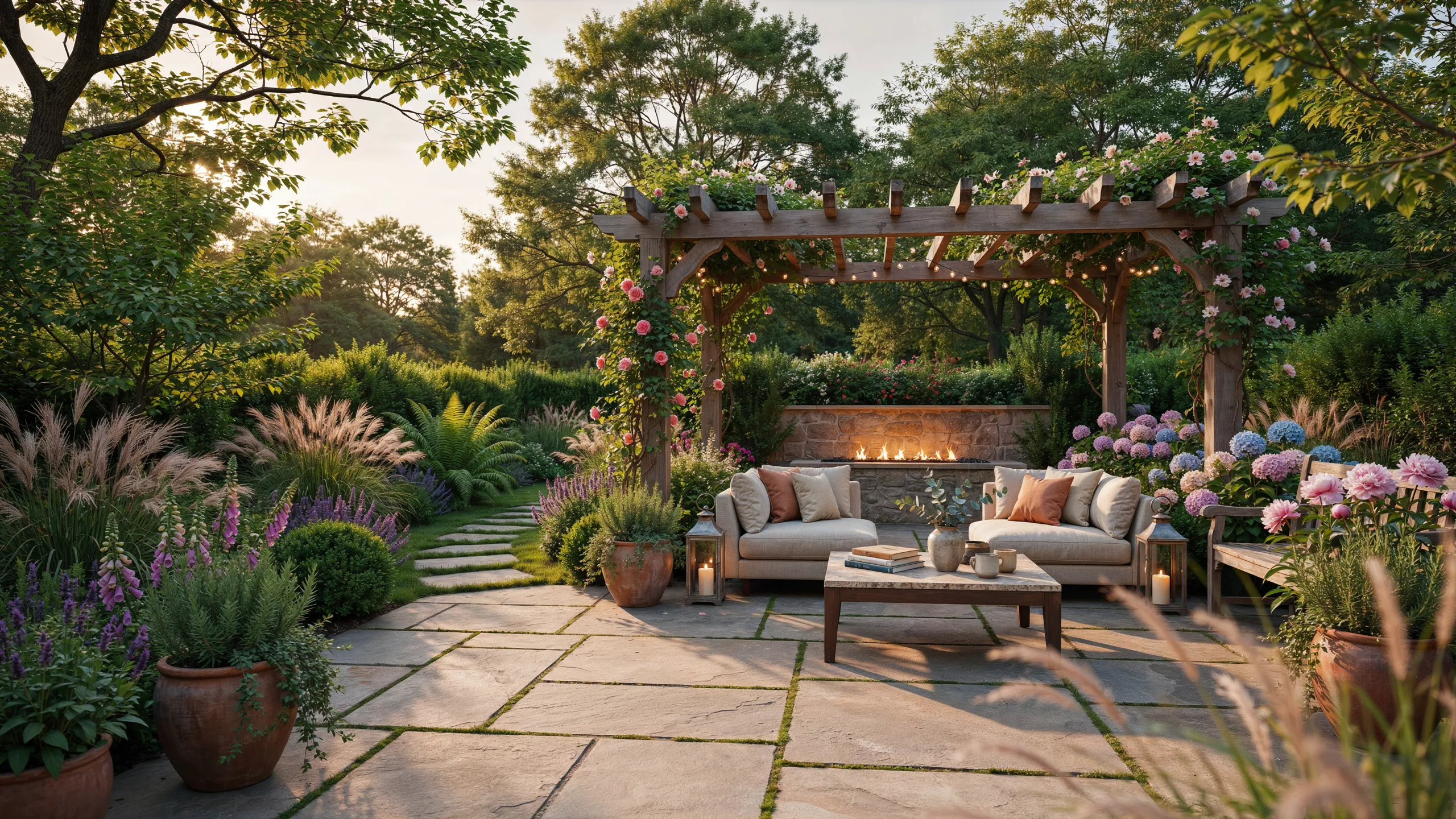
15 Outdoor Sitting Area Ideas to Create a Beautiful and Cozy Backyard Retreat
A beautiful garden isn’t defined by colorful flowers or a perfectly trimmed lawn alone. The best outdoor spaces also give you a comfortable place to relax, and these outdoor sitting area ideas can help you turn an unused corner of your garden into a space you’ll actually want to enjoy.
Picture a peaceful weekend morning with a warm cup of coffee, birds singing nearby, fresh air moving through the garden, and a comfortable seat where nothing demands your attention. That’s what a thoughtfully designed outdoor sitting area can bring to your home.
A garden can look beautiful and still go mostly unused if there’s nowhere comfortable to sit. The good news is that creating an inviting seating space doesn’t always require a major renovation or a large budget. Whether you have a tiny patio, a narrow side yard, a spacious backyard, or a colorful cottage garden, you can create a seating area that fits your space, lifestyle, climate, and budget.
In this guide, you’ll find 15 outdoor sitting area ideas that combine comfort, style, and function. You’ll also learn how to choose the right location, select practical furniture materials, and avoid common design mistakes that can make an outdoor space less enjoyable.
Before You Choose Outdoor Sitting Area Ideas, Plan Your Space
Beautiful outdoor spaces usually start with a little planning. Before buying chairs, benches, or a pergola, think about how the area will work throughout the day and how you will actually use it.
Where Will You Feel Comfortable Throughout the Day?
Spend some time observing your yard in the morning, afternoon, and evening. A sunny corner that feels pleasant at breakfast may become uncomfortably hot by mid-afternoon, while a heavily shaded spot may feel cool or damp depending on your climate and drainage.
If your garden gets strong afternoon sun, look for locations that benefit from existing trees, fences, walls, or nearby structures. If natural shade isn’t available, consider an umbrella, pergola, canopy, or shade sail before choosing your furniture.
Is the Ground Ready for Daily Use?
Furniture placed directly on grass can work for occasional use, but wet soil can become muddy and uneven after rain. For a seating area you’ll use regularly, create a more stable surface underneath.
Gravel, pavers, natural stone, composite decking, or a properly constructed wooden platform can provide a firmer foundation than bare lawn. They can also make cleaning, drainage, and furniture maintenance easier.
How Will You Actually Use the Space?
Think about the main purpose of your seating area. You might want a peaceful reading corner, a morning coffee spot, a family gathering area, an outdoor dining space, a place for evening conversations, or simply a quiet retreat after work.
Designing around your real habits usually creates a more useful space than designing only for occasional parties.
Now let’s look at 15 outdoor sitting area ideas you can adapt to your own garden.
1. Create a Charming Bistro Corner for Small Gardens
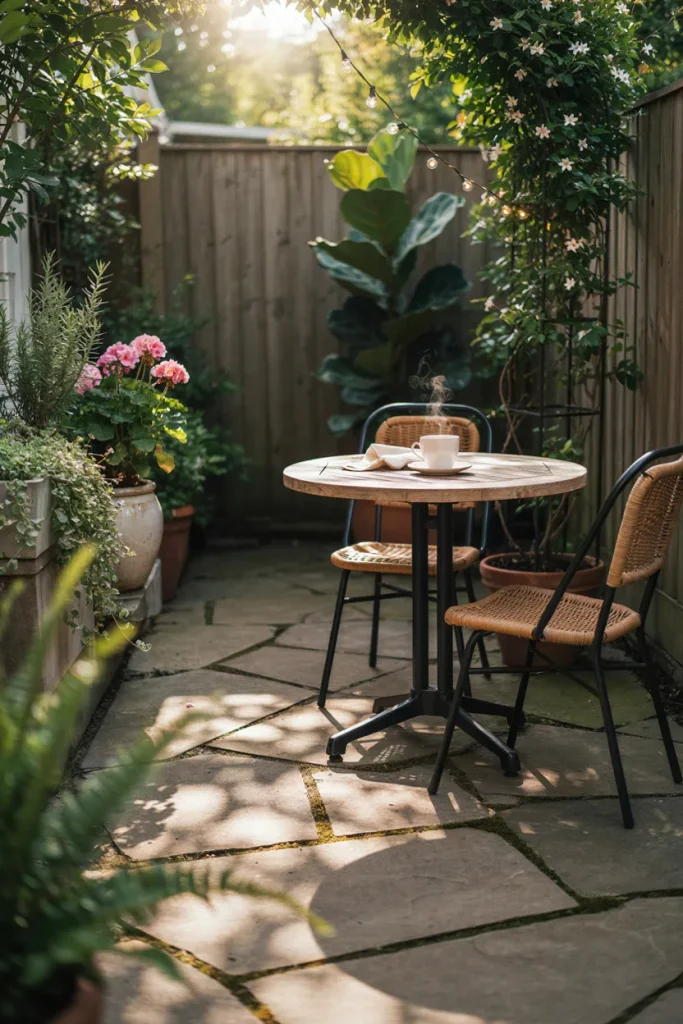
Small outdoor spaces can still have a comfortable and attractive sitting area. A compact bistro set with a small round table and two chairs creates a simple destination for breakfast, coffee, reading, or conversation without taking up much floor space.
This layout works especially well for apartment patios, small balconies, courtyards, side gardens, and tiny backyard corners.
Choose weather-resistant furniture designed for outdoor use, then soften the space with a small outdoor rug or a couple of potted plants.
Place your bistro set where you can enjoy your favorite garden view rather than simply choosing the spot closest to the house. Even a small seating area feels more intentional when it has a pleasant view.
2. Build a Bench That Becomes Part of the Garden
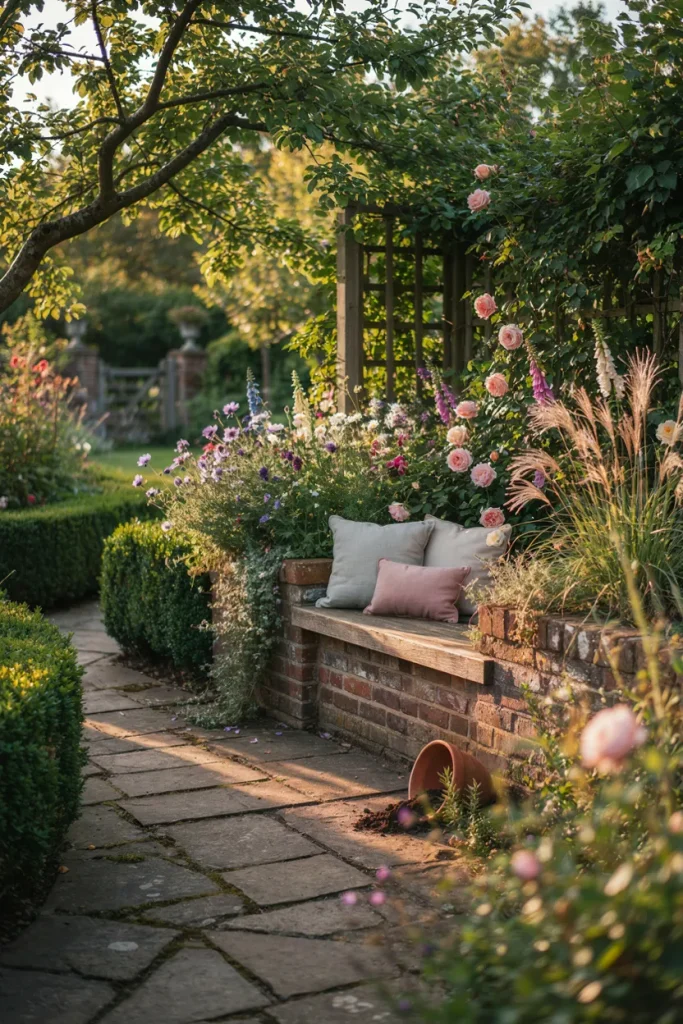
Sometimes the most useful outdoor seating doesn’t need to be movable. A built-in bench can blend into the landscape while making efficient use of limited space.
You can position one along a retaining wall, raised flower bed, fence, or garden border.
A well-designed built-in bench can make use of awkward spaces, provide seating without several separate chairs, include storage beneath the seat, and become a permanent part of your garden layout.
Cedar, teak, and other outdoor-rated woods can work well, but the right choice depends on your climate, finish, maintenance preferences, and budget.
If you enjoy DIY projects and have the necessary skills, a built-in bench can be a practical way to create customized seating that fits your garden exactly.
3. Design a Fire Pit Gathering Space for Relaxed Evenings
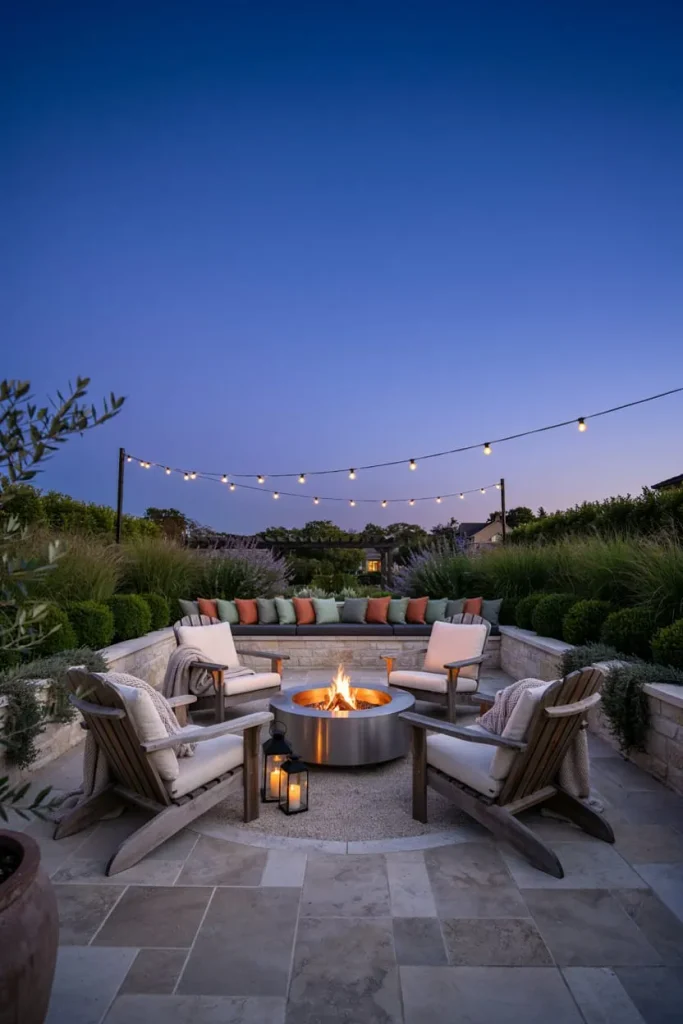
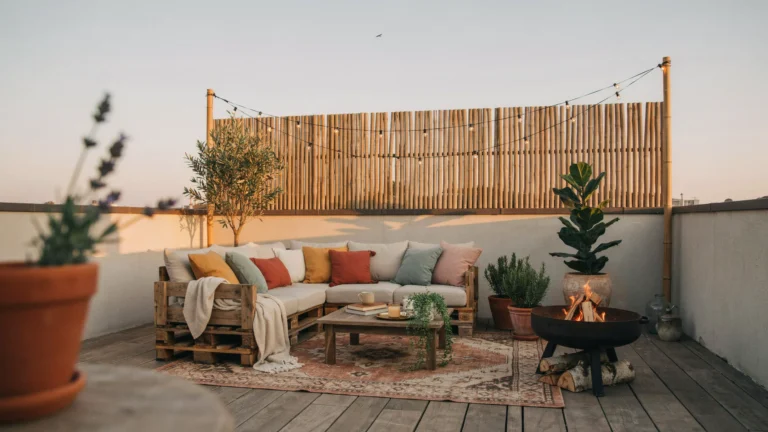
A fire pit can turn an ordinary backyard into a natural gathering spot. Whether you’re enjoying an autumn evening with friends, roasting marshmallows where permitted, or relaxing after dinner, seating arranged around a central fire feature creates an easy and social atmosphere.
Depending on your space and local regulations, you might use Adirondack chairs, lounge chairs, or curved benches. Leave enough room around the fire for safe movement and follow the clearance requirements for your specific fire feature.
Gas fire tables offer convenient operation, while wood-burning fire pits provide a more traditional experience.
Before installing or using a fire pit, check local regulations, manufacturer instructions, and property requirements. Keep the fire at the recommended distance from combustible materials, and never leave an active fire unattended.
For evening lighting, skip harsh overhead illumination and use softer ambient light instead. Lanterns, low-level lights, and carefully placed string lights can create a warmer and more comfortable atmosphere.
4. Turn a Sunny Patio into an Outdoor Living Room with a Pergola
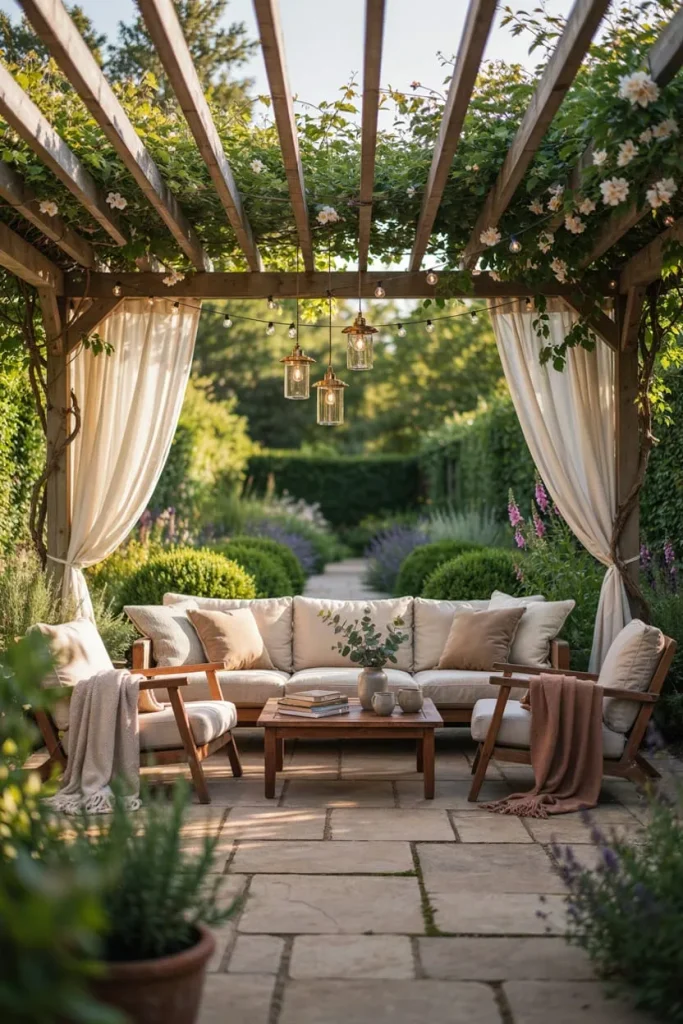
Many patios become uncomfortable on hot afternoons without enough shade. A pergola can help define an outdoor room while still allowing air and daylight to remain part of the space.
Depending on the design, you can add retractable canopies, outdoor curtains, climbing plants, hanging lanterns, string lights, or an outdoor fan where appropriate.
Climbing roses, wisteria, and clematis can add a softer garden feel when growing conditions are suitable.
Keep in mind that a pergola doesn’t automatically provide complete protection from sun or rain. Think about how much coverage you actually need before choosing one.
If a full pergola doesn’t fit your budget or available space, a shade sail or large outdoor umbrella can provide a simpler alternative.
5. Create Your Own Backyard Escape with a Hammock or Hanging Chair
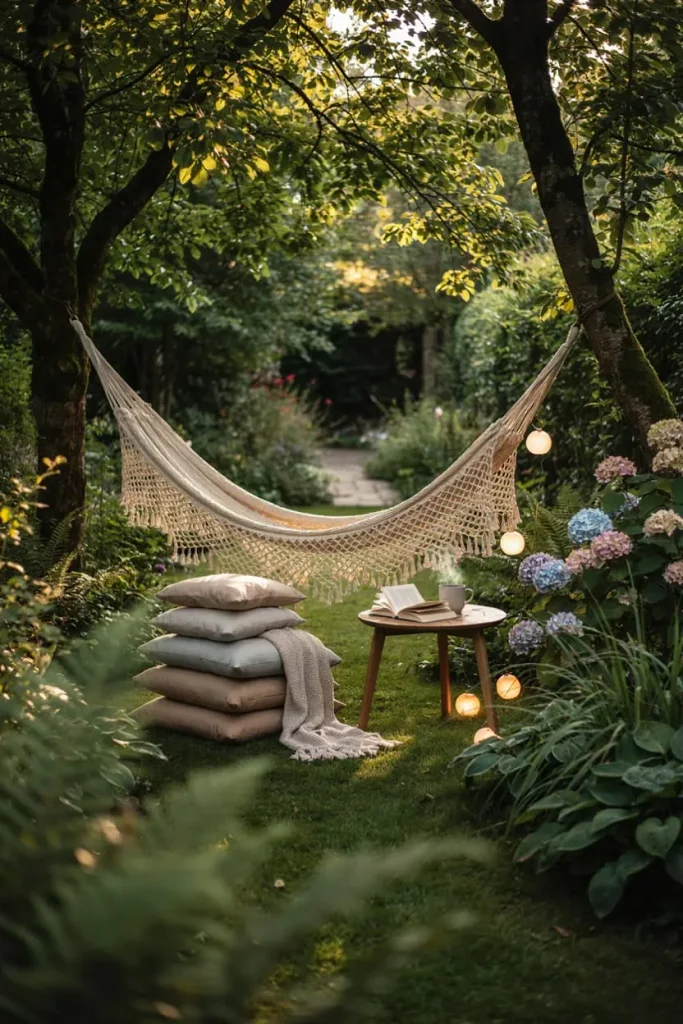
Not every outdoor sitting area needs a table and several chairs. Sometimes the entire purpose is relaxation.
A hammock between sturdy trees can create a peaceful place for reading, resting, or simply enjoying the garden. If you don’t have appropriately positioned trees, a freestanding hammock stand or hanging chair gives you more flexibility.
Complete the space with comfortable outdoor cushions, a lightweight outdoor throw, solar lanterns, a small side table, and plants that provide additional privacy.
Install hanging equipment according to the manufacturer’s instructions, and attach it only to structures capable of supporting the intended load.
A simple setup like this can create a surprisingly comfortable retreat without requiring a large furniture arrangement.
6. Add Luxury with a Sunken Conversation Area
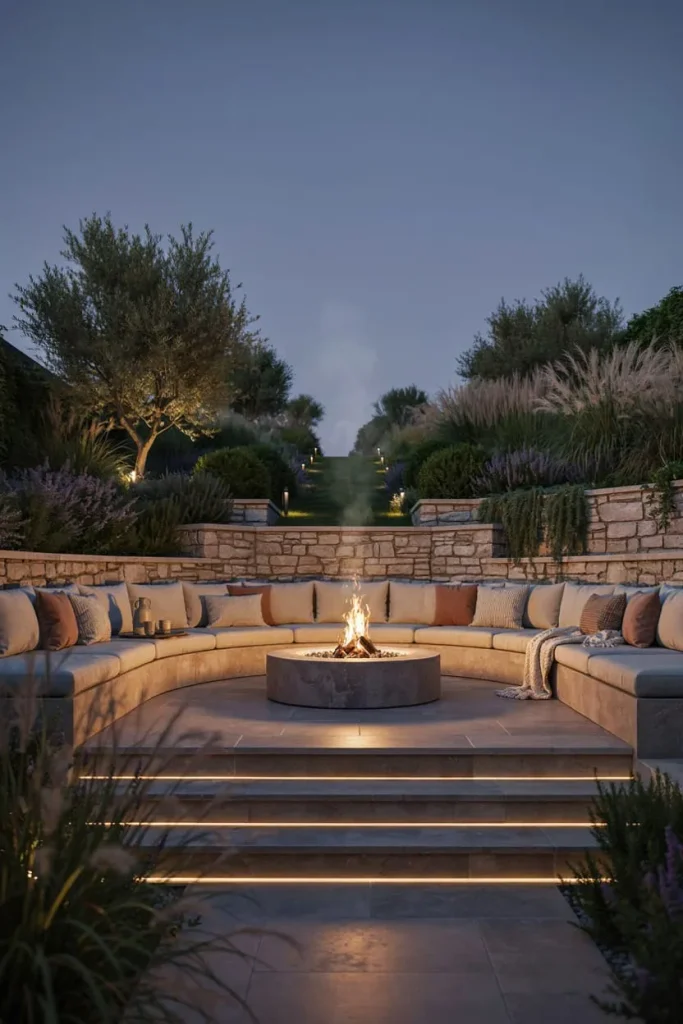
If you’re planning a larger landscape project, a sunken seating area can become a striking architectural feature.
Lowering the seating area slightly helps define it as its own outdoor room and creates a more intimate atmosphere. Built-in benches around a central coffee table or a properly designed fire feature can complete the layout.
However, this isn’t usually a simple weekend project. Excavation, drainage, retaining structures, and water management require careful planning. Depending on the project, professional design or construction may also be necessary.
For that reason, a sunken conversation area is generally better suited to larger landscape renovations than small budget makeovers.
7. Keep Bugs Out with a Screened Outdoor Lounge
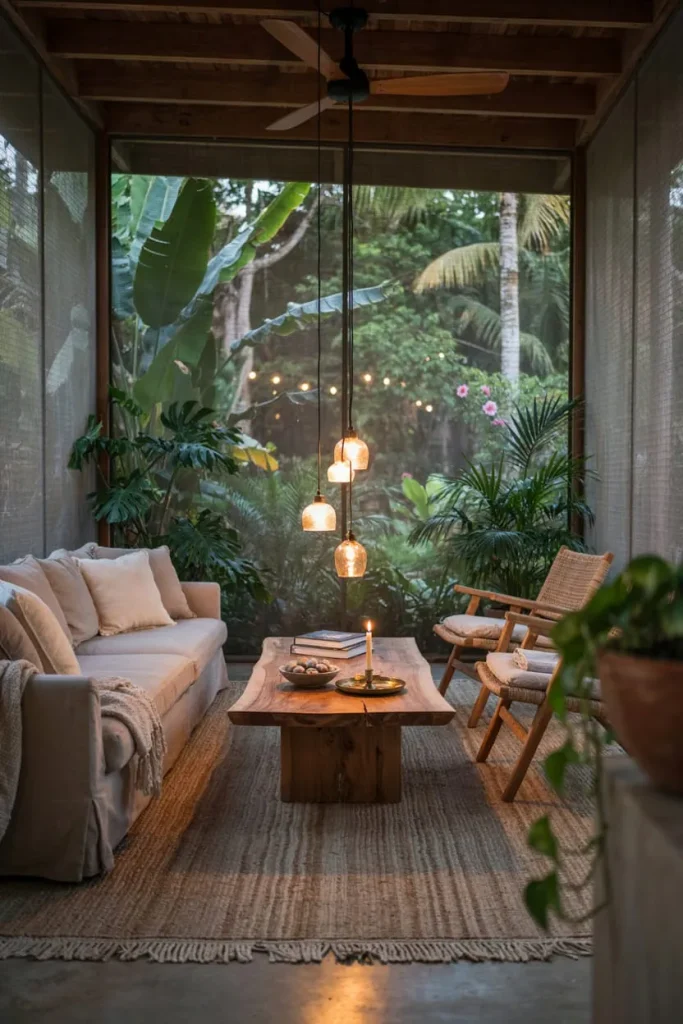
For many homeowners, insects can make warm evenings outdoors much less enjoyable. A screened porch, gazebo, or similar protected structure can create a more comfortable space while reducing exposure to flying pests.
Furnish the area much like an indoor living room with comfortable outdoor seating, an outdoor rug, accent lighting, decorative pillows, a ceiling fan where suitable, and a small coffee table.
Because the space is partly protected from the weather, furniture and cushions may also receive less direct rain and sunlight.
If you live in a humid climate, make sure the structure has good airflow and choose materials that can handle local conditions.
8. Build a Peaceful Reading Corner Surrounded by Nature
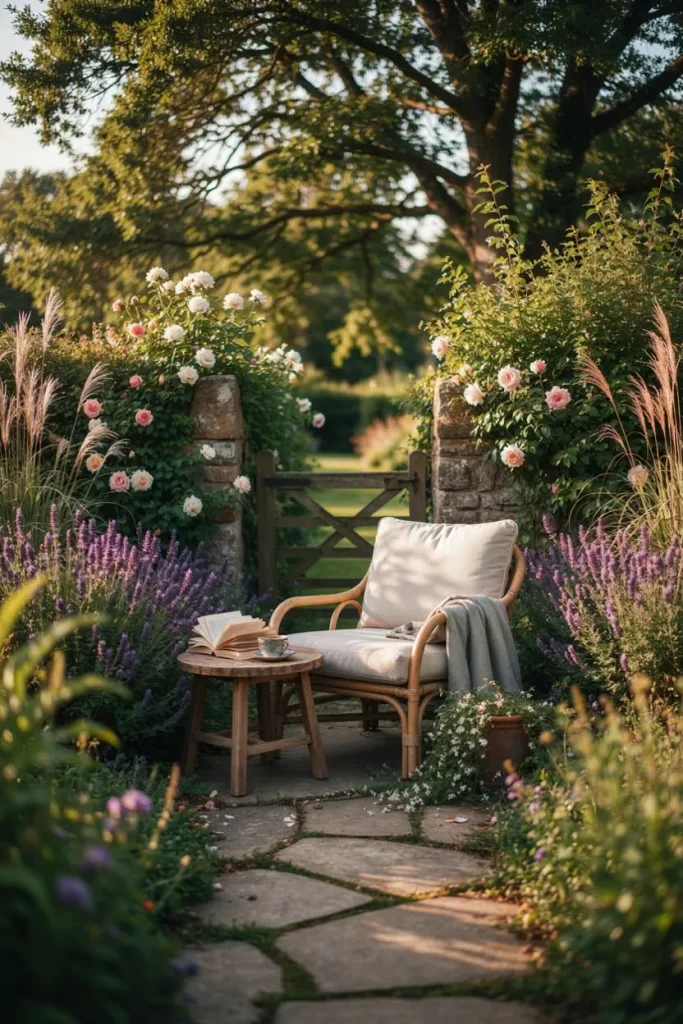
Not every garden needs to host a crowd. Sometimes one comfortable chair is enough.
Choose a quiet corner away from busy walkways and surround it with plants that thrive in your area. Fragrant flowers, ornamental grasses, flowering shrubs, and container plants can all help create a relaxing atmosphere.
Lavender, jasmine, rosemary, and climbing roses can add fragrance where the climate allows them to thrive.
Add a comfortable lounge chair, a small side table for books or drinks, and soft evening lighting.
For an extra touch, face the chair toward a favorite garden feature such as a flower bed, bird feeder, fountain, or mature tree. A pleasant view can make even a simple seating area feel much more inviting.
9. Divide Your Patio into Dining and Lounge Zones
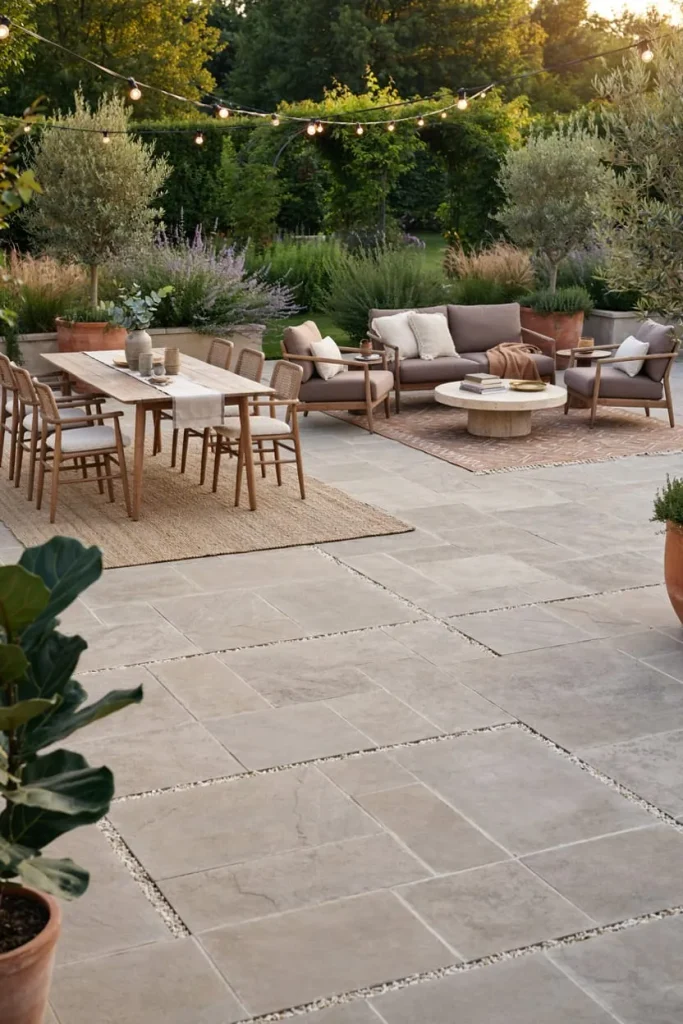
A common outdoor layout problem is asking one furniture arrangement to do everything.
A dining table works well for meals but isn’t always the most comfortable place to relax afterward. Deep lounge seating has the opposite problem.
If you have enough space, divide your patio into two zones. Place a dining table on one side and a lounge area with sofas, armchairs, or Adirondack chairs on the other.
This makes the space feel more organized and allows each area to serve a clear purpose.
For comfortable movement, leave clear space between furniture pieces and along the main walking routes. About 36 inches, or 91 cm, is a useful starting point for many main walkways, although the ideal clearance depends on your furniture, layout, accessibility needs, and local requirements.
An outdoor rug under each zone can also help separate the spaces visually without adding permanent walls.
10. Stay Cool on a Budget with a Shade Sail
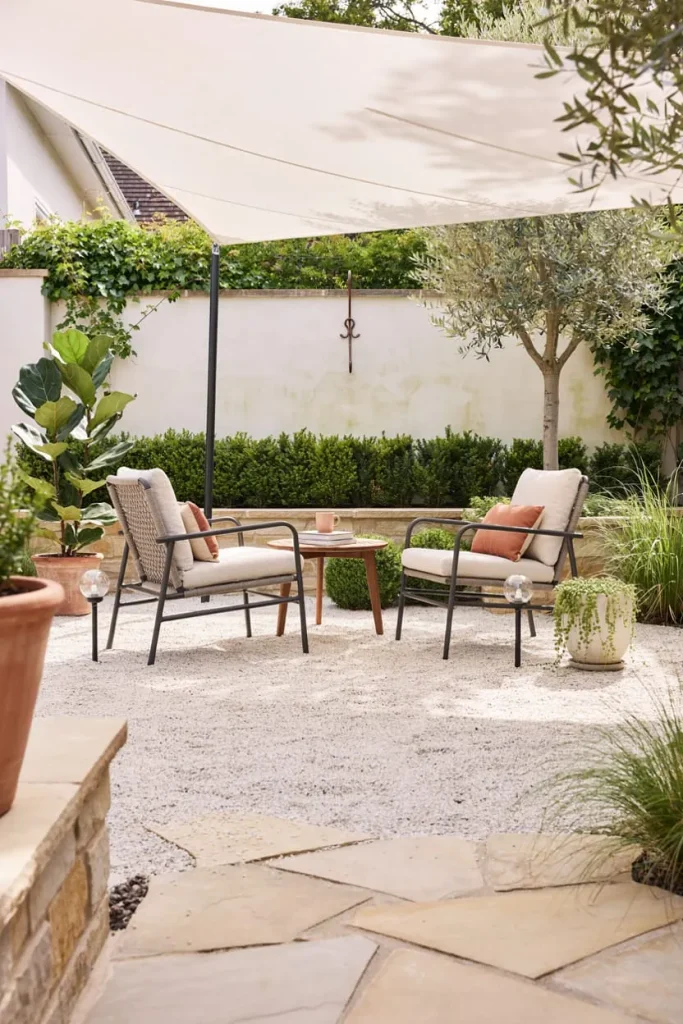
A pergola isn’t the only way to add shade. Shade sails can provide overhead coverage without requiring the structure or cost associated with some permanent options.
They’re particularly useful for small patios, decks, poolside seating areas, courtyards, and outdoor play spaces.
Shade sails come in different shapes, sizes, and fabrics. Installation is easier when suitable anchor points already exist, but those anchor points need to be strong enough for the product and local weather conditions.
If your area receives intense sunlight, look for outdoor-rated fabric with good UV resistance. If rain protection is important, choose a product specifically designed to provide it rather than assuming every shade sail is waterproof.
11. Hide a Garden Bench Among Flowers
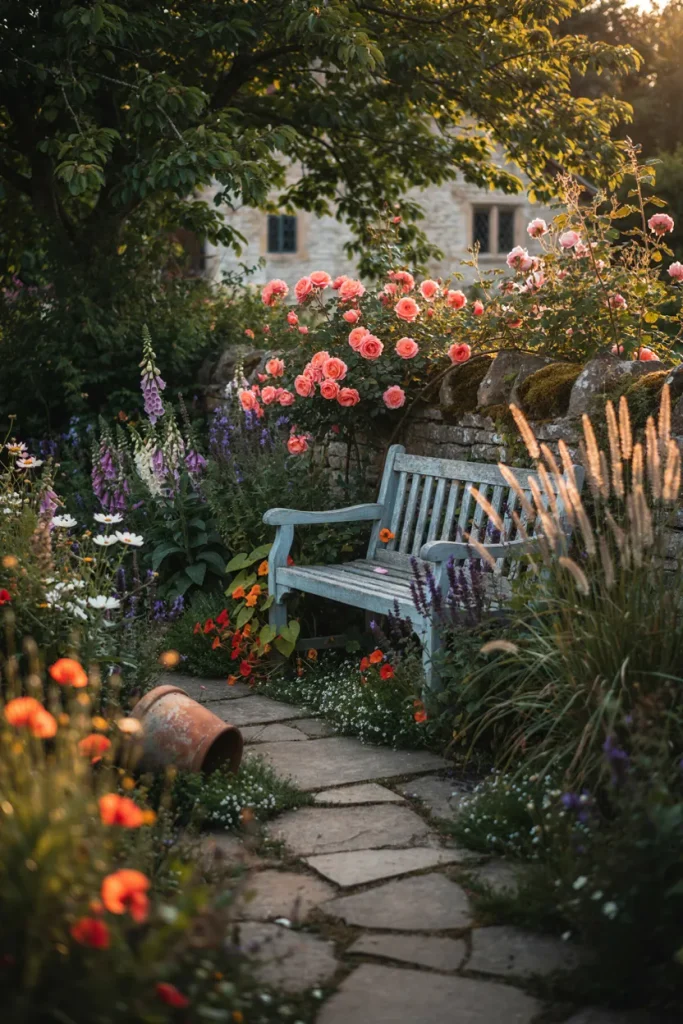
Some seating areas are designed for conversation. Others are meant for quiet reflection.
A single wooden or metal bench tucked among flowering plants can create a peaceful destination within the garden. Frame it with seasonal blooms, ornamental grasses, climbing plants, or flowering shrubs to create a stronger sense of enclosure.
This idea works especially well in cottage-style gardens, English-inspired gardens, butterfly gardens, and larger landscaped yards.
Instead of placing the bench directly beside the entrance, position it somewhere visitors naturally discover as they explore the garden. That small element of discovery can make the seating area feel more connected to the landscape.
12. Make Water the Center of Attention
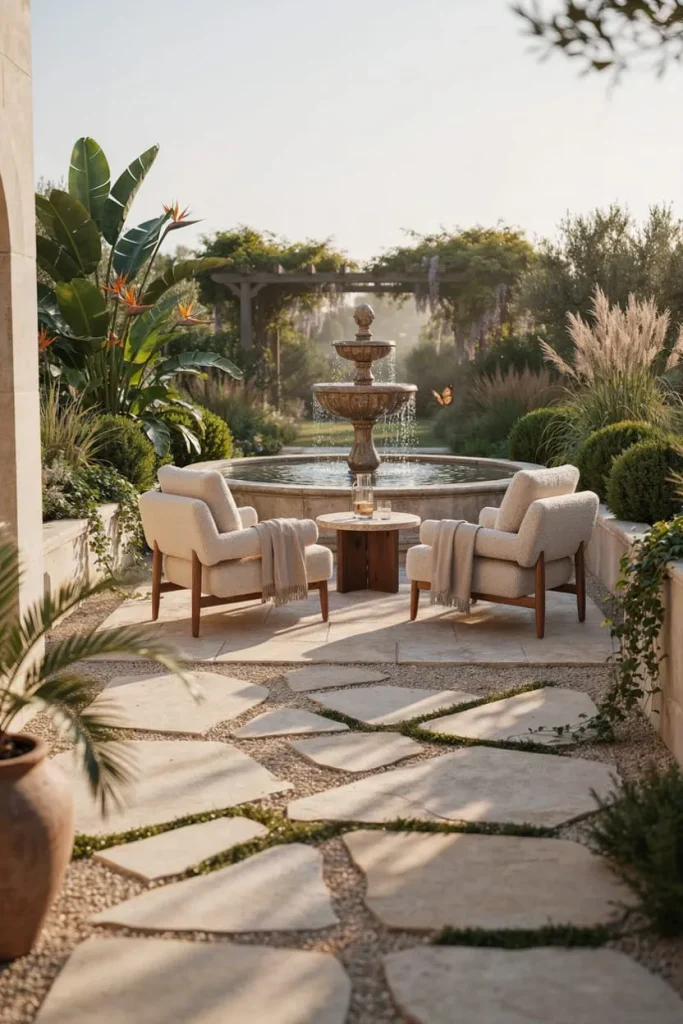
Water features can serve as natural focal points. If your garden already has a fountain, pond, waterfall, or swimming pool, arrange the seating so people can comfortably see and enjoy it.
Furniture can accidentally block the view of a garden’s most attractive features, so consider sightlines before finalizing your layout.
If the seating area will be close to water, choose materials suited to wet conditions. Quick-drying cushions and removable covers can also make maintenance easier.
For poolside seating, leave enough clear space for safe movement and easy access.
13. Build a Multi-Level Deck That Defines Different Experiences
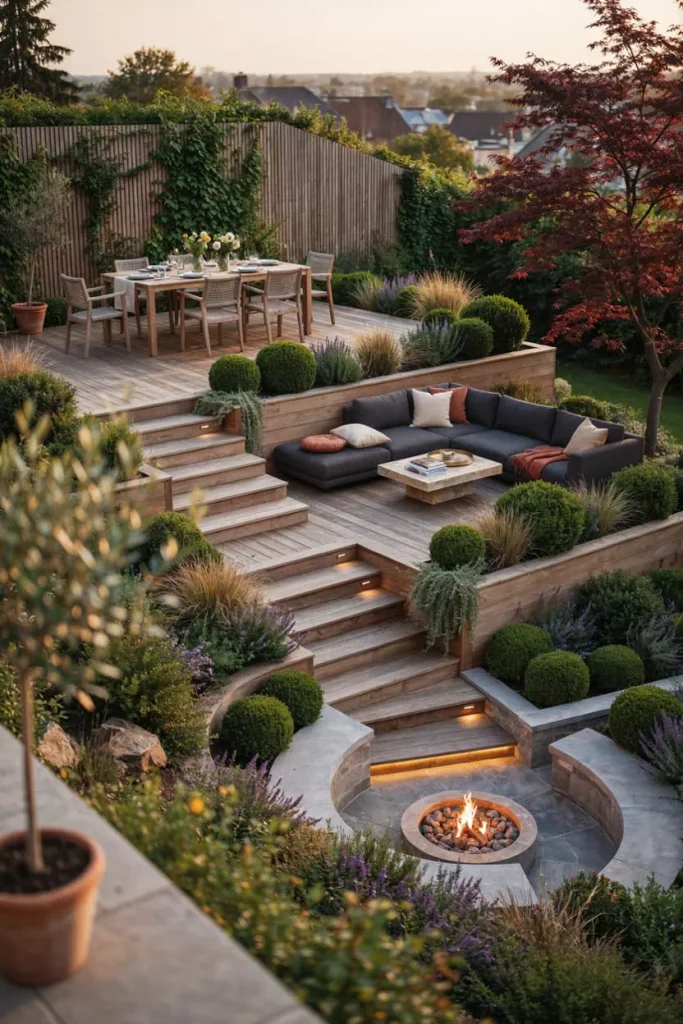
Sloped gardens can be challenging to arrange, but different elevations can also help separate activities naturally.
A multi-level deck or terrace can create distinct areas for outdoor dining, lounging, fire features, or garden seating. Steps with integrated planters can connect the different levels while adding visual interest.
This layered approach can make a sloped garden feel more organized and intentional.
However, multi-level decks involve structural, drainage, and safety considerations. Depending on the project and local requirements, professional design or construction may be appropriate.
Because of the cost and complexity involved, this idea is generally better suited to larger landscape projects.
14. Choose Modular Furniture That Grows with Your Needs
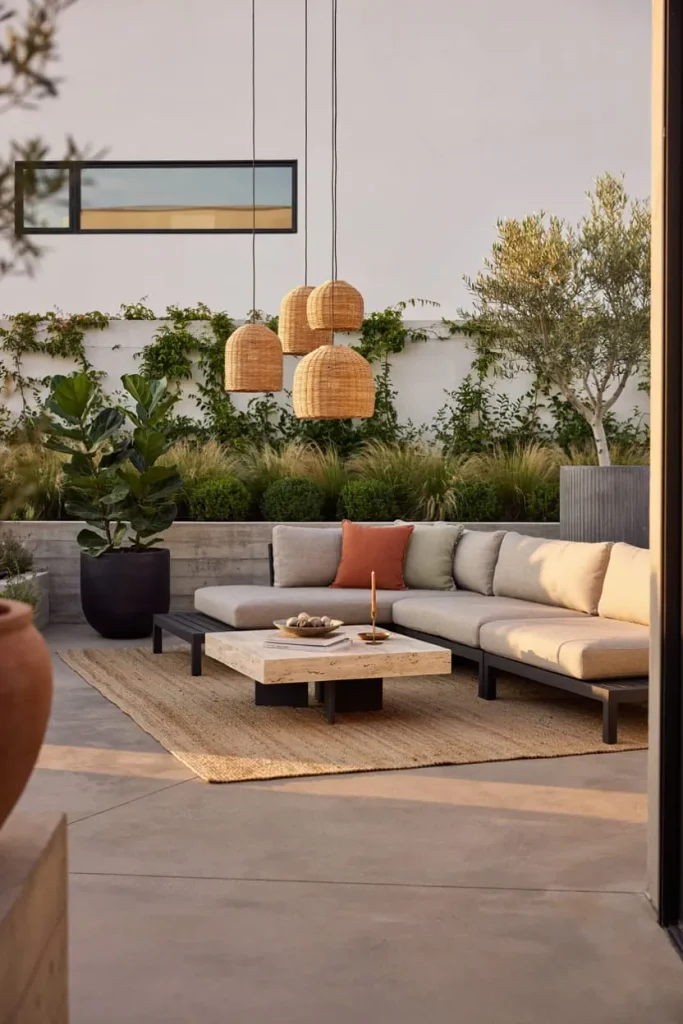
Your seating needs can change depending on the occasion. Modular sectionals allow you to rearrange individual pieces to match the way you’re using the space.
Hosting a larger gathering? Combine the pieces into one large conversation area.
Enjoying a quiet weekend? Separate them into smaller seating groups.
This flexibility is especially useful if you frequently entertain or enjoy changing your outdoor layout.
When shopping for modular furniture, look for weather-resistant frames and removable cushion covers that are practical to clean and store.
15. Add Timeless Charm with a Swing Bench
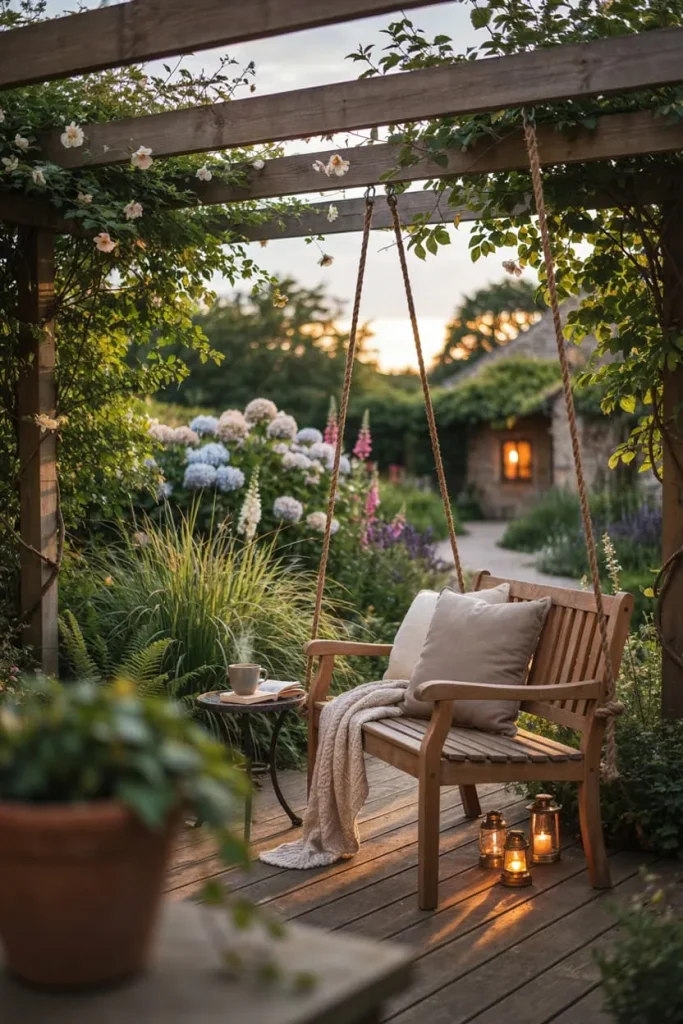
Few outdoor seats create the same relaxed feeling as a gently swaying bench.
A swing can hang beneath a covered porch, attach to a properly engineered structure, or stand on its own freestanding frame.
It’s a natural spot for morning coffee, reading, sunset conversations, watching children play, or simply enjoying the fresh evening air.
Always follow the manufacturer’s installation requirements, check the weight capacity, and make sure the supporting structure and hardware are appropriate for the swing.
A well-placed swing can become both a practical seat and a memorable feature of your garden.
Which Outdoor Sitting Area Ideas Work Best for Different Gardens?
Choosing between different outdoor sitting area ideas becomes easier when you match the design to your available space and the way you expect to use it.
| Garden Size or Need | Seating Option to Consider |
| Tiny Balcony | Bistro Set |
| Small Backyard | Built-in Bench or Reading Corner |
| Medium Garden | Pergola Lounge or Fire Pit |
| Large Backyard | Multi-Zone Patio |
| Larger Landscape Project | Sunken Conversation Area |
| Family-Friendly Yard | Fire Pit with Flexible Seating |
| Budget Garden | Shade Sail with Bistro Set |
These aren’t strict rules. A small garden can hold more than one type of seating, while a large backyard may work better with a single well-planned area.
The best choice depends on your space, climate, budget, maintenance preferences, and everyday habits.
Choosing the Best Outdoor Furniture Material for Your Space
Outdoor furniture performance depends on more than the material itself. Climate, construction quality, protective finishes, maintenance, and exposure to sunlight and moisture all affect how long a piece remains attractive and functional.
| Material | General Characteristics | Maintenance Considerations | Often Suited To |
| Teak | Naturally durable outdoor wood | Periodic cleaning; appearance changes over time | Premium outdoor seating and natural garden styles |
| Powder-Coated Aluminum | Lightweight and generally rust-resistant | Easy to clean; inspect the finish for damage | Rainy, humid, or coastal settings |
| Resin Wicker | Lightweight and available in many styles | Clean regularly and protect cushions when needed | Patios, pool areas, and family spaces |
| Cedar | Natural wood with a warm appearance | Requires appropriate exterior protection and care | DIY benches and garden settings |
| Wrought Iron | Heavy and traditional | May need protection against rust and finish damage | Traditional and cottage-style gardens |
| Plastic Resin | Lightweight and generally low-maintenance | Simple cleaning; quality varies by product | Budget-conscious outdoor spaces |
Rather than choosing whatever is advertised as the best option, consider your local weather, how often you’ll use the furniture, how much maintenance you’re willing to do, and whether you’ll need to move or store it seasonally.
8 Common Mistakes to Avoid When Using Outdoor Sitting Area Ideas
Even attractive furniture can become frustrating when the layout doesn’t match the way you use the space. Avoid these mistakes before spending money.
1. Ignoring Sun Exposure
A spot that’s perfect in the morning can become unbearable by mid-afternoon. Observe the area at different times of day before deciding where your furniture should go.
2. Buying Furniture That’s Too Large
Oversized sectionals can overwhelm small patios and leave little room to move. Measure your space and compare it with the furniture dimensions before buying.
3. Forgetting Lighting
Without suitable lighting, an outdoor sitting area becomes much less useful after sunset. Solar lights, lanterns, wall lights, and string lights can make the space more comfortable in the evening.
4. Placing Furniture Directly on Grass
Grass and soft soil can become muddy after rain and make furniture unstable. A firm surface is easier to maintain when the seating area is used frequently.
5. Choosing Cushions Without Considering Outdoor Conditions
Outdoor cushions deal with sunlight, moisture, dirt, and temperature changes. Look for fabrics and fillings designed for outdoor use, and consider removable covers for easier cleaning.
6. Ignoring Wind
Lightweight furniture can slide or tip in exposed locations. If your garden is windy, consider heavier pieces, suitable anchoring, or a more sheltered position.
7. Skipping Overhead Shade
Trees and walls can provide some shade, but they may not offer enough protection throughout the day. Even a simple umbrella can help, while larger spaces may benefit from a pergola, canopy, or shade sail.
8. Designing for Guests Instead of Yourself
A large entertaining area isn’t very useful if you rarely host. Think about how you spend most of your time outdoors and design the space around those habits.
Simple Design Tips That Make Outdoor Sitting Areas Feel More Polished
Professional-looking outdoor spaces don’t require expensive furniture. Thoughtful details often have a bigger impact.
Repeat a simple color palette throughout the space.
Mix plants with different heights and textures.
Use soft outdoor lighting instead of relying on bright floodlights.
Place planters around the seating area to create natural boundaries.
Add one focal point such as a fire feature, fountain, sculpture, or statement planter.
Layer outdoor cushions and throws for additional comfort.
Keep pathways clear so the space remains easy to navigate.
Choose furniture that’s proportional to the size of the garden.
The goal isn’t to fill every empty area. Leaving some visual and walking space can actually make a garden feel more comfortable and spacious.
Plan Your Outdoor Sitting Area Around Your Local Climate
The right outdoor sitting area depends partly on your weather. You don’t need to design for every possible condition, but you should account for the conditions your garden experiences most often.
Hot Regions
Prioritize shade, airflow, and furniture surfaces that remain comfortable under your typical sun exposure.
Cold Regions
A covered seating area, a fire feature where permitted, or a suitable outdoor heater can help extend the time you can comfortably use the space.
Rainy Areas
Look for rust-resistant furniture, quick-drying cushions, and surfaces that provide good drainage.
Coastal Locations
Salt-laden air can be harder on some outdoor materials. Choose furniture designed for coastal exposure and follow the manufacturer’s maintenance recommendations.
Create Outdoor Sitting Area Ideas on a Budget
A welcoming garden doesn’t need a major renovation. You can often create a comfortable retreat by improving one part of the garden at a time.
Consider buying quality second-hand outdoor furniture.
Refresh older furniture with suitable exterior paint.
Build a simple gravel seating area instead of choosing a more expensive hardscape.
Add inexpensive solar lighting.
Use large planters to define the seating area.
Repurpose suitable wood into a simple bench or outdoor table.
Add shade before buying more furniture.
Start with one comfortable seating area instead of trying to furnish the entire yard.
A larger budget gives you more options, but thoughtful planning can have just as much impact on how comfortable and useful your outdoor space feels.
Frequently Asked Questions About Outdoor Sitting Area Ideas
What is the cheapest way to create an outdoor sitting area?
Start with two comfortable outdoor chairs, a small table, and an inexpensive stable surface such as gravel, depending on your existing yard. A solar lantern or a few container plants can make the space feel finished without requiring a major renovation.
Which outdoor furniture lasts the longest?
Teak and well-finished aluminum are commonly chosen for long-term outdoor use, but no single material lasts longest in every environment. Longevity depends on the specific product, construction quality, climate, maintenance, protective finish, and exposure to sunlight and moisture.
How much space do I need for outdoor sitting area ideas?
It depends on the number and size of the seats, the table dimensions, and how much room you want for movement. A compact two-person setup can fit in a relatively small area, while a larger family arrangement needs more space.
Instead of relying on one universal measurement, measure the furniture you’re considering and leave comfortable clearance around it.
Should I choose a pergola or a gazebo?
A pergola is generally an open, airy structure that provides partial shade depending on its roof design, while a gazebo typically provides a more enclosed and covered space.
Choose based on how much shade, weather protection, privacy, and enclosure you want.
How can I make a small patio look larger?
Choose furniture that’s proportional to the space, keep walking routes open, avoid filling every corner, and use vertical planters or wall-mounted features where appropriate.
A simple layout with fewer, better-sized pieces often feels more spacious than a crowded arrangement.
What are the best outdoor sitting area ideas for a small backyard?
For a small backyard, focus on furniture that provides comfort without consuming too much floor space. A compact bistro set, built-in bench, reading corner, hanging chair, or small modular seating arrangement can work well.
The key is to maintain clear walking space and avoid furniture that’s oversized for the area.
How can I make an outdoor sitting area more comfortable?
Start with comfortable seating and then improve shade, lighting, privacy, and weather protection. Outdoor cushions, a small side table, plants, soft lighting, and an overhead shade option can make the space much more inviting.
Final Thoughts on Outdoor Sitting Area Ideas
The most beautiful garden isn’t necessarily the one with the biggest budget. It’s the one that makes you want to spend time outside.
The best outdoor sitting area ideas are the ones that fit the way you actually live. Whether you choose a cozy reading nook beneath a flowering tree, a fire pit for evening gatherings, a peaceful garden bench, a hammock, or a simple bistro set for morning coffee, the goal is to create an outdoor sitting area that feels comfortable, personal, and inviting.
You don’t need to transform the entire yard at once. Start with one well-planned seating area. Pay attention to sunlight, consider your local climate, choose furniture that matches your maintenance preferences, and prioritize comfort over short-lived trends.
When your outdoor space reflects the way you actually live rather than simply the way it looks in photos, you’re far more likely to use it regularly and enjoy your garden throughout the seasons.