3D Wall Art: Stunning Ideas for Choosing, Styling, and Installing Dimensional Decor
Flat walls can make a room feel unfinished, even when you’ve already hung a gallery of framed prints. That’s where 3D wall art makes a difference. Unlike traditional paintings and photographs, dimensional pieces extend from the wall, catching light from different angles, creating natural shadows, and adding a sculptural quality that flat artwork cannot provide.
If you’ve ever walked into a hotel lobby, boutique restaurant, or beautifully renovated living room and felt an immediate sense of visual impact without knowing exactly why, dimensional decor may have been part of the reason. The combination of texture, depth, light, and shadow can make an otherwise ordinary wall feel intentional and finished.
This guide covers what 3D wall art is, the most popular types, how to choose the right piece for your space, installation methods for different weights, renter-friendly options, styling ideas, maintenance, cost considerations, and the common mistakes worth avoiding.
What Is 3D Wall Art, Exactly?
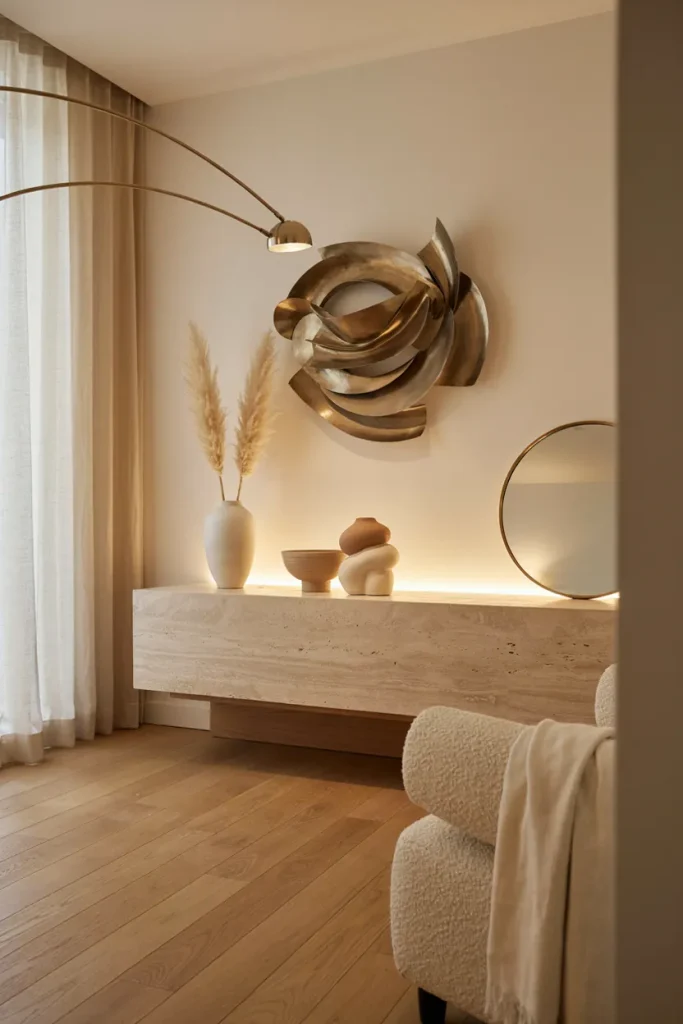
3D wall art is wall decor that physically extends outward from the wall, creating real depth rather than using printed shading or perspective to create the illusion of dimension. It can include sculptural metal pieces, layered wood panels, textured plaster artwork, woven fiber hangings, geometric wall panels, and modular systems designed to create repeating patterns.
The defining feature is physical dimensionality. A realistic canvas print of mountains is still flat, while a carved wood panel showing the same landscape has actual ridges, contours, and texture that you can see and feel.
That depth also changes how the piece looks throughout the day. Natural sunlight and artificial lighting create different highlights and shadows across the surface, giving dimensional artwork a more dynamic appearance than many flat pieces.
Why 3D Wall Art Works So Well in Home Decor
One reason designers and homeowners use dimensional pieces is that they can add visual interest without filling an entire wall with multiple frames. If you’re also exploring how to choose and arrange artwork for a living room, see our guide to Living Room Wall Art for practical styling and placement ideas. A single sculptural piece can act as a focal point while keeping the rest of the room relatively simple.
Texture is another major advantage. A room filled with smooth surfaces such as painted walls, glass, polished furniture, and hard flooring can sometimes feel visually flat. Adding wood, woven fibers, plaster, or textured metal introduces another layer of contrast.
Some textured materials can also contribute modestly to sound absorption. Woven fibers, felt, and certain wood-based surfaces may absorb more sound than smooth glass or highly reflective surfaces. However, decorative wall art should not be treated as a substitute for purpose-built acoustic panels when meaningful sound control is needed.
Types of 3D Wall Art
The material you choose affects the appearance, weight, maintenance, durability, and overall cost of the piece. Here are some of the most common options to consider.
Metal Wall Sculptures

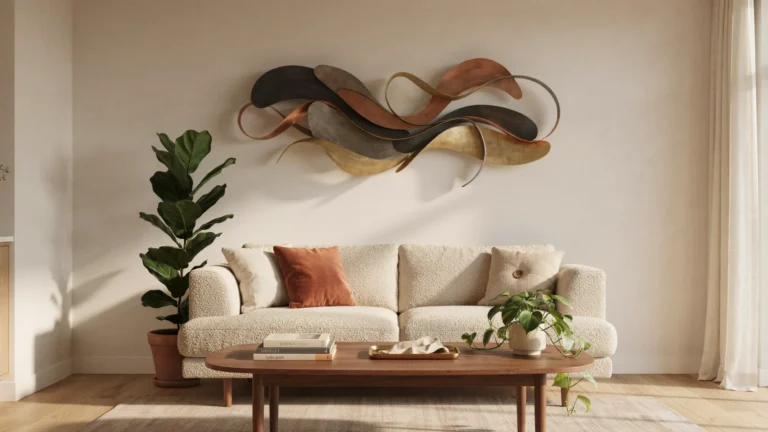
Metal wall sculptures are popular in modern, industrial, contemporary, and transitional interiors. Common materials include aluminum, steel, iron, and brass.
Metal can create a strong visual statement without necessarily taking up much physical space. Matte black, brushed metal, brass, and bronze finishes can each create a different effect, from understated and modern to warm and decorative.
Before buying a large metal sculpture, check its actual weight and hanging hardware rather than judging its weight by appearance.
Wood Panel Art

Carved, layered, and assembled wood panels bring warmth and natural texture to a room. They work particularly well with farmhouse, Scandinavian, rustic, Japandi, and mid-century-inspired interiors.
Wood also gives you plenty of visual variation. A deeply carved panel creates stronger shadows, while thin layered panels offer a more subtle dimensional effect.
Large solid-wood pieces can be surprisingly heavy, so the mounting system should always be selected according to the actual weight and wall construction.
Woven and Macramé Wall Hangings
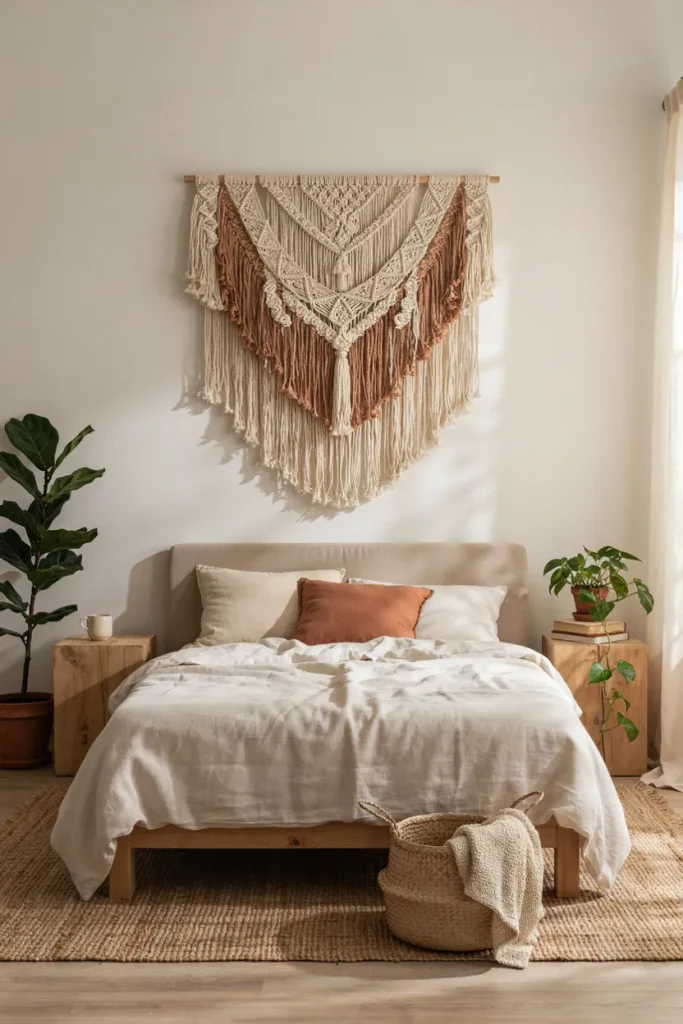
Macramé and woven fiber art add softness and texture, making them useful in boho, coastal, organic, and relaxed interiors.
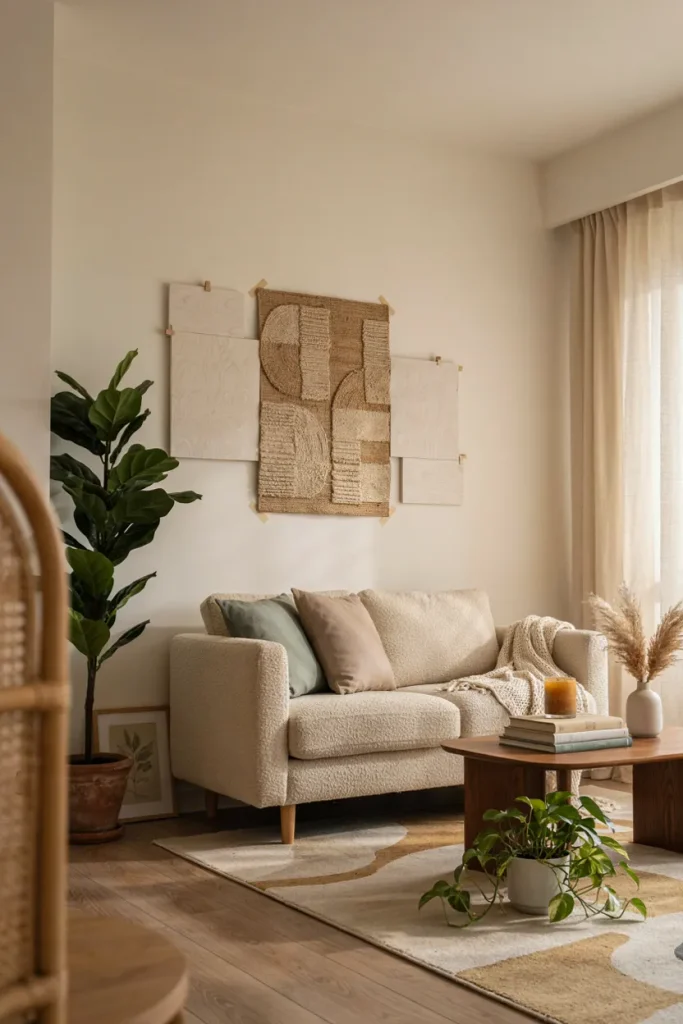
They are often lighter than metal, wood, or plaster pieces, which can make them especially practical for renters or anyone who wants a relatively simple installation.
Their softer texture also provides contrast against harder materials such as leather, tile, glass, and polished metal.
Geometric and Modular Wall Panels

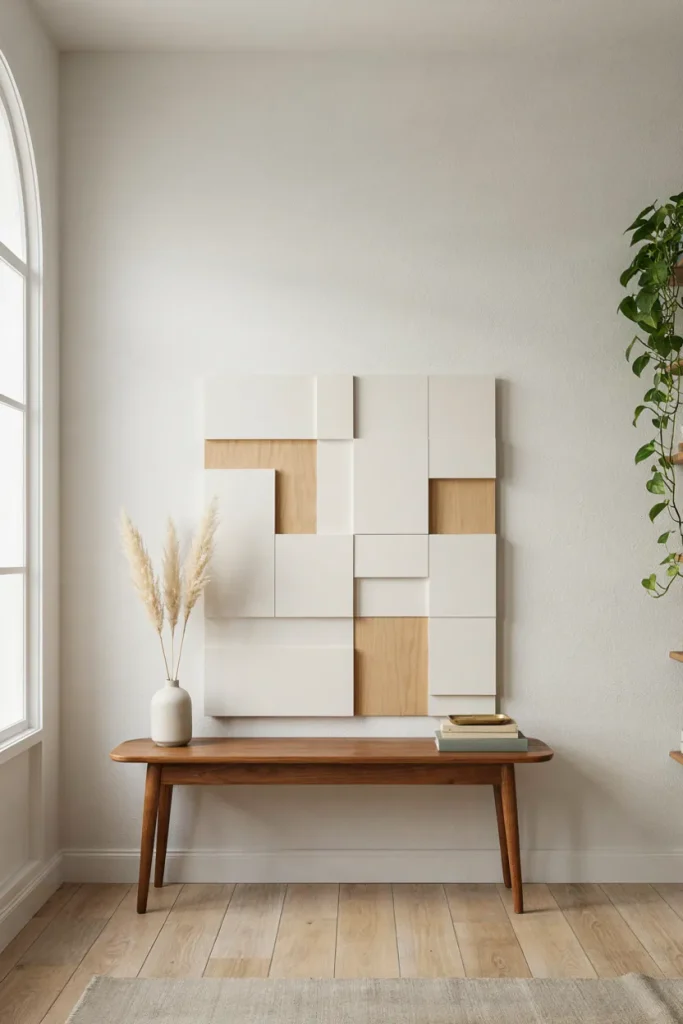
Geometric wall panels use repeating shapes such as arches, hexagons, squares, waves, or angular forms to create a larger visual composition.
Because individual panels can often be arranged in different configurations, they work well for accent walls behind sofas, beds, desks, and televisions.
The key is planning the overall arrangement before attaching anything to the wall. A small mistake in spacing can become very noticeable when several identical shapes are installed together.
Plaster and Textured Relief Art

Plaster relief artwork has a distinctly organic appearance and is often associated with contemporary, minimalist, and organic-modern interiors.
Its irregular surfaces can resemble landscapes, waves, stone, or abstract topographic forms. Handmade pieces can also have subtle variations that make them feel more individual than mass-produced decor.
The downside is fragility and weight. Plaster pieces require careful handling, and larger works may need more substantial mounting hardware.
DIY and Upcycled 3D Art
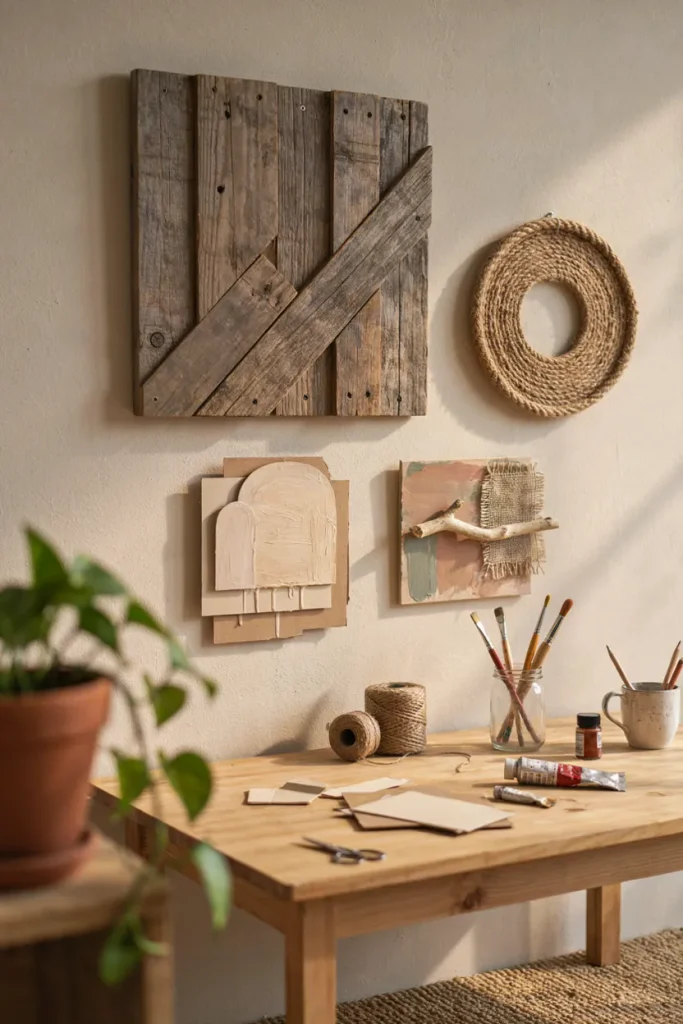
DIY 3D wall art can be made from reclaimed wood, rope, plaster, cardboard, fabric, paper, or other materials.
This approach is useful when you want a custom look without paying for a large finished piece. It also gives you control over the dimensions, colors, and textures.
The trade-off is time. A DIY project may cost less in materials but require considerably more effort, especially when creating a large or detailed design.
Which Type of 3D Wall Art Fits Your Space?
| Material Type | Typical Price Range | Weight | Best For | Maintenance |
| Metal sculpture | 80–500 | Light to medium | Modern, industrial, transitional | Occasional dusting |
| Wood panel | 60–400 | Medium to heavy | Farmhouse, Scandinavian, mid-century | Dust regularly; avoid excessive moisture |
| Macramé/woven | 25–150 | Very light | Boho, coastal, rentals | Gentle vacuuming or dusting |
| Geometric/modular panels | 100–600 per set | Light to medium | Contemporary rooms and accent walls | Dry cloth |
| Plaster/textured relief | 200–1,200+ | Medium to heavy | Organic modern, high-end interiors | Careful dry dusting |
| DIY/upcycled | 10–100 in materials | Varies | Budget projects and custom decor | Depends on materials |
Prices vary significantly by size, material, craftsmanship, brand, and whether the artwork is handmade or mass-produced. Use these figures as general planning ranges rather than fixed market prices.
How to Choose the Right 3D Wall Art for Your Room
Choosing dimensional artwork is about more than finding a design you like. Scale, lighting, color, wall construction, and the surrounding furniture all affect whether the finished result feels balanced.
Start With the Wall and Furniture Size
One of the most common mistakes is choosing artwork that is too small for the wall.
When placing art above a sofa, bed, or console, a useful starting point is to choose a piece or arrangement that is roughly 60 to 75 percent of the furniture’s width. The exact proportion does not need to be mathematical, but the artwork should have enough visual presence to relate to the furniture below it.
For an empty wall, consider the available wall area and the scale of nearby furniture rather than automatically choosing the largest piece available.
Consider the Direction of Light

Lighting is especially important with dimensional artwork because shadows are part of its visual appeal.
A piece illuminated from the side can reveal texture and depth much more clearly than one lit evenly from directly in front. Wall sconces, directional track lighting, or adjustable lamps can help emphasize the contours of sculptural pieces.
If you’re investing in a statement piece, consider how natural daylight and your existing artificial lighting will interact with it before finalizing its position.
Match the Color Palette, Not Just the Style
A piece can match your decorating style and still look wrong if its color undertones clash with the room.
For example, cool silver may feel disconnected in a room dominated by warm woods and cream tones, while warm brass can stand out awkwardly against a palette built around cool gray and blue.
Look at the undertones of your walls, flooring, furniture, and lighting finishes before choosing the artwork.
Think About the Room’s Function
Different rooms can benefit from different levels of visual activity.
Bedrooms generally work well with softer textures and quieter compositions. Living rooms and entryways can accommodate larger statement pieces. Home offices may benefit from structured geometric patterns, while dining areas can handle more sculptural or decorative artwork.
The goal is not to follow a strict rule but to match the visual energy of the artwork to the way you use the room.
How to Install 3D Wall Art Safely
Installation is one of the most important parts of working with dimensional decor. The correct hardware depends on the item’s weight, the wall material, the hanging mechanism, and the location of the piece.
Lightweight Pieces
Lightweight pieces may be suitable for adhesive picture-hanging products, small hooks, or nails, depending on the manufacturer’s instructions and your wall surface.
Always check the rated weight capacity of the specific hanging product. Do not assume that a product designed for a lightweight frame will safely hold a heavier sculptural piece.
Medium-Weight Pieces
For medium-weight artwork, use hardware designed for the item’s actual weight and your specific wall type.
Where possible, attaching the hardware to a wall stud provides a stronger mounting point. If the ideal location does not line up with a stud, use an appropriate drywall anchor or other fastener rated for the load.
Heavy Pieces
Large wood panels, substantial metal sculptures, and plaster reliefs require more careful planning.
Whenever possible, attach heavy artwork to wall studs. For larger pieces, a French cleat can distribute the load across a wider area and provide a secure mounting method when the artwork is designed to accommodate one.
Do not rely on a generic drywall anchor simply because its advertised weight capacity appears to match the artwork. Wall condition, anchor type, installation quality, and how the load is distributed all affect real-world performance.
Renter-Friendly Installation
Renters have fewer options, but that does not mean every dimensional piece is off-limits.
Lightweight macramé, woven art, and small decorative panels may work with removable hooks or hanging strips when the product is specifically rated for the item’s weight and wall surface.
For anything substantial, avoid taking unnecessary risks with adhesive products. A fallen piece can damage both the artwork and the wall.
If drilling is not allowed, you can also create a dimensional effect with lightweight removable wall panels, textured removable decor, or 3D-effect wallpaper.
Common 3D Wall Art Mistakes to Avoid
Hanging It Too High
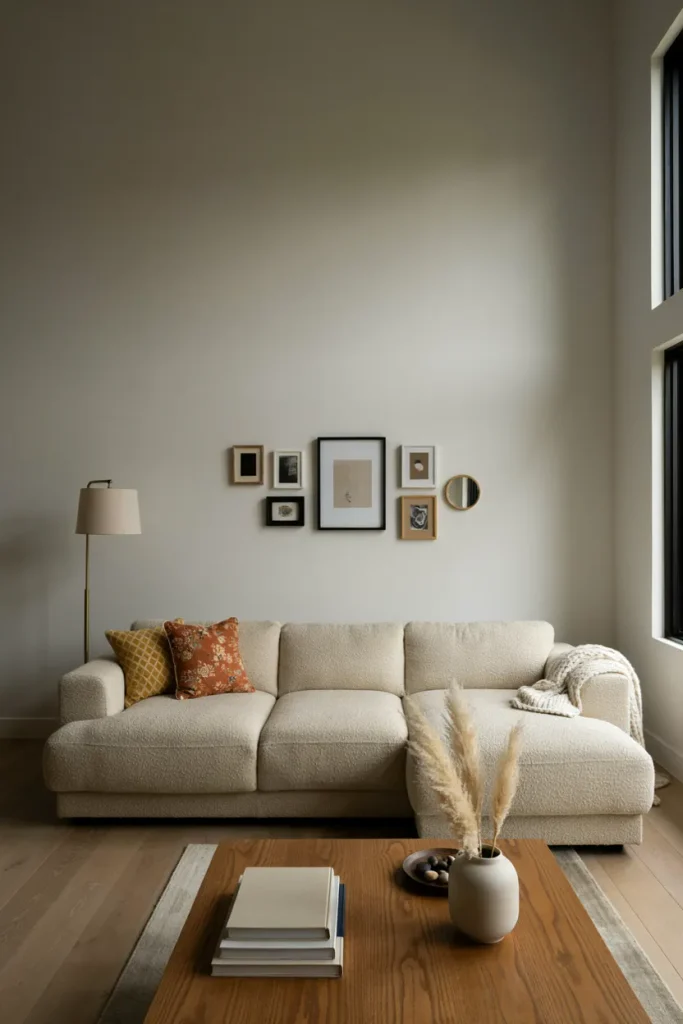
Artwork is often positioned too close to the ceiling, making the wall feel disconnected from the furniture below.
For artwork displayed at eye level, the center is often placed around 57 to 60 inches from the floor. When hanging artwork above furniture, the relationship between the artwork and furniture usually matters more than a fixed measurement. A gap of roughly 6 to 8 inches is a useful starting point; then adjust based on the scale of both pieces.
Ignoring the Weight Rating
Never estimate weight based only on appearance.
A hollow-looking sculpture may have a heavy metal frame or solid backing. Check the manufacturer’s listed weight and choose hardware with an appropriate load rating for your wall type.
Ignoring Shadow Direction
If the piece was chosen for its texture and depth, installing it where the surface receives almost no directional light can reduce much of its visual impact.
Before permanently installing it, observe the wall at different times of day if possible.
Overcrowding the Wall
Dimensional artwork already has physical presence. Adding several competing pieces immediately around it can make the wall feel busy.
In many rooms, one strong sculptural piece with generous negative space will have more impact than a collection of unrelated objects.
Skipping the Stud Check
For heavier pieces, finding the studs before installation can prevent avoidable problems. A stud finder is inexpensive compared with repairing a damaged wall or replacing broken artwork.
Choosing the Wrong Scale
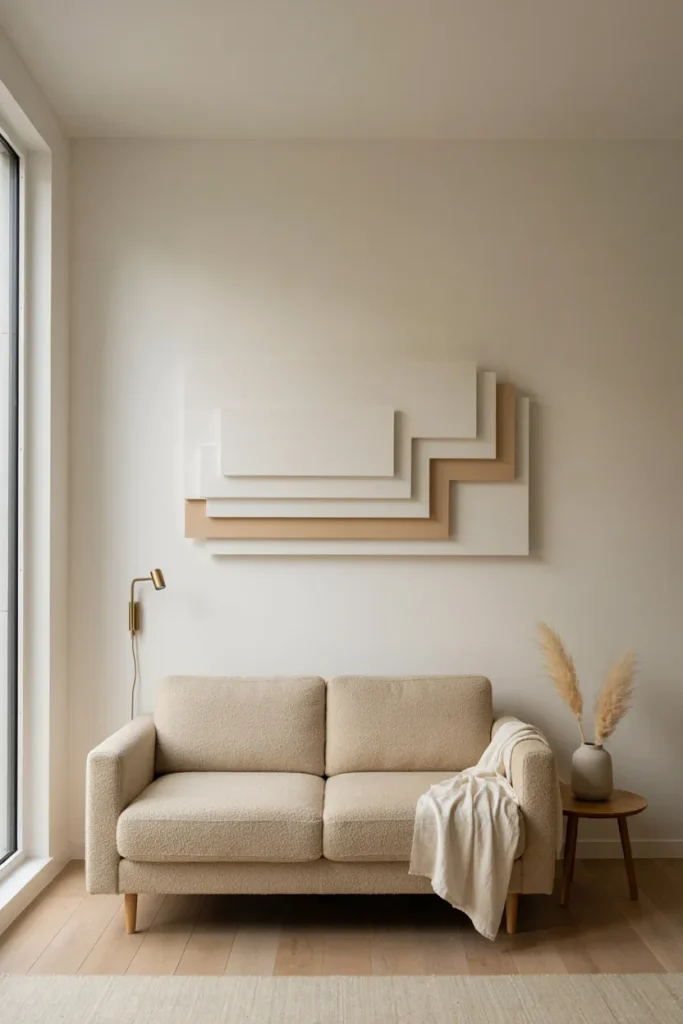
A small piece can disappear on a large wall, while an oversized piece can dominate a small room.
Always consider the artwork in relation to the wall, furniture, ceiling height, and surrounding decor rather than judging its size in isolation.
Best Practices for Styling 3D Wall Art
Once your piece is installed safely, styling can make the difference between intentional decor and something that simply looks added at the last minute.
Give the artwork enough breathing room. Negative space allows the texture and silhouette to remain visible.
Create contrast by pairing matte or textured artwork with a smoother nearby surface, such as a mirror, glass table, or polished console.
Use adjustable or dimmable lighting when possible. The shadows created by dimensional artwork can look completely different in bright daylight compared with soft evening lighting.
Repeat the artwork’s material or finish somewhere else in the room. For example, a brass sculpture can connect visually with brass lighting or cabinet hardware.
If you’re decorating a rental, consider making one dimensional piece the main focal point rather than installing several smaller pieces. This can create a stronger result while reducing the number of wall attachments required.
How Much Does 3D Wall Art Cost?
The price of 3D wall art varies widely according to size, material, craftsmanship, brand, and production method.
Small metal sculptures and geometric accents can sometimes be found for less than $50. Mid-range wood panels and metal artwork commonly cost between $100 and $400, while large handmade pieces, custom plaster work, and commissioned sculptures can cost $1,000 or considerably more.
DIY projects can reduce the material cost substantially. A small plaster relief or reclaimed-wood project may cost less than $30 in materials, depending on what you already have available.
However, material cost is only part of the budget. If a large piece requires specialized mounting hardware, professional installation, or additional lighting, include those expenses before deciding how much you can spend.
Is 3D Wall Art Still a Good Choice for Modern Interiors?
Dimensional artwork has remained popular because texture and natural materials can add warmth and depth to otherwise simple interiors.
Styles change, however. Specific finishes that are fashionable today may look dated later, while natural wood, neutral plaster textures, woven materials, and simple sculptural forms tend to be easier to adapt as the rest of a room changes.
If you like updating your decor regularly, lightweight pieces are easier to replace. Large plaster reliefs and substantial wood installations make more sense when you genuinely like the material and design enough to keep them for several years.
How to Maintain 3D Wall Art

Different materials require different cleaning methods.
Metal artwork usually needs occasional dusting with a dry microfiber cloth. Avoid aggressive household cleaners unless the manufacturer specifically recommends them, because some finishes can be damaged by harsh chemicals.
Wood panels should be dusted regularly and protected from excessive moisture and dramatic humidity changes. Follow the manufacturer’s care instructions before applying wax, oil, or another finish.
Macramé and woven artwork can collect dust in their fibers. A gentle vacuum brush attachment on a low setting can help remove buildup without pulling or damaging the material.
Plaster and other porous relief artwork are more delicate. Use a soft, dry brush or cloth and avoid water unless the piece has been specifically sealed and the manufacturer confirms that moisture is safe.
3D Wall Art for Homes With Children and Pets
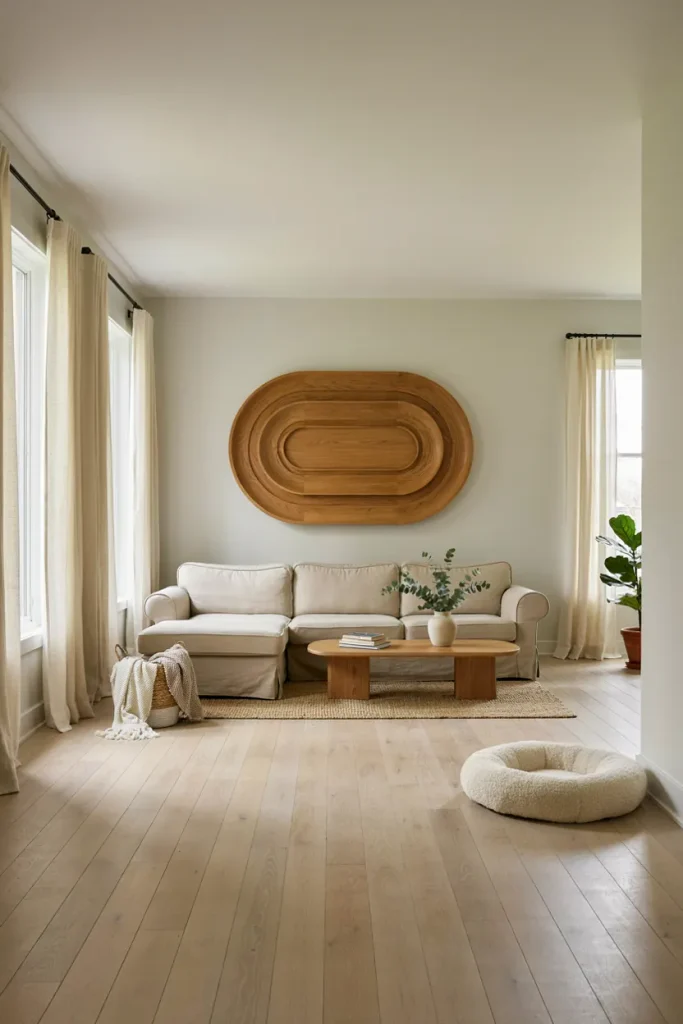
Families with young children or active pets should consider both placement and material.
Fragile plaster pieces may not be appropriate for busy hallways or areas where they could easily be bumped. Metal and wood can be more resistant to accidental contact, although sharp corners and protruding elements still require attention.
Avoid pieces with small detachable components in areas accessible to young children. Heavy artwork should also be mounted securely enough to reduce the risk of movement if it is accidentally touched or pulled.
The safest choice depends on the specific room, artwork, mounting system, and household situation.
Frequently Asked Questions About 3D Wall Art
What Is the Best Material for 3D Wall Art in a Humid Climate?
Metal and properly sealed wood are generally easier to use in humid environments than porous, unsealed materials. Plaster and unsealed wood can be more vulnerable to moisture, so always check the manufacturer’s recommendations before placing artwork in a bathroom or other damp area.
How Much Weight Can Drywall Hold Without a Stud?
There is no single weight limit for drywall because capacity depends on the anchor type, drywall condition, installation method, and how the load is distributed. For heavier artwork, use an appropriately rated anchor or attach the mounting hardware to a stud whenever possible.
Can I Hang 3D Wall Art Without Drilling Holes?
Yes, but only when the artwork and hanging product are both suitable for adhesive installation. Lightweight pieces are generally the safest candidates. Always follow the manufacturer’s weight and surface requirements rather than relying on a general weight estimate.
Does 3D Wall Art Work in Small Rooms?
Yes. The key is scale. One appropriately sized dimensional piece can give a small room a stronger focal point without making it feel cluttered. Avoid choosing a piece so large that it competes with essential furniture or blocks circulation.
How Do I Clean Textured or 3D Wall Art?
For most materials, start with a soft, dry cloth or a gentle vacuum brush attachment. Avoid liquid cleaners unless the artwork is specifically labeled as washable or sealed. Delicate plaster and porous materials should generally be cleaned without moisture.
Is 3D Wall Art a Good Option for Rental Apartments?
It can be. Lightweight macramé, woven pieces, and small geometric artwork are often easier to install with minimal wall impact. Before using adhesive hooks or strips, check that they are compatible with your wall surface and rated for the artwork’s actual weight.
What’s the Difference Between 3D Wall Art and a Wall Sculpture?
The terms overlap, but 3D wall art is the broader category. It can include sculptures, textured panels, relief artwork, woven pieces, and modular systems. Wall sculpture generally emphasizes a more sculptural, artistic object mounted directly to the wall.
How Do I Choose the Right Size for an Empty Wall?
Start by looking at the wall’s overall width and the furniture surrounding it. If the artwork is above a sofa, bed, or console, a piece or arrangement around 60 to 75 percent of the furniture’s width is a useful starting point. On an empty wall, choose a size that feels proportionate to the surrounding room rather than automatically filling two-thirds of the wall.
Can I Make My Own 3D Wall Art at Home?
Yes. Plaster reliefs, reclaimed-wood designs, rope wall hangings, layered cardboard artwork, and fabric-based projects can all be made at home. The difficulty depends on the material and complexity of the design.
Does 3D Wall Art Help With Sound?
Some textured materials can absorb more sound than smooth, reflective surfaces, which may slightly reduce echo. However, decorative artwork should not be considered a replacement for acoustic treatment designed specifically for sound absorption.
Bringing It All Together
3D wall art can transform an empty wall by adding something flat artwork cannot: physical depth, texture, and changing shadows. But the best result comes from treating the piece as part of the entire room rather than as an isolated decoration.
Start by measuring the wall and nearby furniture. Consider the artwork’s weight, material, color, and relationship with your existing decor. Then think about lighting before choosing the final position, because directional light can dramatically change how dimensional surfaces appear.
Whether you’re hanging a lightweight macramé piece in a rental, adding a carved wood panel above a console, or installing a substantial plaster relief in a large living room, the same principles apply: choose the right scale, respect the wall’s load capacity, and give the artwork enough space and light to stand out.
When those details are handled properly, 3D wall art can turn an ordinary wall into a genuine focal point while adding texture and personality to the room.