Garden Clip Art: The Complete Guide to Styles, Sources, and Smart Ways to Use It
Spend five minutes searching for garden clip art, and you’ll notice something odd: the results are everywhere and nowhere at the same time. Some sites offer a single wilted flower icon, while others bury genuinely useful graphics under pop-ups and broken download links. If you’ve ever closed a dozen browser tabs in frustration while looking for the right image for a seed packet label, Pinterest pin, classroom worksheet, or home decor project, this guide is built for you.
Garden clip art has become a versatile graphic resource for teachers, small business owners, crafters, bloggers, and home gardeners. This guide covers the different styles available, where they come from, how licensing works, and how to use them effectively without wasting hours searching for the right tomato, flower, or gardening tool illustration.
What Is Garden Clip Art, Exactly?

Garden clip art refers to pre-made illustrations or graphics depicting gardening themes, including flowers, vegetables, tools, garden structures, plants, and related scenes. Unlike photographs, clip art is often vector-based or hand-illustrated, which makes it easy to resize and, in many cases, recolor for different projects.
The format matters more than most people realize. A photograph of a rose garden captures one specific moment, perspective, and lighting condition. A piece of garden plant clipart, by contrast, is designed to be flexible. You can use it on a birthday invitation, recipe card, nursery school newsletter, seed catalog, printable, or website graphic and make it feel intentional rather than out of place.
Clip art has been around since desktop publishing became popular in the 1980s, when collections were often distributed on physical CDs bundled with software. Today, most clip art is digital and available through stock libraries, design marketplaces, educational resources, and free repositories. That convenience also makes it more important to understand file formats and licensing before downloading or using an image.
Types of Garden Clip Art You’ll Actually Need

Not all garden-themed graphics serve the same purpose. Knowing which category you need before you begin searching can save a significant amount of time.
Flower Garden Clip Art
Flower garden clip art covers everything from individual stems to complete flowerbed illustrations, often featuring tulips, roses, daisies, sunflowers, and other popular blooms. It works well for greeting cards, wedding stationery, spring-themed projects, garden newsletters, and home decor printables.
Black-and-white versions are especially useful for coloring pages, stamps, embroidery patterns, and line-art projects because the lack of color and heavy shading makes the designs easier to trace, print, or fill in by hand.
Vegetable Garden Clipart
Vegetable garden clipart focuses on produce such as carrots, tomatoes, peppers, lettuce, pumpkins, and other edible crops. Illustrations may show individual vegetables or plants growing in rows and raised beds.
This category is particularly useful for homesteading blogs, meal-planning materials, farmers’ market promotions, gardening worksheets, and nutrition education resources. A simple illustrated carrot or tomato can communicate an idea quickly without requiring much supporting text.
Garden Tools Clip Art
Garden tools clip art includes familiar equipment such as trowels, watering cans, wheelbarrows, pruning shears, gardening gloves, spades, and hand forks.
This style is useful for gardening tutorials, product packaging, DIY blog graphics, printable guides, and educational materials. Gardening tool illustrations often work best when they are simple and slightly stylized rather than overloaded with tiny details, especially when they need to remain recognizable at small sizes.
Fairy Garden Clip Art
Fairy garden clip art has a distinctly whimsical character. Common elements include tiny doors at the base of tree trunks, miniature lanterns, mushrooms, flowers, stones, and fairy characters surrounded by foliage.
It is popular for children’s party invitations, nursery wall art, craft tutorials, printable activities, and content about creating miniature fairy gardens at home. The same style can also work well for whimsical adult stationery and garden-themed crafts.
Garden Gnome Clip Art
Garden gnome clip art features one of the most recognizable figures associated with traditional lawn and garden decor. Typical illustrations include gnomes with pointed hats, beards, boots, gardening tools, or playful poses.
These graphics are commonly used in humorous greeting cards, garden-themed invitations, yard-sale flyers, craft projects, and seasonal decor. Because generic gnome imagery is a broad folklore theme, individual illustrations can vary considerably in appearance and style.
Botanical Garden Clip Art
Botanical garden clip art takes a more detailed and scientific approach. It may include carefully illustrated leaves, stems, flowers, plant parts, labels, and foliage inspired by traditional botanical prints.
This style works particularly well for refined home decor projects, framed prints, stationery, educational materials, apothecary-style labels, and designs that call for a vintage or sophisticated botanical appearance.
Garden of Eden Clip Art
Garden of Eden clip art is a distinct category associated with religious and biblical storytelling. Illustrations may feature lush vegetation, trees, a serpent, and depictions of Adam and Eve.
This type of artwork is commonly used in Sunday school materials, church bulletins, educational resources, Bible study materials, and faith-based printables. Because the subject is narrative rather than purely decorative, illustrations often focus on storytelling and symbolism.
Community Garden Clip Art

Community garden clip art depicts shared growing spaces and collaborative gardening. Common scenes include raised beds, groups of people gardening, garden pathways, shared tools, vegetables, and entrance signs.
Nonprofit organizations, neighborhood groups, schools, community programs, and local organizations can use this style for volunteer announcements, garden events, educational materials, and plot-registration promotions.
Spring Garden Clip Art
Spring garden clip art captures seasonal elements such as tulips, budding plants, watering cans, butterflies, rain clouds, sunshine, and fresh green foliage.
It is especially useful for spring newsletters, planners, classroom materials, Mother’s Day projects, Easter-themed designs, garden-club communications, and social media graphics.
Garden Party Clip Art
Garden party clip art combines floral and gardening elements with celebration motifs such as bunting, teacups, picnic tables, string lights, flowers, and outdoor seating.
It is a natural choice for bridal showers, garden-themed birthday parties, outdoor weddings, invitations, menus, and other spring and summer celebrations.
Home Garden Clip Art
Home garden clip art typically depicts residential-scale gardening scenes, such as a small backyard plot, potted plants on a patio, raised beds, or a flowerbed beside a house.
This style works naturally for home improvement blogs, gardening websites, real estate marketing, neighborhood newsletters, and content focused on practical backyard gardening.
Gardenia Clip Art
Gardenia clip art focuses specifically on the gardenia flower, known for its layered white petals and glossy green leaves.
It is often used in wedding stationery, floral designs, Southern-inspired decor, botanical artwork, invitations, and projects where an elegant white flower is the central visual element.
A Quick Note on “Olive Garden Clip Art”
The phrase “olive garden clip art” can confuse because people may mean different things by it. Some users are searching for illustrations of an actual olive garden, such as olive trees, branches, or Mediterranean landscapes. Others may be referring to the Olive Garden restaurant brand and its logo.
If you’re looking for decorative or botanical artwork, use more specific search terms such as “olive tree clip art,” “olive branch illustration,” or “olive grove illustration.” If an image relates to a specific brand, logo, or trademark, check the applicable usage restrictions before using it.
Garden Clip Art Styles: Choosing the Right Look
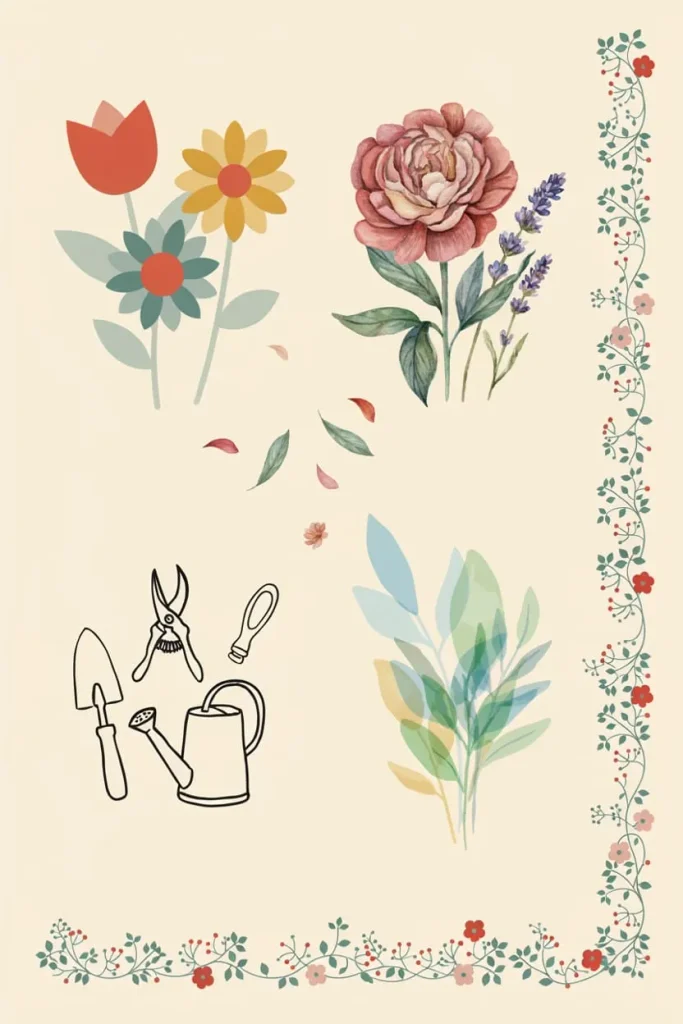
Once you’ve identified the subject you need, the next decision is style. This is where many projects go wrong. A beautifully detailed illustration can look less effective than a simple one if it doesn’t match the rest of the design.
Gardening Clipart Black and White
Gardening clipart black and white, also commonly searched as black-and-white garden clipart, removes color and relies on line weight, outlines, and shading to create depth.
It is a practical choice for coloring pages, embroidery transfers, stamps, laser engraving designs, worksheets, and print projects where color is unnecessary. Black-and-white imagery can also work well when you’re unsure what the final color palette will be because it is less likely to clash with other design elements.
Simple Garden Clipart vs. Beautiful Garden Clipart
These two styles represent different levels of visual detail, and both have useful applications.
Simple garden clipart uses minimal detail, flat shapes, and a limited color palette. Think of a basic flower reduced to a few recognizable shapes. This approach works well for small labels, icons, worksheets, app graphics, and other designs where instant recognition matters more than intricate detail.
Beautiful garden clipart generally uses more detail, including layered petals, realistic shading, textured leaves, and carefully illustrated forms. It works particularly well for posters, framed artwork, stationery, blog hero graphics, and larger designs where viewers have enough space to appreciate the details.
Neither style is automatically better. The right choice depends on where the graphic will be used, how large it will appear, and what visual style surrounds it.
Garden Clipart PNG
Garden clipart PNG refers to a file format rather than an artistic style. PNG files can support transparent backgrounds, allowing you to place a flower, plant, tool, or other illustration over a colored background, photograph, patterned paper, or website design without creating an unwanted white rectangle around it.
For scrapbook pages, custom merchandise designs, digital collages, social media graphics, and layered compositions, a transparent PNG can be particularly convenient.
Garden Background Clip Art, Garden Clipart Background, and Garden Clipart Border
These terms are often used interchangeably, but they usually describe different types of assets.
Garden background clip art and garden clipart background generally refer to a complete scene intended to sit behind text or other design elements. This might be a wide garden scene with grass, flowerbeds, trees, and foliage.
Garden clipart border refers to a decorative frame or edge made from vines, leaves, flowers, or other garden elements.
Knowing the difference can make searching much easier. If you’re creating a certificate and need a decorative frame, searching specifically for “garden clipart border” will usually produce more relevant results than searching for “garden clip art” alone.
Matching Garden Clip Art to Your Project
| Project Type | Best Style | Best Format | Important Consideration |
| Coloring pages | Black and white, simple line art | PNG or SVG | Use bold outlines and minimal shading |
| Wedding stationery | Detailed botanical | PNG with transparency | Flower or gardenia illustrations work well |
| Blog headers | Simple to moderate detail | PNG or JPEG | Make sure the design remains clear when scaled |
| Embroidery or engraving | Black and white line art | SVG or high-resolution PNG | Avoid extremely fine details |
| Children’s party invitations | Whimsical and colorful | PNG | Fairy garden or gnome illustrations work naturally |
| Real estate or home flyers | Home garden, realistic | PNG or JPEG | Keep the artwork understated |
| Certificates and awards | Garden border | PNG or vector | The border should support rather than overpower the text |
Where to Find Free Garden Clip Art Without Regretting It Later
Free garden clip art is available from many different sources, but the word “free” does not automatically mean that an image can be used for every purpose.
Public-domain and Creative Commons libraries can be useful sources of openly licensed artwork. However, licensing conditions can vary from one image to another. Some licenses require attribution, while others may restrict commercial use or modifications. Always read the specific license attached to the image rather than assuming that every graphic on a website has identical usage rights.
Design platforms and marketplaces may also offer free graphics alongside paid content. A graphic being available at no cost does not necessarily mean that you can redistribute it, sell it as part of a product, or use it without attribution. Check the platform’s current license terms before using an image commercially.
Government agencies, universities, libraries, and educational institutions may also publish gardening illustrations and diagrams for educational or informational purposes. These resources can be particularly useful when accuracy is more important than decorative styling.
A practical rule is simple: if a website does not clearly explain the licensing terms for an image, don’t assume that the image is free for commercial use. Look for a clearly stated license or choose another source with transparent usage conditions.
How to Use Garden Images Clip Art Well

Finding the right graphic is only half the job. Using it effectively is what separates a polished project from one that looks rushed.
Match the level of detail to the surrounding design. Pairing a highly detailed botanical illustration with an extremely minimal flat-design layout can create visual friction. Try to keep the level of detail reasonably consistent throughout the project.
Respect white space. Garden backgrounds can easily compete with text when used at full opacity. If you’re placing text over a garden scene, consider reducing the image’s visual intensity or placing the text on a solid or semi-transparent panel.
Recolor thoughtfully. Vector garden plant clipart can often be recolored to match a brand or project palette. However, the new colors should make sense for the intended style. Unusual colors can work beautifully in whimsical designs but may look distracting in realistic botanical artwork.
Size the graphic for the medium. A border designed for a printed certificate may not work well when stretched across a large website banner. Vector formats such as SVG can be resized without the same pixelation concerns associated with raster images.
Consider the final viewing size. A detailed illustration may look beautiful at full resolution but become visually confusing when reduced to a small social media thumbnail or icon. Always check how the graphic looks at its actual final size.
Common Mistakes People Make With Garden Clip Art
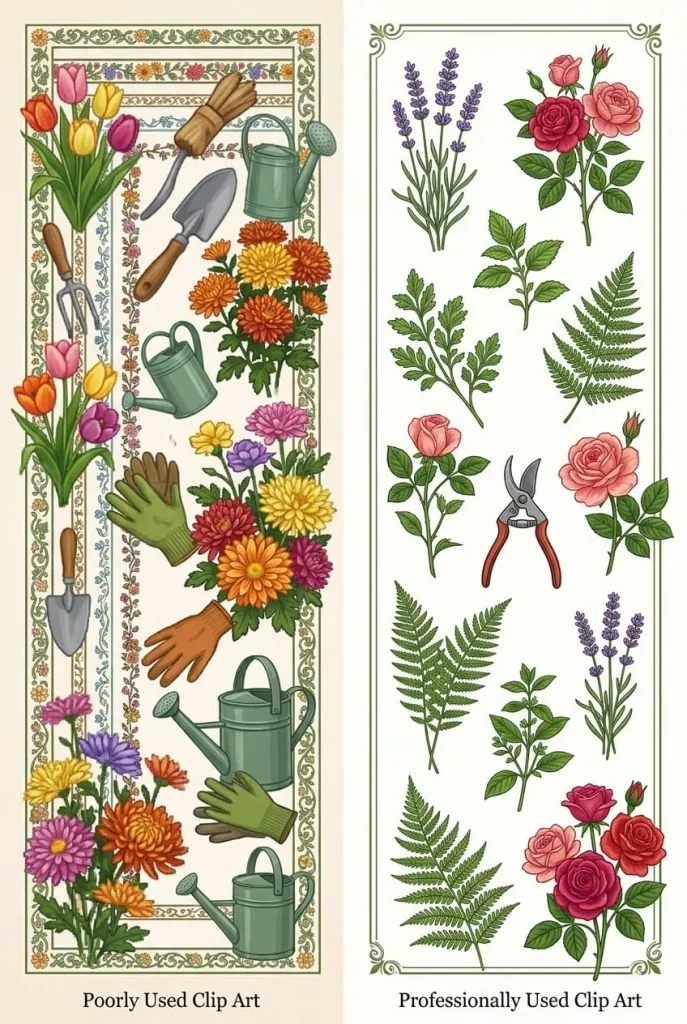
Using low-resolution images at full print size. A graphic that looks acceptable at a few hundred pixels wide may become blurry when enlarged for a poster or other large print project. Check the original resolution before committing to a final design.
Ignoring licensing on free downloads. Not every free image is licensed for commercial use. Using an image on products you sell without understanding its license can create avoidable legal problems.
Overcrowding a design. Combining flowers, tools, borders, backgrounds, and multiple decorative elements on the same page can create visual clutter. Choose one primary focal graphic and give the supporting elements enough breathing room.
Mismatching seasons and themes. Spring imagery such as tulips and rain clouds may feel out of place in a late-autumn harvest design. Matching the artwork to the season and purpose helps the finished project feel more intentional.
Skipping alt text on web images. Descriptive alt text improves accessibility and helps provide search engines with useful information about an image. For example, “black-and-white illustration of a flower garden” is more informative than leaving the alt text blank or using a generic filename.
Best Practices and Expert Recommendations
Designers working with gardening, home decor, education, and printable content often follow a few practical habits:
- Build a small personal library of properly licensed graphics instead of starting from scratch for every project.
- Keep both color and black-and-white versions of frequently used illustrations when possible.
- Test graphics at the smallest size at which they will actually appear.
- Save original vector or layered source files whenever licensing permits.
- Record the source and license information for graphics you use regularly.
- Choose graphics that match the overall tone and audience of the project.
- Avoid using decorative artwork simply because it looks attractive; every visual element should support the purpose of the design.
Seasonal and Themed Garden Clip Art Trends
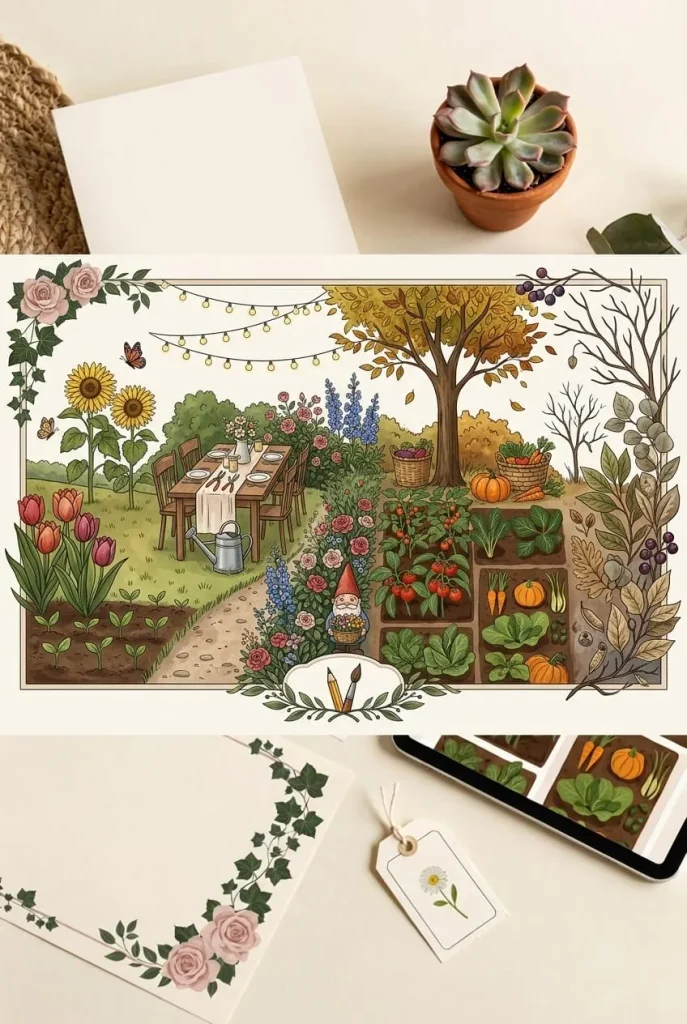
Demand for different garden-themed graphics changes throughout the year.
Spring garden clip art and flower garden clip art often become more relevant during the months when people are planning Mother’s Day cards, Easter decorations, spring newsletters, garden-club activities, and outdoor events.
Vegetable garden clipart can become particularly useful during the growing and harvest seasons, especially for gardening blogs, educational content, meal planning, farmers’ market promotions, and canning-related projects.
Community garden clip art has a more consistent year-round use because nonprofit organizations, schools, neighborhood groups, and community programs may promote gardening activities throughout the year.
Garden party clip art is naturally suited to the late spring and summer event season, when outdoor weddings, bridal showers, birthdays, and garden gatherings become more common.
Illustrated botanical artwork with a hand-drawn or slightly imperfect appearance is also a strong stylistic choice for projects that aim to create warmth and personality. Compared with perfectly uniform graphics, hand-drawn illustrations can give a design a more natural and collected feeling.
Frequently Asked Questions
Is Garden Clip Art Copyrighted?
It depends entirely on the source and its license. Some graphics may be in the public domain or released under licenses that permit certain types of free use. Others remain copyrighted and require a paid license or permission. Always check the specific usage terms attached to an image before using it.
Can I Use Free Garden Clip Art for a Business or Product I’m Selling?
Only when the applicable license allows commercial use. Some free graphics are limited to personal or educational projects, while others permit commercial applications. Read the license before using artwork on products, packaging, advertisements, websites, or items you plan to sell.
What’s the Difference Between Garden Clip Art and Garden Stock Photos?
Clip art is illustrated artwork rather than photography. It is commonly provided as a vector graphic, PNG, or similar digital asset and may be easier to resize or recolor. Stock photos are photographic images and are generally used differently.
What File Format Is Best for Garden Clip Art?
SVG is often the most flexible choice when you need to resize an illustration without losing quality or want to edit its colors. PNG is useful when you need transparency and don’t need to scale the image dramatically. JPEG is suitable for photographic or full-background images where transparency is not required.
Where Can I Find Gardening Clipart Black and White for Coloring Pages?
Search specifically for line art, black-and-white illustrations, or coloring-page graphics within reputable clip art libraries. Adding terms such as “line art,” “outline,” or “coloring page” can help narrow the results.
Is Fairy Garden Clip Art Appropriate for Adult Projects, or Just Kids’ Content?
Fairy garden clip art is popular in children’s materials, but it is not limited to them. Whimsical fairy garden illustrations can also work well for adult stationery, craft projects, garden-themed home decor, invitations, and blogs about miniature gardens.
How Do I Make Sure a Garden Clipart Border Fits My Page Size?
Vector formats are generally the easiest option because they can be resized without the same pixelation problems as raster images. For borders that need to wrap around an entire page, also check whether the design is symmetrical or designed to repeat seamlessly.
Why Do Some Garden Images Clip Art Look Blurry When I Print Them?
Blurriness usually occurs when a low-resolution raster image is enlarged beyond the size it was designed for. For high-quality print work, check the image’s dimensions and resolution at the final print size. A commonly used target for professional-quality printed images is 300 DPI, although the appropriate resolution can vary depending on the printing process.
Are Botanical Garden Clip Art and Flower Garden Clip Art the Same Thing?
Not exactly. Botanical garden clip art usually has a more scientific and detailed appearance, often focusing on plant structures, leaves, stems, and botanical accuracy. Flower garden clip art tends to be more decorative and focuses primarily on the visual beauty of flowers and garden scenes.
Can I Edit the Colors of Clip Art I Download?
It depends on the file type and license. Vector formats such as SVG, EPS, or AI are generally much easier to recolor than flattened JPEG images. PNG files may also be editable in certain design programs, but the process can be more limited. Before editing or redistributing an image, check whether the license permits modifications.
Bringing It All Together
Garden clip art earns its popularity because it is flexible, easy to adapt, and suitable for everything from classroom worksheets and craft projects to wedding invitations, home decor printables, and gardening websites.
The key isn’t simply finding an attractive graphic. It’s finding the right illustration, in the right style and format, with licensing terms you actually understand. Match the level of detail to your project, choose the appropriate file format, check usage rights before using an image, and keep a small collection of dependable, properly licensed graphics for future projects.
With those habits in place, finding and using garden clip art becomes much faster and more reliable — and your finished designs will look more polished, intentional, and professional.