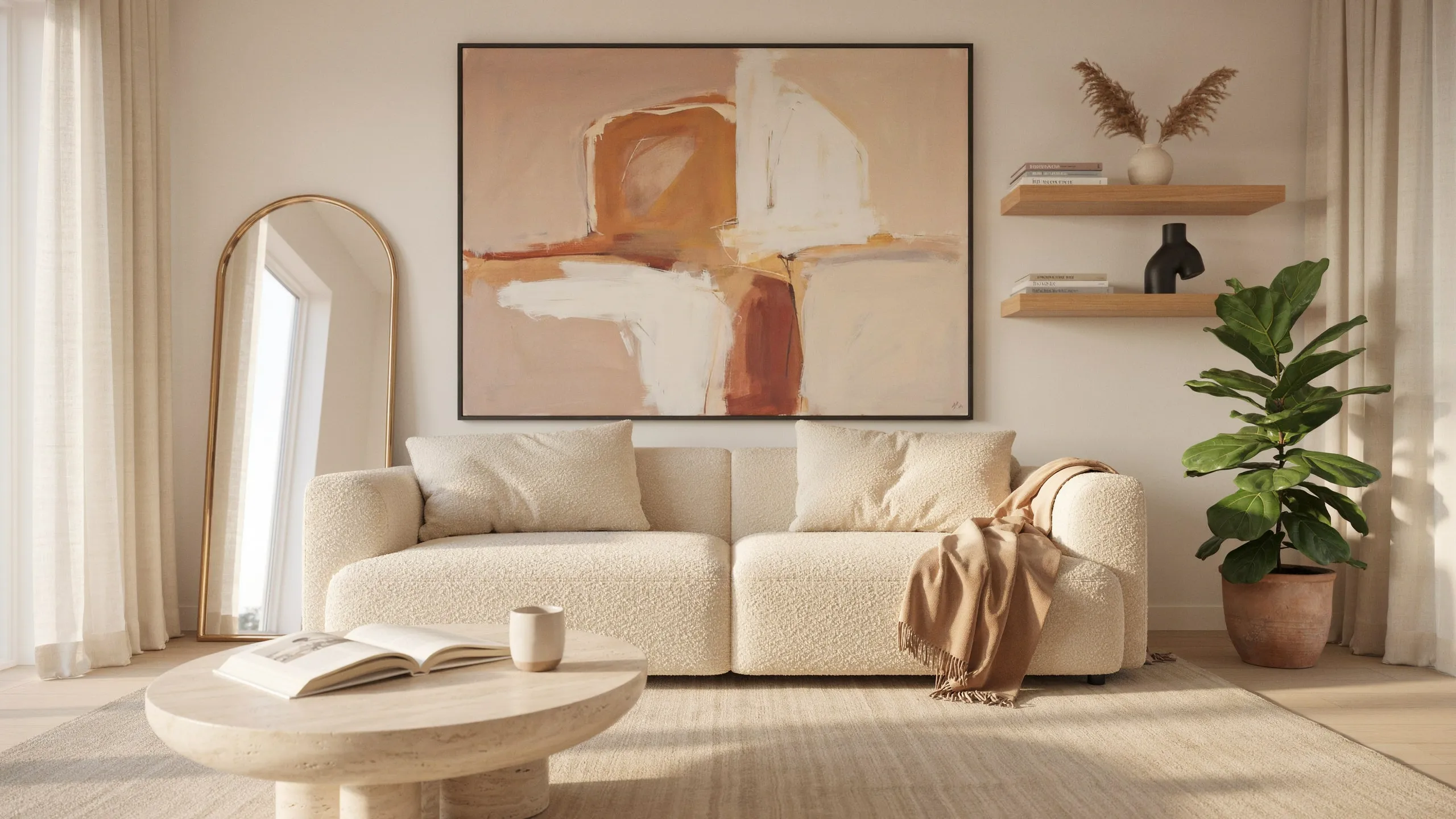
60+ Living Room Wall Decor Ideas That Actually Transform a Space
The best living room wall decor ideas combine one strong anchor piece, such as oversized art, a statement mirror, or a textured wall treatment, with smaller supporting elements such as shelves, sconces, plants, or carefully arranged artwork. The biggest shift is away from perfectly matched gallery grids and toward layered, asymmetrical spaces that feel personal, collected, and naturally styled.
Why Your Living Room Walls Deserve More Thought
Most people furnish a living room from the floor up with a sofa, rug, coffee table, lamps, and other furniture, while treating the walls as an afterthought. That approach can leave an otherwise beautiful room feeling unfinished.
Walls provide some of the largest visual surfaces in a living room, which means they have a major influence on how the entire space looks and feels. The right wall decor can add color, texture, personality, warmth, and even the illusion of more space.
In 2026, living room walls are becoming an important part of the overall design rather than simply a background for furniture. Oversized artwork, warm wood paneling, textured finishes, sculptural wall decor, and floor-to-ceiling shelving are all being used to create stronger focal points.
Gallery walls are also becoming less rigid. Instead of perfectly symmetrical rows of identical frames, many interiors now use mixed sizes, different textures, varied frame finishes, and slightly asymmetrical arrangements that feel collected over time.
The good news is that you do not need a designer budget to create this look. You need the right plan, the right scale, and a clear understanding of what you want the wall to accomplish.
How to Choose Living Room Wall Decor: A 5-Minute Planning Framework
Before buying a single piece of wall decor, take a few minutes to understand the wall you are working with. This simple planning process can prevent one of the most common decorating problems: a wall that looks randomly assembled instead of intentionally designed.
Decide what the wall is for
A wall behind a sofa needs a different approach from a TV wall, fireplace wall, entryway wall, or empty accent wall.
Start by identifying the wall’s main purpose. Is it supposed to create a focal point, provide storage, display artwork, add texture, or simply make the room feel more finished?
Let the function of the wall guide your decorating decisions.
Choose an anchor point.
Every successful wall arrangement needs a dominant element that immediately attracts attention.
Your anchor could be a large piece of artwork, an oversized mirror, a collection of shelves, a fireplace, a TV, or a textured wall treatment.
Choose this element first. Smaller decorative pieces should support it rather than compete with it.
Get the scale right
One of the most common wall-decor mistakes is choosing pieces that are too small for the wall or furniture beneath them.
For artwork above a sofa or console, a useful guideline is to choose a piece or grouped arrangement that covers roughly two-thirds of the furniture’s width.
For a completely blank wall, consider filling approximately 60 to 75 percent of the available visual area with your combined decor rather than leaving one tiny piece floating in the middle.
Plan your lighting
Wall decor should not disappear once the sun goes down.
Picture lights, wall sconces, or a warm floor lamp aimed toward the feature wall can dramatically change the atmosphere of a living room in the evening.
Lighting should therefore be considered part of the wall design rather than something added at the very end.
A simple planning checklist can help:
- Identify the wall’s purpose.
- Choose one main anchor.
- Measure the wall and furniture.
- Check the scale before buying.
- Add one or two supporting elements.
- Consider evening lighting.
- Step back several feet and look at the arrangement before permanently installing anything.
Gallery Wall Ideas
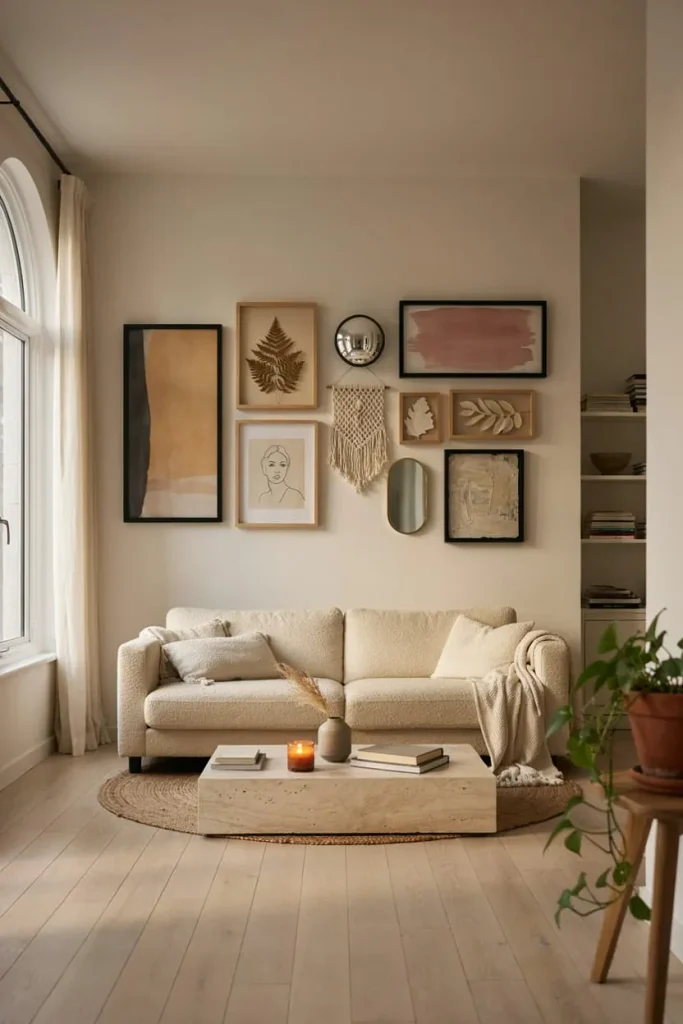
Gallery walls remain one of the most flexible ways to decorate a living room wall. They can be inexpensive, highly personal, and easy to expand over time.
The key to making a gallery wall look intentional is creating enough structure while allowing the individual pieces to feel different.
Anchored asymmetrical gallery wall
Start with one larger piece as the anchor and arrange smaller frames around it at different heights.
This creates a relaxed, collected appearance and avoids the rigid feeling of a perfectly symmetrical grid.
Color-story gallery wall
Instead of matching every frame, connect the artwork through a shared color palette.
Warm terracotta, sage green, cream, beige, charcoal, or muted blue can create a visual connection even when the artwork and frames are different.
Mixed-media gallery wall
Combine framed prints with a small mirror, woven wall art, textile pieces, carved wood, or another dimensional object.
The mixture of flat and three-dimensional elements gives the wall more depth and prevents it from feeling visually flat.
Narrow vertical gallery
If you have a tight wall beside a doorway or window, arrange three to five smaller pieces vertically.
This makes use of narrow spaces without making the room feel crowded.
Salon-style gallery wall
For an eclectic or maximalist living room, consider a dense arrangement that extends from relatively low on the wall toward the ceiling.
A salon-style arrangement can include 15 or more pieces in different sizes and styles.
This approach works especially well when the artwork has personal meaning because the wall becomes something visitors naturally want to explore.
Before putting holes in the wall, lay the entire arrangement on the floor.
You can also create paper templates the size of each frame and temporarily tape them to the wall. This makes it much easier to adjust spacing before installing anything permanently.
Statement Art Ideas

One oversized canvas
A single oversized artwork can create an immediate focal point without requiring a complicated gallery wall.
Abstract art, botanical artwork, landscapes, and large-scale photography can all work beautifully as statement pieces.
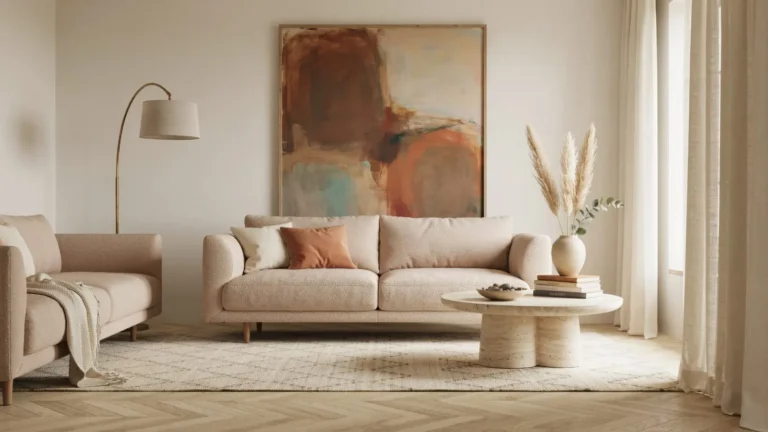
Bold abstract art against a neutral wall
A colorful abstract painting can transform a neutral living room without requiring a complete room makeover.
Choose colors that connect with existing furniture, rugs, cushions, or accessories while allowing the artwork to remain the main visual feature.
Artwork that echoes furniture shapes
Curved sofas, rounded coffee tables, and organic furniture shapes can be complemented by artwork featuring flowing lines, circles, arches, and softer forms.
Repeating visual shapes throughout the room can make the entire space feel more cohesive.
Oversized botanical or nature artwork
Large botanical prints, forests, landscapes, and floral scenes can create the feeling of bringing the outdoors inside.
They are especially useful in apartments or rooms with limited views of nature.
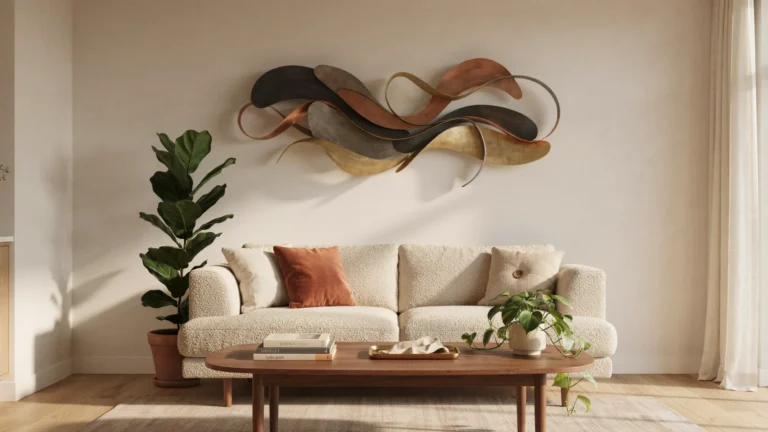
Sculptural wall art
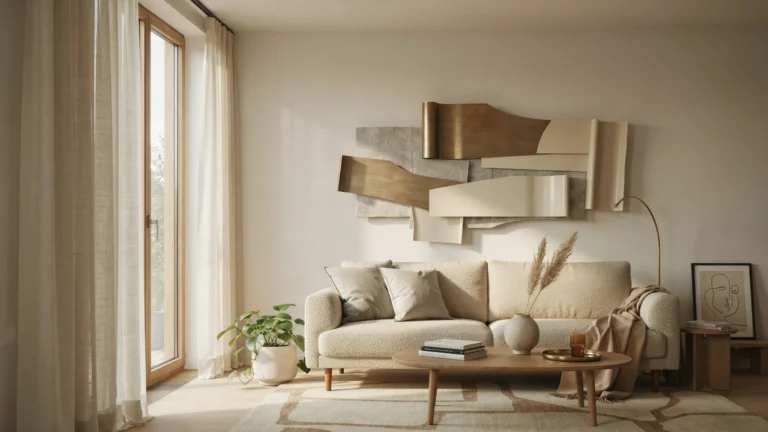
Carved wood, layered metal, plaster relief, and other dimensional wall pieces introduce shadows and texture that traditional flat artwork cannot provide.
This type of decor works particularly well when positioned where natural or artificial light can highlight its surface.
Framed textiles
Vintage fabrics, embroidered pieces, woven textiles, and small tapestries can bring warmth and softness to a living room.
They are also an excellent way to introduce pattern without relying entirely on painted artwork.
Black-and-white photography
A carefully selected pair or trio of large black-and-white photographs can create a timeless appearance.
Architecture, nature, travel photography, and black-and-white portraits can all work well with a wide range of furniture styles.
Local and regional artwork
Artwork inspired by your city, region, landscape, architecture, or local culture can make a living room feel much more personal.
A regional map, local landmark, architectural print, or work from a nearby artist can also prevent the room from feeling generic.
Mirror Ideas

Mirrors are useful because they combine decoration with function.
They can reflect natural light, make a room feel more open, and create another visual focal point without introducing as much color as artwork.
Oversized mirror above the sofa
An oversized mirror can replace traditional artwork above a sofa while reflecting light around the room.
Choose a frame that complements the existing furniture and architectural style.
Mirror above the mantel
A mirror above a fireplace remains a classic choice.
For a more contemporary appearance, consider an organic or slightly irregular frame rather than a basic rectangular design.
Clustered organic mirrors
Several small mirrors with irregular or curved shapes can be grouped together to create a sculptural wall arrangement.
The different surfaces catch light from various directions and create movement across the wall.
Arched mirror
Arched mirrors add a softer architectural shape to a living room.
They work especially well with curved furniture, rounded lighting, and other organic forms.
Mirror opposite a window.
Placing a mirror opposite a window can reflect natural light into the room and make the space feel brighter.
This placement can be particularly useful in smaller living rooms.
Textured and Architectural Living Room Wall Decor Ideas
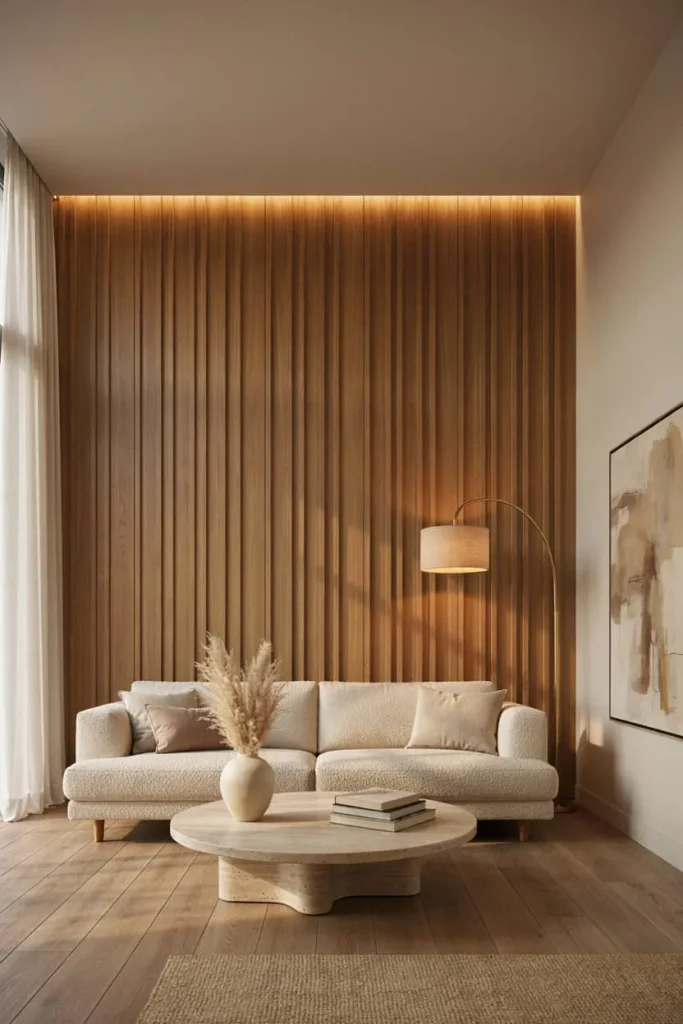
Sometimes the wall itself can become the decoration.
Architectural treatments add depth and character without requiring large quantities of artwork.
Wood slat paneling
Vertical wood slats add warmth and structure to a living room wall.
They can be used behind a sofa, TV, fireplace, or reading area and work especially well with neutral furniture and natural materials.
Panel molding
Picture-frame molding can turn a plain wall into an architectural feature.
Rectangular or grid-like molding can add character while keeping the overall design relatively simple.
Soft sage, warm white, beige, and muted plaster-inspired colors can enhance the architectural effect.
Color-drenched walls
Instead of painting only the wall, use a similar color across the wall, trim, and selected built-ins.
This creates a more immersive appearance and allows artwork and furniture to stand out against the background.
Limewash or plaster finish
Limewash and plaster-inspired finishes create subtle tonal variation across the wall.
The uneven texture catches natural light and can give a living room a warm, handcrafted appearance.
Wallpaper as a feature
You do not always need to wallpaper an entire room.
A bold or textured wallpaper on one accent wall behind the sofa can introduce pattern and personality while keeping the rest of the room relatively calm.
Exposed or faux brick
A brick accent wall can introduce texture and an industrial character.
Pairing brick with wood, soft upholstery, plants, and warm lighting can prevent the room from feeling too cold.
Fabric-wrapped wall panels
Linen, boucle, wool, and other fabrics can be used on wall panels to introduce softness and acoustic comfort.
This approach works particularly well in large living rooms where hard surfaces can otherwise make the space feel echoey.
Shelving and Functional Wall Decor
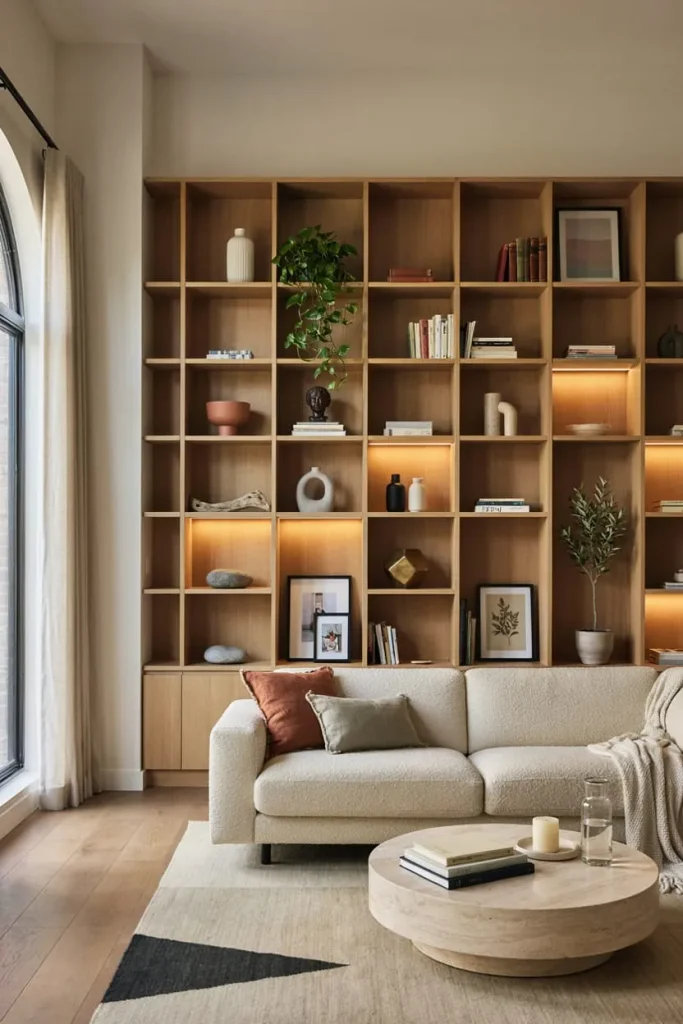
Floor-to-ceiling built-in bookcases
A full wall of bookshelves can become the main decorative feature of a living room.
Books, ceramics, artwork, plants, photographs, and collected objects can all become part of the display.
Wraparound shelving
Shelving can run along the upper portion of several walls instead of occupying one entire wall.
This can provide additional storage and display space while preserving valuable floor area.
Floating shelves
Floating shelves are useful for displaying books, plants, artwork, candles, ceramics, and small decorative objects.
Vary the height, size, and texture of objects so the shelves feel layered rather than overly staged.
Backlit shelving
Integrated LED lighting can make shelves glow in the evening and provide a soft layer of ambient lighting.
Warm lighting usually creates a more comfortable living room atmosphere than harsh, cool lighting.
Personal collection wall
Use one wall to display something meaningful to you.
Vinyl records, ceramics, vintage cameras, travel souvenirs, books, photographs, or collected artwork can turn a wall into a genuine conversation piece.
Above-the-Sofa Wall Decor Ideas
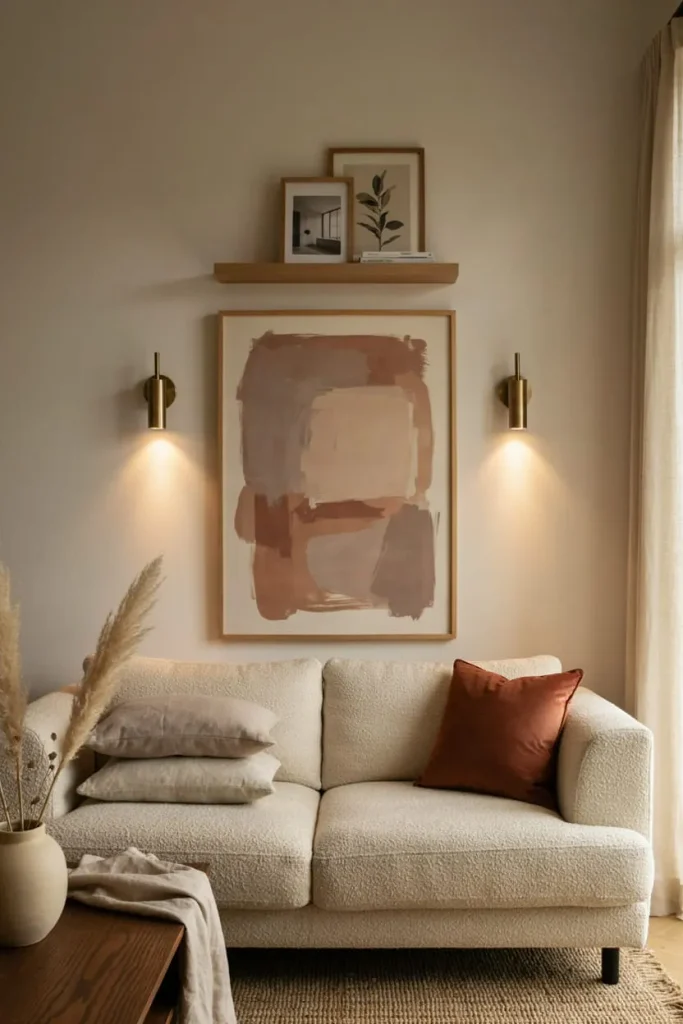
Follow the two-thirds rule.
Artwork above a sofa should generally span about two-thirds of the sofa’s width.
The goal is to create a visual relationship between the furniture and the wall decor rather than making the artwork look too small.
Layered frames on a shelf
Instead of hanging every piece, place a large frame on a slim shelf and layer two or three smaller pieces in front.
This creates depth and makes it easy to change the artwork later.
A pair of matching pieces
Two complementary or matching artworks can create a balanced appearance above a long sofa.
This approach works particularly well in traditional, transitional, and symmetrical interiors.
Sconces beside artwork
Wall sconces positioned on either side of artwork provide both decoration and useful evening lighting.
They can also make a central artwork feel more intentional and finished.
TV Wall Decor Ideas
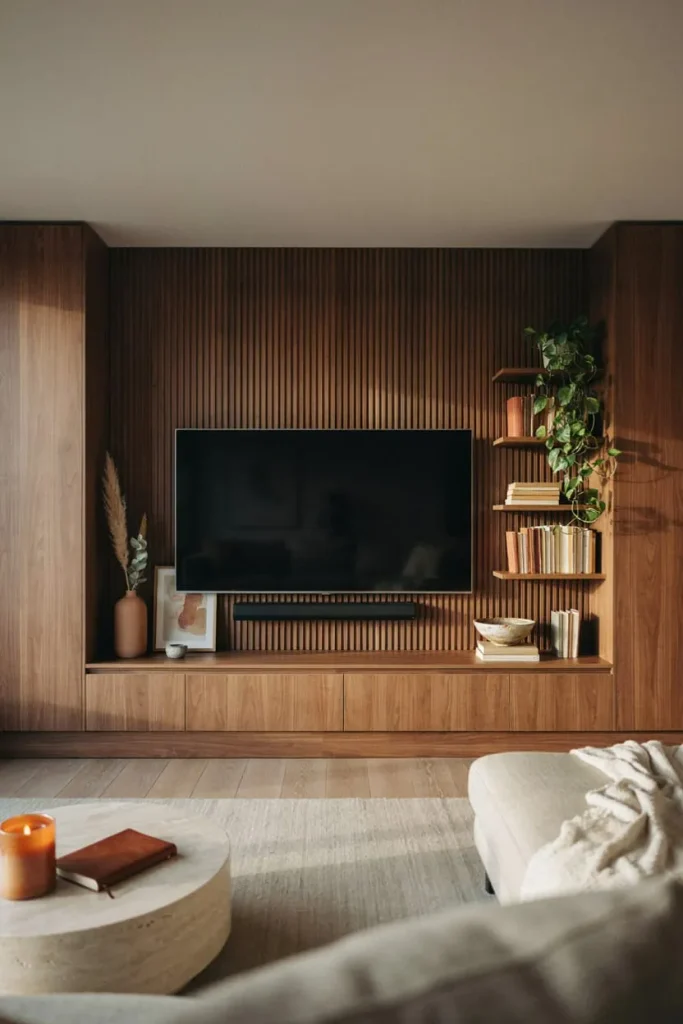
The TV is often one of the most difficult elements to integrate into a living room.
Instead of trying to hide it completely, the goal should be to make the television feel like part of the overall wall design.
Build the TV into shelving.
Surround the television with shelves, cabinets, books, artwork, and decorative objects.
This turns the TV wall into a complete composition rather than leaving the screen isolated.
Symmetrical media wall
A low media console with matching cabinets or shelves on both sides of the television creates a balanced appearance.
It also provides practical storage for electronics, cables, books, and other items.
Art around the TV
Instead of placing artwork directly above the television, use smaller pieces around the surrounding wall.
The artwork should support the overall composition without competing with the screen.
Textured wall behind the TV
Wood slats, stone-look surfaces, panel molding, or another textured treatment can make the TV wall feel intentional.
The screen then becomes one component of a larger architectural feature.
Treat cable management as part of the design.
Visible cables can quickly make an otherwise beautiful media wall look unfinished.
Use appropriate cable channels, in-wall solutions where suitable, or wall-colored cord covers to keep the installation clean.
Fireplace Wall Decor Ideas
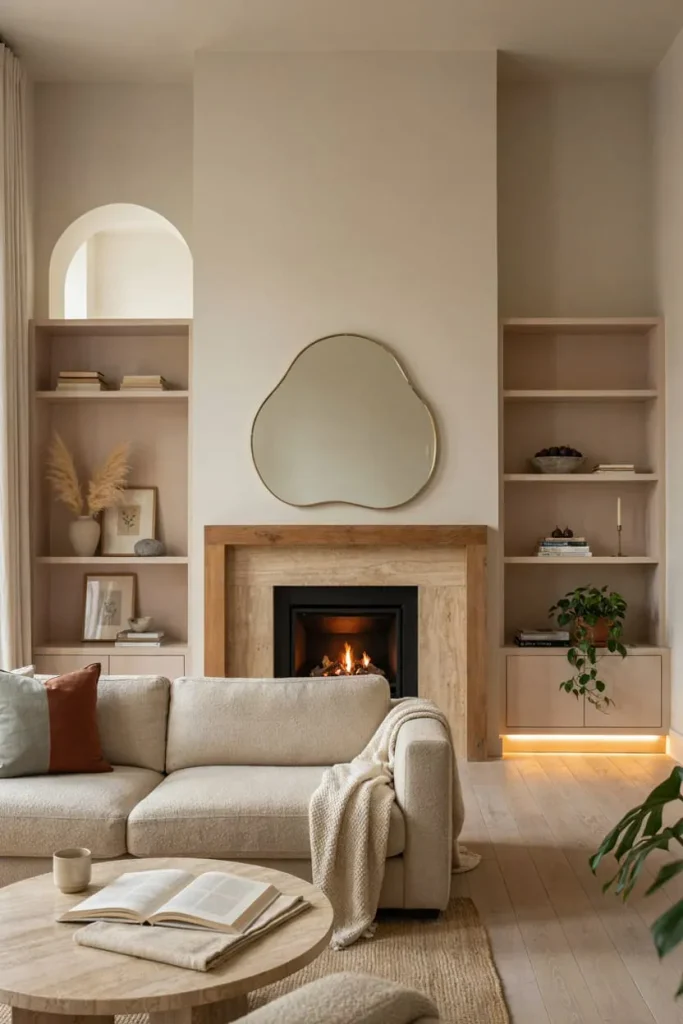
Mirror above the mantel
A mirror remains one of the easiest ways to decorate a fireplace wall.
It reflects light from windows and the fireplace while creating a strong focal point.
Bold artwork against a stone fireplace
A colorful abstract piece can create contrast against traditional stone or brick.
This combination can make an older fireplace feel more contemporary without replacing the fireplace itself.
Built-ins beside the fireplace
Bookcases or cabinets on either side of the fireplace can transform a single focal point into an entire functional feature wall.
Use books, artwork, ceramics, baskets, and plants to create a balanced display.
Oversized botanical artwork
A large botanical print can soften the hard appearance of stone or brick.
Choose natural colors that connect with the room’s furniture and accessories.
Small Living Room Wall Decor Ideas

Small living rooms need decoration that adds personality without creating unnecessary visual clutter.
Use vertical artwork
Tall and narrow artwork can draw the eye upward and create the impression of a higher ceiling.
This can be more effective in a small room than using several wide horizontal pieces.
Choose one large mirror.
One large mirror can visually expand a small living room more effectively than several small decorative objects.
Place it where it can reflect natural light or an attractive part of the room.
Install slim floating shelves.
Floating shelves that are only a few inches deep can provide display and storage without taking up valuable floor space.
Use them for books, small plants, photographs, and decorative objects.
Choose light, matte finishes.
Warm whites, soft neutrals, muted greens, and other light colors can help a small living room feel more open.
Matte finishes can also provide a softer appearance than highly reflective surfaces.
Use multifunctional wall storage.
Wall-mounted cabinets, narrow consoles, and storage shelves can combine decoration with practical organization.
This reduces the need for additional floor furniture.
Budget-Friendly and DIY Wall Decor Ideas
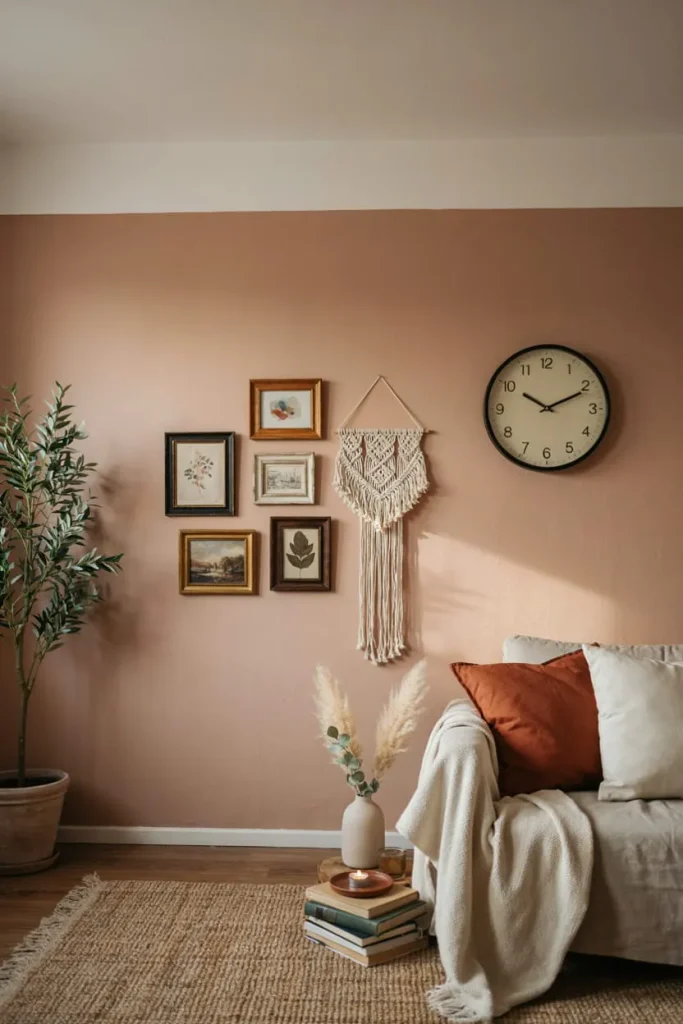
You do not need expensive pieces to create beautiful living room wall decor ideas. Affordable prints, thrifted frames, simple paint treatments, and handmade textiles can all contribute to a polished result when the scale and composition are right.
Use an oversized wall clock.
A large wall clock can work as both functional decor and a focal point.
It is particularly useful when you want one strong feature without spending heavily on artwork.
Frame inexpensive prints
Affordable prints, posters, photographs, museum-inspired artwork, or even attractive wrapping paper can look significantly more expensive when placed in high-quality frames.
The frame can often make as much difference as the artwork itself.
Paint one accent wall.
Painting a single wall is one of the most affordable ways to dramatically change a living room.
Choose a color that works with the sofa, rug, flooring, and natural light.
Try removable wallpaper or wall panels.
Peel-and-stick wallpaper and removable wall panels can provide the appearance of architectural detail without a permanent renovation.
These options can also be useful for renters when the product is suitable for the existing wall surface.
Use thrifted and vintage frames.
Mismatched vintage frames can look intentional when they share a common finish or color.
You can also repaint different frames in the same shade to create a more unified appearance.
Use renter-friendly hanging systems.
Picture rails, removable hanging systems, and appropriate wall-safe strips can make it easier to create artwork arrangements without relying on permanent hardware.
Always check the manufacturer’s weight limits and surface requirements before installation.
Turn textiles into wall art.
A beautiful scarf, vintage fabric, small rug, or textile remnant can become inexpensive wall art.
Stretch the textile over a frame or hang it from a simple dowel for an easy decorative feature.
Common Wall Decor Mistakes to Avoid
Hanging art too high
When artwork is placed too high, it can look disconnected from the furniture and make the room feel visually unbalanced.
For general artwork, aim for the center of the piece to sit around 57 to 60 inches from the floor. Above furniture, keep the artwork visually connected to the furniture rather than leaving a large empty gap.
Choosing pieces that are too small
Small artwork can disappear on a large wall, even when the piece itself is beautiful.
Use the two-thirds guideline above furniture and consider filling a larger portion of a completely blank wall with a properly scaled arrangement.
Using perfectly matched sets everywhere
Matching frames and identical artwork can sometimes make a room feel more like a showroom than a home.
Mix different scales, textures, artwork styles, and finishes while maintaining a loose color or visual connection.
Ignoring evening lighting
Beautiful wall decor can become almost invisible after sunset without appropriate lighting.
Consider sconces, picture lights, shelf lighting, or a floor lamp directed toward the wall.
Ignoring the wall’s function
Decor should work with the purpose of the wall.
A TV wall needs to accommodate the screen and cables. A fireplace wall needs to work around heat and architectural features. A narrow walkway should not be overloaded with bulky decor.
Using only one decorative element
A single piece can work beautifully when it is properly scaled, but some walls need additional layers.
Consider adding lighting, a shelf, a plant, or a smaller complementary piece when the wall still feels empty.
Ignoring furniture scale
Artwork that is too small above a large sofa can make the entire arrangement feel disconnected.
Always consider the size of the furniture and the wall together before purchasing decor.
Living Room Wall Decor Ideas by Style
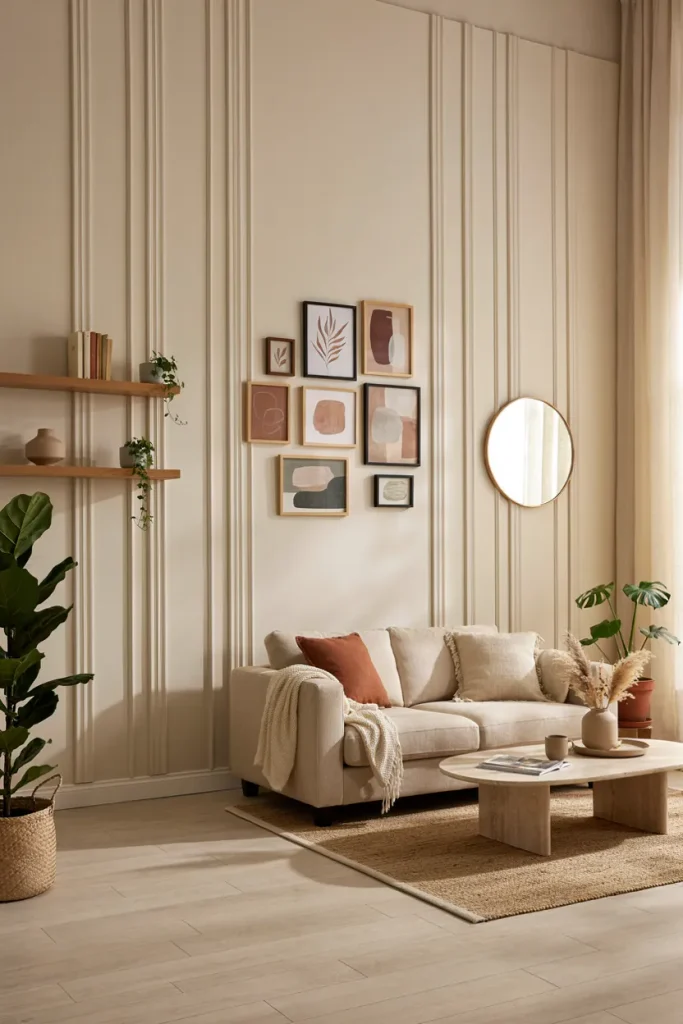
Modern Minimalist
Choose slim metal-framed artwork, one large mirror, neutral wall colors, clean-lined floating shelves, and a restrained color palette.
The goal is to create visual impact without filling every available space.
Cozy and Eclectic
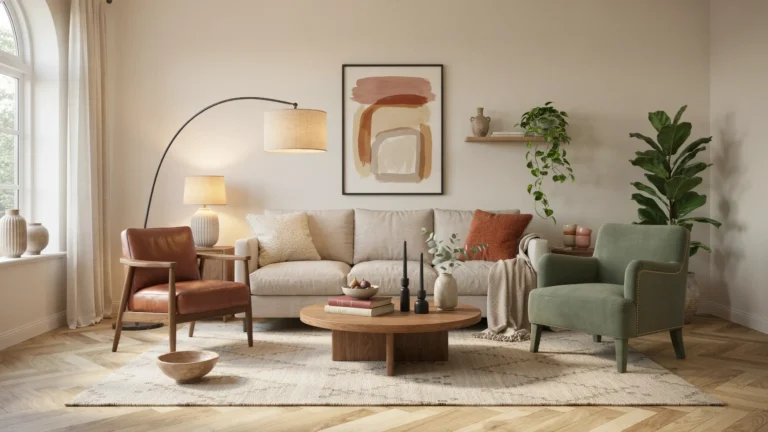
Layer gallery walls, woven pieces, ceramics, textiles, warm wood tones, plants, and artwork collected over time.
A little variation is part of the charm of this style.
Modern Farmhouse
Wood accents, woven baskets, neutral artwork, simple shelves, warm lighting, and natural textures work well in modern farmhouse living rooms.
Keep the overall palette warm and comfortable rather than overly rustic.
Art Deco-Inspired
Use geometric artwork, metallic accents, rich colors, decorative frames, and strong shapes.
Gold and brass details can add elegance when used selectively rather than throughout every element.
Coastal and Organic
Botanical prints, natural fibers, soft wood tones, woven wall hangings, and arched mirrors create a relaxed coastal or organic atmosphere.
Keep the materials natural and the colors soft.
Quiet Luxury and Traditional
Decorative molding, classic artwork, refined frames, warm ambient lighting, and balanced furniture arrangements create a timeless appearance.
The emphasis should be on quality, proportion, and restraint rather than excessive decoration.
Frequently Asked Questions About Living Room Wall Decor Ideas
How high should I hang wall art in a living room?
A common guideline is to place the center of the artwork approximately 57 to 60 inches from the floor. When artwork is positioned above furniture, keep the bottom of the frame relatively close to the furniture, so the artwork feels connected to the arrangement.
What size art should go above a sofa?
Aim for artwork or a grouped arrangement that covers roughly two-thirds of the sofa’s width. For example, a 90-inch sofa can work well with artwork or a combined arrangement measuring approximately 54 to 70 inches wide.
How do I decorate a large empty living room wall on a budget?
Start with one larger, affordable anchor piece such as an oversized print, tapestry, mirror, or DIY artwork. Then add two or three smaller thrifted or handmade pieces around it instead of buying an entire matching set.
Are gallery walls still in style for 2026?
Yes. Gallery walls continue to be a versatile choice, but the approach is becoming more relaxed. Mixed sizes, varied frames, asymmetrical arrangements, and personal artwork can create a more collected appearance than rigid grids.
What’s a good alternative to hanging art above the TV?
Consider building the television into a larger media wall with shelving, cabinets, books, or a textured backdrop. This allows the screen to become part of the overall composition.
Should wall decor match my sofa or rug exactly?
No. Exact matching can make a room feel overly coordinated. Instead, choose colors that belong to the same general family or share similar undertones.
What’s the best living room wall decor for renters?
Removable wallpaper, peel-and-stick wall treatments, picture rails, appropriate removable hanging systems, floating shelves where permitted, and leaning artwork can all provide flexible options. Always check product requirements and weight limits before installation.
How many pieces should be in a gallery wall?
There is no fixed number. A simple arrangement might use five pieces, while a large salon-style wall could contain 20 or more. Scale, spacing, balance, and visual connection are more important than the exact number of pieces.
Is it okay to lean art against the wall instead of hanging it?
Yes. Large artwork can be leaned against a wall on a sturdy shelf or another appropriate surface. This creates a relaxed appearance and makes it easier to change artwork later.
What lighting works best for wall art?
Warm-toned lighting around 2700 to 3000K is generally comfortable for living spaces and can complement artwork and photography. Picture lights and sconces can provide focused illumination, while indirect lighting can create a softer atmosphere.
How do I add texture to a wall without a full renovation?
Consider removable wall panels, textured paint finishes, woven wall hangings, fabric panels, lightweight wood treatments, or wallpaper. These options can add depth without requiring major structural changes.
What wall decor makes a small living room feel bigger?
A large mirror placed where it can reflect natural light is one of the simplest ways to make a small room feel more open. Slim shelves and vertically oriented artwork can also add function without overwhelming the room.
What colors are trending for living room walls in 2026?
Warm whites, soft sage and teal tones, earthy neutrals, and muted plaster-inspired pinks are being widely used in contemporary living room designs. The best choice depends on your natural light, furniture, flooring, and overall style.
How often should I update my living room wall decor?
There is no required schedule. Instead of completely redesigning the room, consider occasionally replacing one statement piece, rearranging a gallery wall, or rotating a small portion of the artwork when you want the space to feel refreshed.
Can I mix frame finishes on a gallery wall?
Yes. Black, wood, brass, and other frame finishes can work together when the artwork has a loose color, subject, or style connection.
Final Takeaways
The best living room wall decor ideas start with a clear focal point, the right scale, and a thoughtful relationship with the rest of the room.
Before buying new decor, start with the wall itself.
Identify whether it is a sofa wall, TV wall, fireplace wall, storage wall, or blank accent wall.
Choose one strong anchor such as artwork, a mirror, shelving, or a textured treatment.
Check the scale using the two-thirds guideline above furniture or the 60 to 75 percent guideline for larger blank walls.
Think about evening lighting so the wall remains attractive after dark.
Finally, avoid the pressure to make everything match perfectly. Some of the most inviting living rooms use different artwork, textures, frames, materials, and objects that look as though they were collected gradually.
Start with one wall, create a clear focal point, and build the rest of the room around it.
3 Comments