Home Gate Designs: 10 Stunning Ideas for Every House
The right home gate designs can transform your property’s entrance, improve curb appeal, and provide greater privacy and security. Whether you own a small cottage, a modern suburban home, or a property with a wide driveway, the right gate should complement your home’s architecture while offering convenient everyday access.
Choosing a gate involves more than appearance. Material, opening style, driveway space, weather resistance, maintenance, and installation costs all influence how well a design performs over time. A beautiful gate may become inconvenient if it blocks a pathway, struggles on a sloped driveway, or requires more maintenance than you’re prepared to handle.
This guide explores 10 popular home gate designs, from warm wooden entrances and decorative ironwork to modern sliding gates and minimalist horizontal slats. You’ll also learn how to compare gate materials, coordinate your entrance with a fence, understand installation costs, and choose a design that suits your property’s size and architectural style.
Well-designed Entrance
Home gate designs play an important role in the appearance and functionality of a residential property. A well-designed entrance creates a welcoming first impression while helping define the boundary between your home and the outside environment.
The best design depends on your property’s layout, architectural style, privacy requirements, and available budget. Before selecting a gate, consider how frequently it will be used, what type of vehicles need access, and how much maintenance you’re willing to manage.
What Makes a Good Home Gate Design?
A good home gate should balance appearance, durability, convenience, and security. Consider these essential factors before making your decision.
Purpose and security: Decide whether you need a decorative garden entrance, a pedestrian gate, a private driveway entrance, or a gate that forms part of a larger security system. Your intended use will influence the gate’s height, construction, locking mechanism, and material.
Opening style: Swing gates open inward or outward, while sliding gates move sideways along a track or cantilever system. Your driveway space, ground conditions, and vehicle access will help determine which option is practical.
Material and durability: Wood, wrought iron, steel, and aluminum offer different advantages in appearance, maintenance, and weather resistance. Compare their characteristics before choosing a material.
Size and proportion: A narrow pedestrian entrance requires a different design from a wide driveway. The gate should look proportional to your house while providing enough clearance for people, vehicles, and deliveries.
Climate and maintenance: Rain, humidity, intense sunlight, and coastal salt exposure can affect materials and finishes. Consider whether you’re comfortable resealing wood, repairing metal coatings, or maintaining a sliding track and automatic opener.
Taking time to evaluate these factors can help you avoid expensive modifications and select a gate that remains practical for years.
Popular Home Gate Designs for Every House
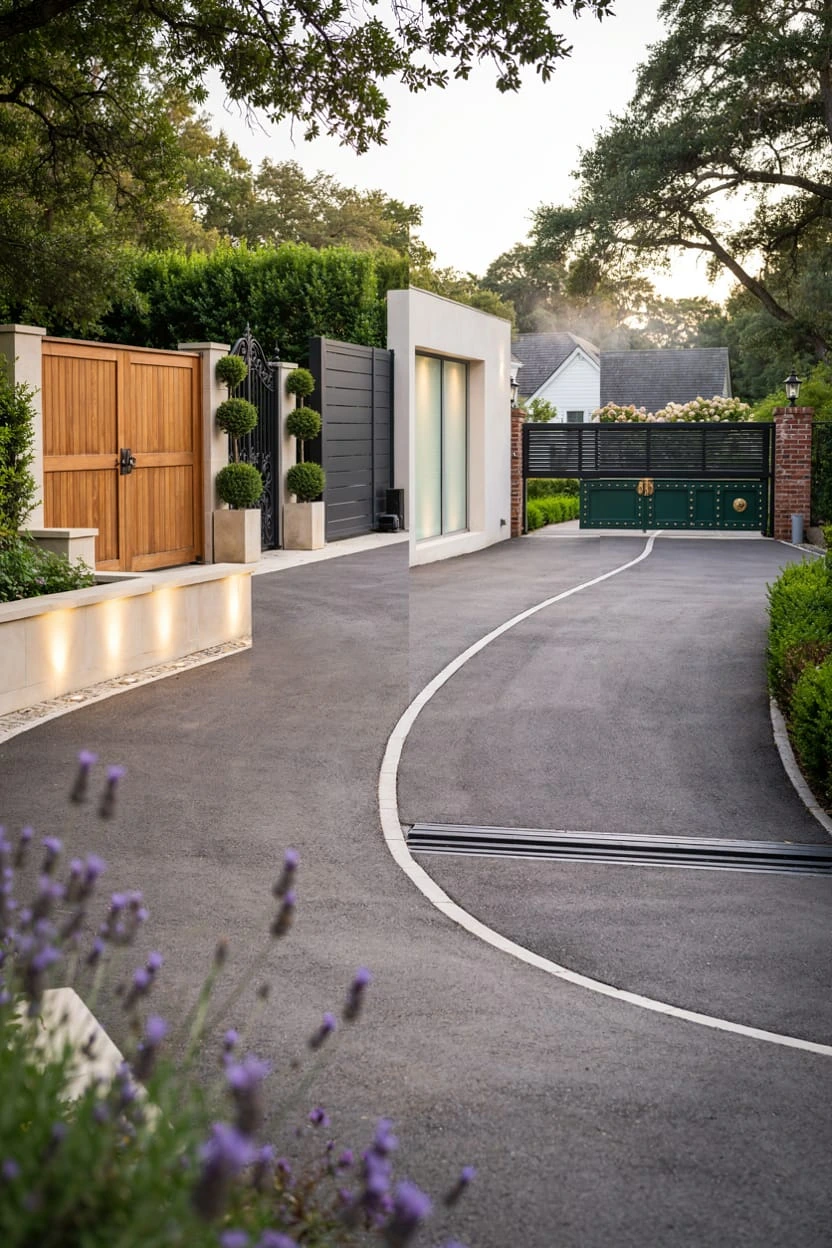
The best home gate designs complement your home’s architectural style while meeting your practical requirements. From traditional wooden entrances to contemporary metal structures, several options can improve the appearance and functionality of your property.
Here are 10 popular styles worth considering.
1. Wooden Gate Designs
Wooden gate designs remain popular because they add natural warmth, texture, and character to a property’s entrance. They work particularly well with farmhouse, cottage, Craftsman, and rustic-style homes.
Cedar and redwood are common choices because they offer natural resistance to decay. Pressure-treated pine may be a more affordable alternative, although its quality and long-term performance depend on treatment, installation, and maintenance.
Horizontal planks create a contemporary appearance, while vertical boards suit more traditional properties. Decorative framing can add character, and solid wooden panels provide greater visual privacy than widely spaced boards.
Best for: Farmhouses, cottages, rustic homes, and homeowners who prefer natural materials.
What to consider: Wood can warp, crack, fade, or deteriorate when exposed to moisture and sunlight. Periodic sealing, staining, or painting is usually necessary, depending on the wood species, finish, and local climate.
2. Modern Iron and Steel Gate Designs
Modern iron and steel gate designs suit homeowners who want a strong, durable entrance with a distinctive appearance. Metal can be shaped into geometric patterns, vertical bars, decorative scrollwork, or clean-lined privacy panels.
Wrought iron is particularly suitable for ornamental designs and traditional craftsmanship. Steel offers considerable design flexibility and is frequently used for contemporary gates featuring horizontal slats and solid panels.
Popular finishes include matte black, charcoal gray, and dark bronze. These colors complement many exterior materials, including brick, stone, stucco, and painted siding.
Best for: Modern, traditional, Mediterranean, and transitional homes.
What to consider: Metal gates can be heavy, depending on their construction. Steel may corrode if its protective coating becomes damaged, while decorative ironwork may require rust treatment and repainting. Proper hinges, supporting posts, and installation are essential for reliable operation.
3. Simple Iron Gate Designs for Small Houses
Simple iron gate designs are practical for smaller homes, narrow entrances, and properties where an elaborate entrance would look out of proportion.
Clean vertical bars, slim frames, and restrained geometric details create an attractive appearance without overwhelming the front of the house. A single-panel design may be more suitable than a large double gate when space is limited.
Black finishes provide a versatile, understated look, while bronze and charcoal can create a softer contrast with lighter exterior walls.
Before ordering a custom gate, compare designs from local fabricators. Pay attention to bar spacing, frame thickness, decorative details, and the proportions of the finished entrance.
Best for: Small houses, narrow frontages, garden entrances, and homeowners who prefer simple designs.
What to consider: Check the gate’s dimensions, hinge capacity, locking system, and supporting posts. A simple appearance does not automatically guarantee durability or security.
4. Sliding Gate Designs for Homes
Sliding gate designs are particularly useful when a driveway doesn’t have enough room for a swinging gate. Instead of opening into the driveway or toward the street, the gate moves sideways along a track or a specially designed cantilever system.
Manual sliding gates may suit smaller entrances and tighter budgets. Motorized versions offer additional convenience, particularly for wide or heavy gates that would otherwise require considerable effort to move.
A sliding gate can also work well on some sloped driveways, provided the design accounts for ground clearance, side space, and the property’s layout.
Best for: Narrow entrances, driveways with limited swing clearance, and properties where an open gate would interfere with parked vehicles.
What to consider: Track-based systems need suitable drainage and regular cleaning because dirt, stones, leaves, and other debris can obstruct movement. Cantilever gates avoid a ground track but require sufficient space beside the entrance and appropriate structural support.
5. Modern Main Gate Designs
The main gate is often one of the most prominent features of a property’s exterior. Modern main gate designs typically emphasize horizontal slats, simple rectangular frames, minimal ornamentation, and combinations of different materials.
A steel frame with wooden inserts creates an appealing contrast between metal’s clean lines and wood’s natural warmth. Aluminum panels offer another option for homeowners who prefer a relatively lightweight, corrosion-resistant material.
Solid panels or closely spaced slats can provide greater visual privacy. Open bars and more widely spaced slats allow greater visibility and airflow.
Best for: Contemporary homes, renovated properties, and homeowners seeking a coordinated modern entrance.
What to consider: Solid panels can increase the wind load on a gate, so the frame, posts, hinges, and foundations must be appropriate for the design. Ask the installer to account for local weather conditions.
6. Traditional Entrance Gate Designs
Traditional entrance gate designs often feature symmetrical layouts, arched tops, decorative finials, and ornamental metalwork. These details complement colonial, classical, and heritage-inspired architecture.
Black ironwork creates a timeless appearance, while dark bronze and other subdued finishes can complement brick, stone, and cream-colored exteriors.
Proportion is particularly important. Decorative gates can look impressive on larger properties, but an overly elaborate design may compete with the architecture of a smaller house.
Best for: Colonial-style homes, traditional properties, and formal entrances.
What to consider: Ornamental detailing can increase fabrication costs and maintenance requirements. Choose a design that complements the house rather than making the entrance unnecessarily complicated.
7. Double Swing Gate Designs
Double swing gates consist of two panels that open from the center. They create a balanced entrance and are commonly used for driveways with enough space for both panels to swing freely.
You can choose wood, steel, aluminum, or decorative iron, depending on the home’s architecture and your requirements. Matching panels create a symmetrical appearance that works particularly well with formal landscaping and centered driveways.
Best for: Wide, relatively level entrances with sufficient clearance.
What to consider: Both panels need room to open fully. Sloping ground, retaining walls, parked vehicles, and nearby pathways can restrict movement. Check the swing radius before selecting this style.
8. Single Panel Gate Designs
A single-panel gate is a practical option for pedestrian entrances, side access, garden pathways, and smaller driveways. It can be made from wood, metal, or a combination of materials.
Single gates generally create a simpler visual effect than double gates and can be easier to accommodate where space is limited. Their straightforward construction may also reduce hardware requirements, although the final cost depends on the material and design.
Best for: Small homes, garden entrances, side passages, and compact driveways.
What to consider: The panel’s width and weight must be suitable for its hinges and supporting posts. Make sure the gate opens without obstructing a pathway or creating an access problem.
9. Horizontal Slat Gate Designs
Horizontal slat gates are a popular choice for contemporary architecture. Their long, clean lines create a streamlined appearance and can make an entrance feel visually wider.
Metal slats produce a crisp, modern finish, while timber slats introduce natural texture. The spacing between the slats determines how much privacy, visibility, and airflow the gate provides.
For a coordinated exterior, repeat the gate’s slat pattern in the surrounding fence or another architectural feature.
Best for: Minimalist homes, contemporary exteriors, and modern landscaping.
What to consider: Closely spaced slats offer more privacy but can increase wind resistance. Choose appropriate structural support and consider how the finish will perform in your local climate.
10. Wooden Gates with Metal Frames
A wooden gate with a metal frame combines the warmth of natural timber with the structural support of steel or aluminum. This mixed-material design suits both modern and rustic properties.
A matte-black frame surrounding natural timber boards creates a contemporary contrast. Dark-stained wood can produce a more traditional appearance, while lighter timber complements bright, minimalist exteriors.
The combination also allows you to coordinate the gate with wooden fencing, metal railings, or other exterior details without relying on a single material throughout the property.
Best for: Homeowners who want natural character combined with a metal framework.
What to consider: Choose compatible materials and finishes. The design should allow water to drain rather than collect around joints or wooden inserts. Timber may still require periodic maintenance even when it is installed inside a metal frame.
Comparing Gate Materials

Material selection affects the appearance, maintenance, durability, and overall cost of your gate. Comparing different materials before choosing a design can help you avoid unnecessary repairs and expenses.
Cedar or Redwood
Potential lifespan: Often around 15 to 20 years with suitable care.
Maintenance: Periodic sealing or staining, depending on exposure and finish.
Relative cost: Low to moderate, depending on the species, dimensions, and local availability.
Best suited to: Cottage, farmhouse, Craftsman, and rustic homes.
Wood provides a natural appearance that is difficult to replicate with other materials. However, moisture, sunlight, and poor drainage can shorten its service life. The quality of construction and ongoing maintenance makes a significant difference.
Wrought Iron
Potential lifespan: Several decades with appropriate care.
Maintenance: Periodic inspections, rust treatment, and repainting when needed.
Relative cost: Often high for custom decorative work.
Best suited to: Traditional, colonial, and Mediterranean homes.
Wrought iron is valued for its decorative possibilities and substantial appearance. Its weight and fabrication requirements can increase installation costs, and corrosion protection is particularly important in damp or coastal environments.
Steel
Potential lifespan: Often around 20 to 25 years, depending on construction, protective coatings, climate, and maintenance.
Maintenance: Inspect the finish and repair damaged areas before corrosion spreads.
Relative cost: Moderate, although custom designs can cost considerably more.
Best suited to: Modern homes, contemporary entrances, and robust gate structures.
Steel supports a wide range of designs, from simple vertical bars to solid privacy panels. A suitable protective coating is essential for long-term performance.
Aluminum
Potential lifespan: Several decades may be possible in suitable conditions.
Maintenance: Generally low, with occasional cleaning and hardware checks.
Relative cost: Moderate to high, depending on construction and finish.
Best suited to: Contemporary homes, coastal settings, and homeowners who prefer relatively low maintenance.
Aluminum naturally resists rust and is generally lighter than steel or wrought iron. However, the strength and stability of a finished gate still depend on its frame, construction quality, dimensions, and installation.
These lifespan ranges are approximate planning estimates, not guarantees. Actual performance depends on material quality, construction, installation, climate, protective finishes, and maintenance.
Which Gate Material Offers the Best Value?
Wood is worth considering when natural warmth and appearance are priorities. It may cost less initially than some custom metal gates, but regular finishing and repairs should be included in the long-term budget.
Wrought iron suits decorative designs that emphasize traditional craftsmanship. Its weight, fabrication requirements, and corrosion protection can increase the total cost.
Steel offers strength and versatility across many modern and traditional designs. A suitable protective coating is particularly important in wet or coastal environments.
Aluminum is a practical option for homeowners seeking a relatively lightweight, corrosion-resistant material with limited maintenance. Its suitability still depends on the gate’s intended use and construction.
The best value comes from considering the total cost over the gate’s service life rather than focusing only on its purchase price.
Current Trends in Home Gate Designs

Modern home gate designs often emphasize clean lines, practical materials, and a coordinated relationship between the entrance and the home’s exterior. These styles can provide inspiration, but their suitability depends on the property’s layout and maintenance requirements.
Horizontal Slat Patterns
Horizontal slats create a contemporary appearance and work particularly well with minimalist architecture. Their spacing can balance privacy with airflow and visibility.
Mixed Wood and Metal Materials
Wood inserts combined with steel or aluminum frames create a contrast between natural texture and clean metal lines. This approach suits modern and transitional homes.
Low-Maintenance Aluminum Gates
Aluminum appeals to homeowners who want a lightweight gate with good corrosion resistance and relatively simple upkeep. The frame and construction must still be appropriate for the intended use.
Automated Sliding Gates
Automatic sliding gates offer convenient vehicle access, particularly on driveways where swing gates would take up too much space. Depending on the system, operation may use a remote, keypad, or compatible smart-home controls.
Minimalist Privacy Gates
Solid panels and closely spaced slats suit homeowners who prefer a more private entrance. The right design depends on the property’s layout, ventilation needs, and any applicable visibility or safety requirements.
Trends can help you explore different looks, but long-term practicality should guide your final choice. A well-built gate that suits the house and property is generally a better investment than a fashionable design that creates daily inconvenience.
Front Gate Designs for Houses by Architectural Style
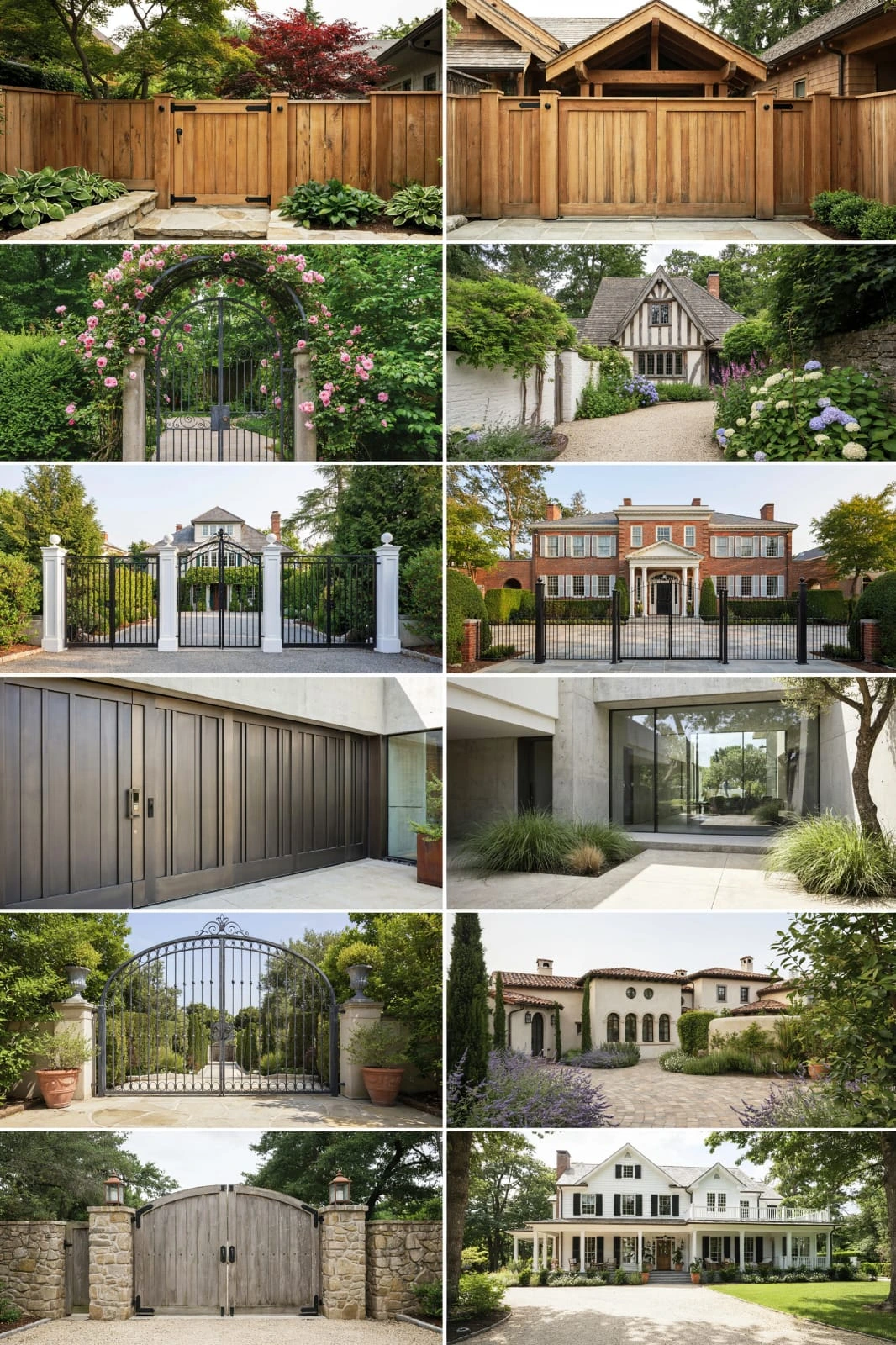
The most attractive front gate designs for houses usually complement the building’s existing architecture rather than compete with it. Choosing a style that repeats the home’s existing colors, materials, and architectural details can create a more balanced entrance.
Craftsman and Cottage Homes
Wooden gates and wood-and-metal combinations suit Craftsman and cottage homes particularly well. Simple geometric details, natural stains, and understated framing complement the informal character of these properties.
Colonial and Traditional Homes
Symmetrical double gates, dark metal finishes, and classic picket or arched-top details can complement the balanced appearance of traditional architecture.
Modern and Contemporary Homes
Horizontal slats, minimalist steel frames, and aluminum panels work well with clean architectural lines. Understated hardware can maintain an uncluttered appearance when the gate system allows it.
Mediterranean and Spanish Colonial Homes
Decorative iron gates with curved lines, scrollwork, and arched tops can complement stucco walls, terracotta roof tiles, and traditional exterior finishes.
Farmhouse-Style Homes
Simple wooden plank gates, cross-bracing, and natural or muted finishes suit farmhouse architecture. A metal frame can provide additional structural support while preserving the rustic appearance.
When comparing designs, consider the home’s exterior materials, roofline, porch railings, and window frames. Repeating a few existing details often creates a more cohesive result than introducing an entirely different style.
Gate and Fence Designs
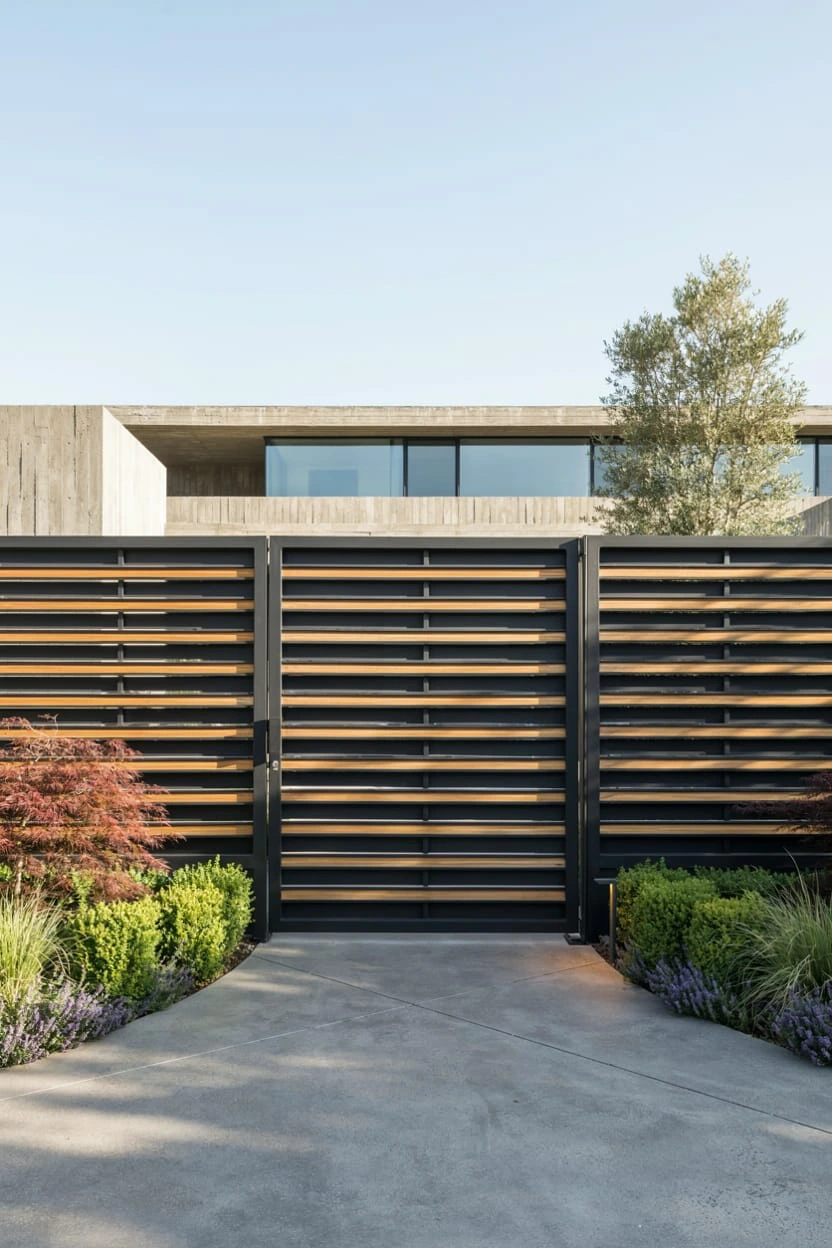
A gate is usually part of a larger boundary, so its relationship with the surrounding fence matters. Coordinated gate and fence designs make the entrance feel intentional and help the property’s exterior look more cohesive.
The gate and fence do not have to use identical materials. Instead, repeat one or two visual elements, such as color, frame shape, board spacing, or decorative patterns.
Matching Wooden Gates and Fences
For a wooden fence, complementary timber boards and matching posts can create a natural appearance. Horizontal or vertical boards can be repeated across both structures to establish a consistent design.
Choose compatible wood species and finishes where possible. Different types of timber may absorb stains differently, so testing the finish before completing the installation can help avoid noticeable color differences.
Metal Gates with Matching Fences
With an iron or aluminum fence, a gate featuring similar bars, frame proportions, and a compatible finish can blend in while allowing slightly more decorative detailing at the entrance.
Black, bronze, and charcoal finishes are versatile options for many residential properties. The gate can include a decorative feature without making the surrounding fence look disconnected.
Mixed-Material Gate and Fence Designs
Mixed-material boundaries offer additional flexibility. For example, a timber gate with a black metal frame can work well with a fence that repeats the same wood tone or metal finish.
This approach is particularly suitable for modern homes that combine natural materials with clean architectural lines.
Before ordering either component, confirm the dimensions, finish specifications, and design details with the suppliers. Planning both installations together can help prevent mismatched colors, heights, and patterns.
Gate Canopy Designs for a More Welcoming Entrance

A gate canopy is a small roof or shelter installed above an entrance. Depending on its design and position, it can provide some weather protection and make the entrance more visually prominent.
Modern Gate Canopies
Simple metal awnings and clean-lined structures complement contemporary homes. They can create a defined entrance without introducing excessive ornamentation.
A slim metal canopy with a dark finish can work particularly well with modern steel gates and minimalist boundary walls.
Traditional Gate Canopies
Tiled or shingled canopies may complement traditional, farmhouse, and Mediterranean architecture. Their materials and proportions should suit the surrounding roof and exterior finishes.
Natural stone pillars, decorative supports, and traditional roof details can help create a more welcoming entrance when they complement the rest of the property.
Gate Canopy Planning Considerations
A properly designed canopy can help shield certain gate components from direct rain and sunlight. However, it does not automatically make an exposed gate motor, electronic lock, or access-control system weatherproof.
These components still need suitable environmental protection and installation according to the manufacturer’s instructions.
Before building a canopy, consider its height, drainage, structural support, and any applicable local building requirements. Check whether the structure will interfere with vehicles, gate movement, or visibility near the road.
Home Gate Designs and Installation Costs
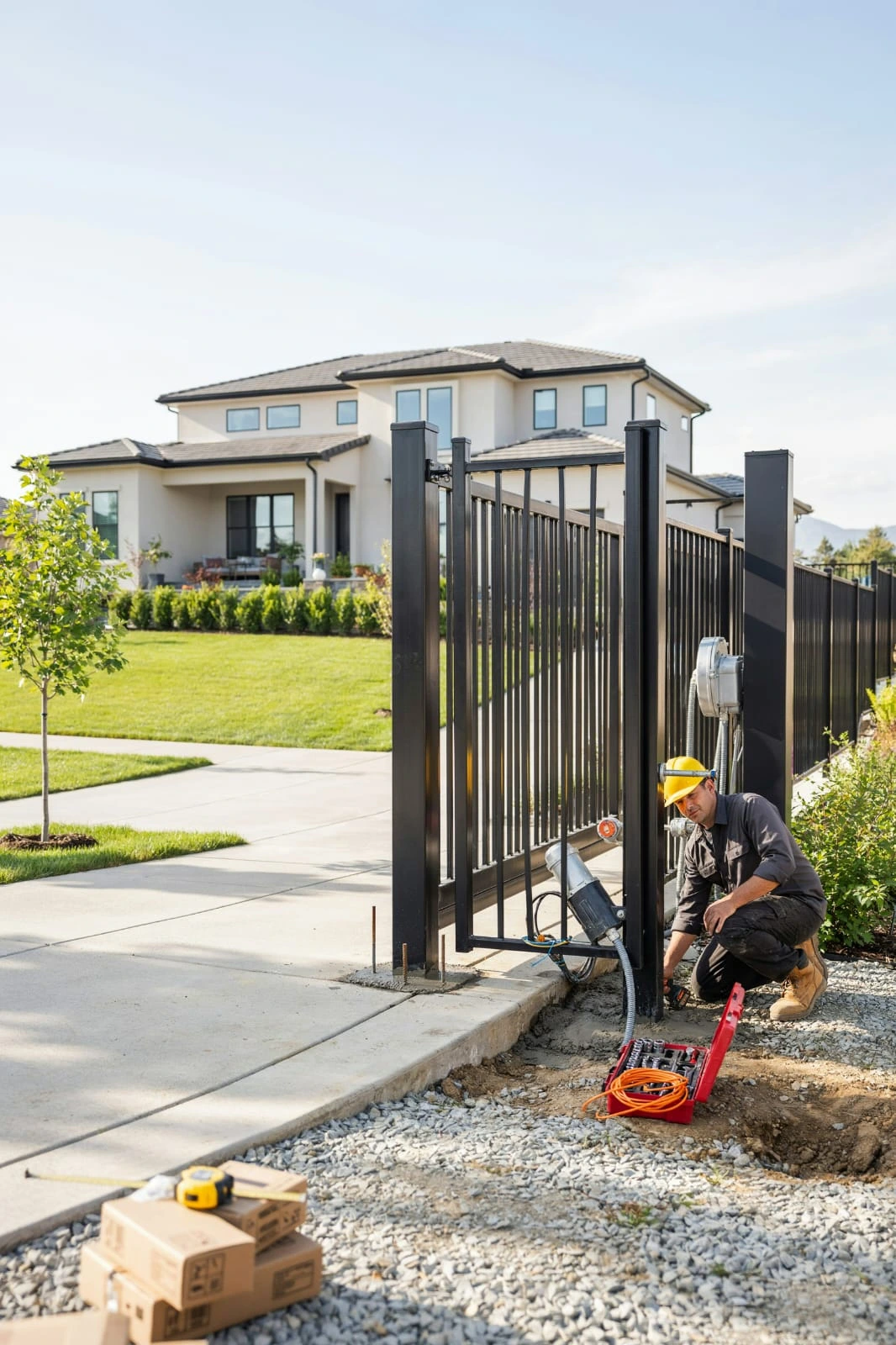
The cost of home gate designs depends on the material, dimensions, customization, installation method, site preparation, and whether automation is included.
The following figures are broad US market planning estimates, not current quotes or guaranteed prices.
Simple Wooden Pedestrian Gate
Approximate materials cost: $150 to $600.
What affects the price: Wood species, dimensions, hardware, finish, and construction quality.
A basic wooden pedestrian gate may be relatively affordable, although premium timber, decorative details, and custom sizing can increase the price.
Custom Wrought Iron Main Gate
Approximate cost: $1,500 to $6,000 or more.
What affects the price: Decorative detailing, overall dimensions, fabrication, finish, and installation complexity.
Custom ornamental iron gates often cost more because of their weight, specialized workmanship, and finishing requirements.
Steel Driveway Gate
Approximate cost: $1,000 to $4,000.
What affects the price: Frame design, panel size, protective finish, hardware, and installation requirements.
Simple steel gates may cost less than elaborate custom designs. Larger gates and privacy panels can require stronger supporting structures.
Automatic Gate Opener Addition
Approximate cost: $800 to $2,500.
What affects the price: Gate weight, opener type, electrical access, controls, safety devices, and installation needs.
An automatic opener adds convenience but also introduces additional equipment, maintenance, and safety requirements.
Professional installation, foundations, posts, electrical work, access-control systems, and site preparation may add significantly to the total. Depending on the project, actual prices may fall below or exceed these ranges.
For a more reliable budget, request at least two or three itemized quotes from local fabricators and installers. Ask each supplier to separate the gate, hardware, finishing, installation, electrical work, and any additional site preparation.
If you’re outside the United States, use local prices and currency rather than relying on US estimates.
Choosing Home Gate Designs by House Size and Driveway Layout
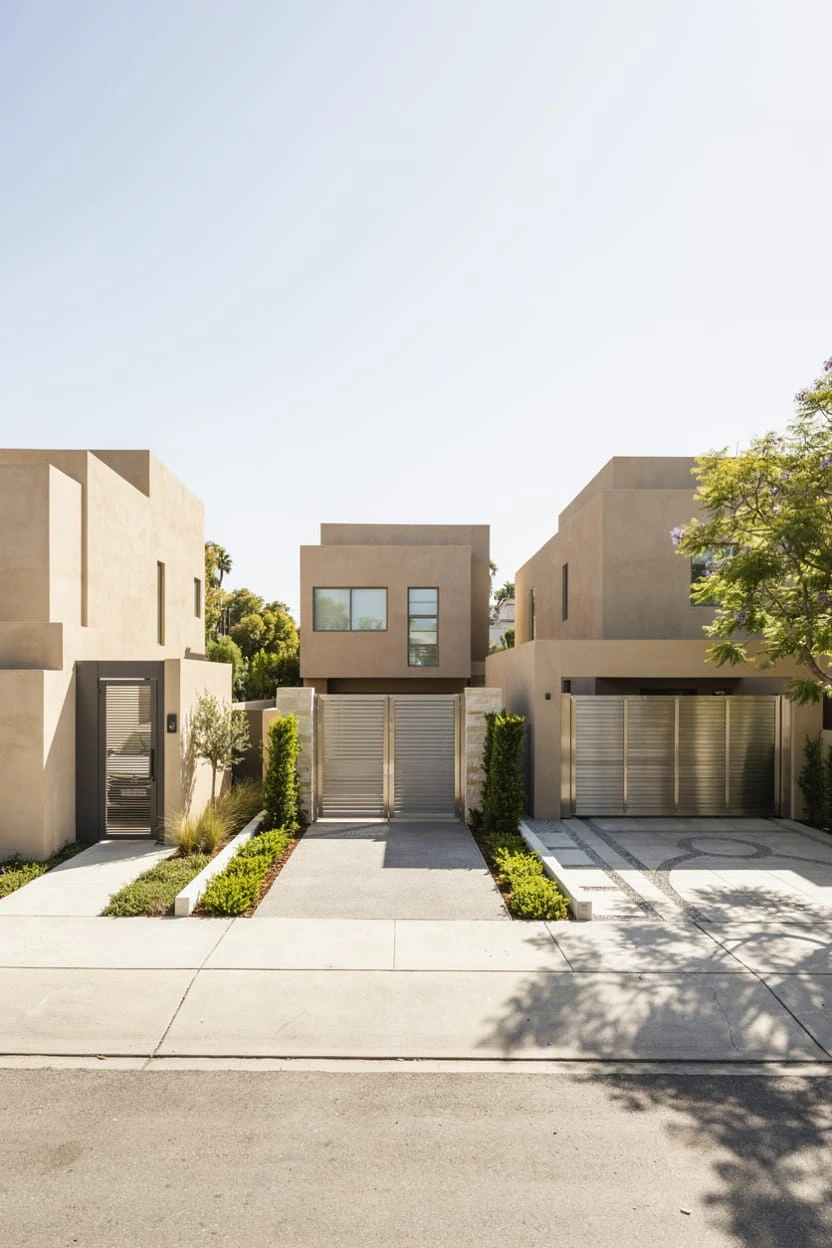
Your property’s dimensions and entrance layout should influence your gate selection as much as its appearance. A gate that works well on a large suburban property may be unsuitable for a compact house with limited clearance.
Small House with a Narrow Frontage
Suitable style: Simple single-panel gate.
Approximate pedestrian opening: Around 3 to 4 feet.
Important consideration: Keep the gate proportional to the facade and ensure it opens without blocking the pathway.
Standard Suburban Driveway
Suitable style: Single sliding gate or double swing gate.
Approximate opening width: Often around 10 to 12 feet for a single-vehicle entrance.
Important consideration: Confirm the actual clearance needed for your vehicle, including mirrors and turning space.
Wide Driveway or Rural Property
Suitable style: Sliding gate or double swing gate.
Approximate opening width: Around 14 to 20 feet may be appropriate for some entrances, depending on the vehicles and intended use.
Important consideration: Check the available side clearance, swing radius, ground conditions, and vehicle dimensions.
Gated Courtyard
Suitable style: Coordinated pedestrian and vehicle gates.
Approximate opening width: Depends on the courtyard layout and access requirements.
Important consideration: Keep the materials, finishes, and design details consistent across the entrance.
These measurements are starting points rather than universal requirements. Measure the actual opening, account for posts and hardware, and consider the vehicles that will use the entrance before ordering.
Common Mistakes to Avoid When Choosing Home Gate Designs
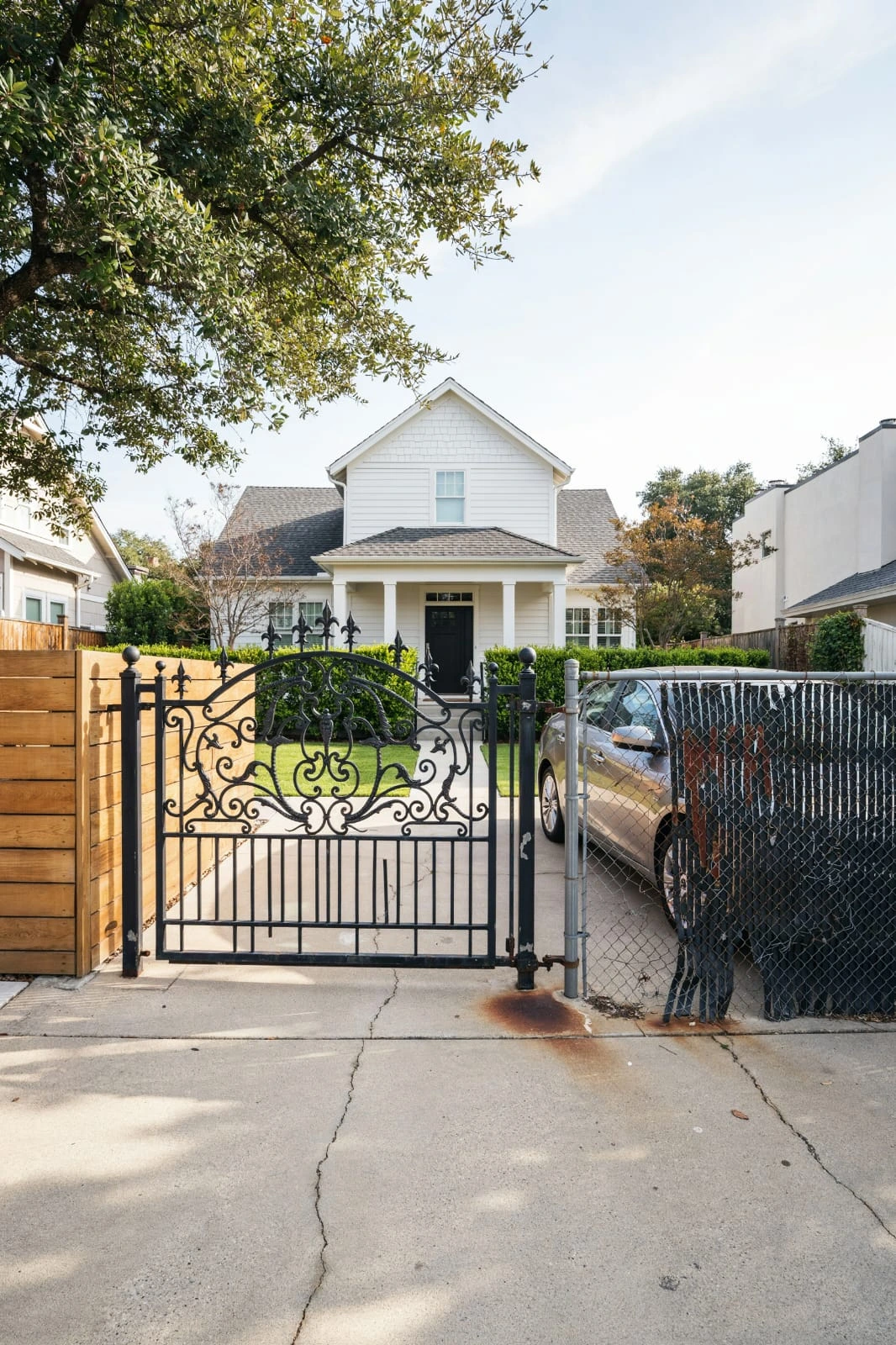
Even attractive home gate designs can become frustrating when practical requirements are overlooked. Avoiding these common mistakes can help you choose a gate that performs as well as it looks.
Ignoring the Swing Radius
Swing gates need enough space to open fully. A design that looks perfect in a catalog may hit a parked vehicle, drag across sloping ground, or block a pathway.
Measure the full opening arc and check ground clearance before choosing this style.
Forgetting to Coordinate the Gate and Fence
A gate and fence with completely different heights, colors, or patterns can make the entrance feel disconnected from the rest of the property.
Coordinate important design details before ordering either component.
Underestimating Maintenance
Wood needs suitable protection against weather, while metal gates may require coating repairs and corrosion checks. Choose a material that matches the amount of maintenance you’re realistically prepared to perform.
Choosing the Wrong Level of Security
A decorative garden gate and a security-focused driveway gate serve different purposes. Consider the frame, hinges, locking system, supporting posts, and overall construction rather than assuming that a heavy-looking gate is automatically secure.
Overlooking Local Regulations
Gate height, fence placement, visibility near roads, and automated gate safety may be subject to local rules. Requirements vary by jurisdiction and property type.
Check with your local building or zoning department before construction, particularly if the gate opens toward a public sidewalk or road.
Leaving Automation Until the Last Minute
If you may want an automatic opener in the future, plan for it during the initial design. Suitable power access, wiring routes, structural support, compatible hardware, and safety devices can make later installation easier.
Frequently Asked Questions About Home Gate Designs
What Is the Most Durable Material for a Home Gate?
Steel, wrought iron, and aluminum can all provide long service lives when properly designed and maintained. Aluminum naturally resists rust and generally requires less corrosion-related maintenance, while steel and iron need suitable protective finishes and timely repairs.
How Wide Should a Driveway Gate Be?
An opening of around 10 to 12 feet is common for many single-vehicle entrances, while wider openings may be appropriate for larger vehicles or two-car access. The correct width depends on vehicle dimensions, turning space, supporting posts, and site conditions.
Is a Sliding Gate or a Swing Gate Better for a Home?
Sliding gates are often more practical where there is limited swing clearance or a suitable sloped driveway layout. Swing gates can be simpler and more economical for many relatively level entrances with enough room to open fully.
How Much Does a Wooden Gate Cost Compared with a Metal Gate?
A simple wooden gate can be relatively affordable, although premium timber and custom designs may cost more. Custom wrought iron often carries a higher price because of its fabrication and decorative detailing, while steel and aluminum costs depend on size, construction, and finish.
Do I Need a Permit to Install a Home Gate?
Permit requirements depend on your local jurisdiction, gate height, property location, and installation details. Some areas regulate front-yard boundaries, road visibility, or automated gate safety. Check local requirements before beginning construction.
Can a Wooden Gate Be Combined with a Metal Frame?
Yes. A steel or aluminum frame with wooden inserts is a common mixed-material design. It combines the appearance of natural timber with a metal framework, provided the materials, joints, drainage, and protective finishes are properly designed.
What Is the Difference Between a Manual and an Automatic Sliding Gate?
A manual sliding gate is opened and closed by hand. An automatic sliding gate uses a motor and suitable controls, such as a remote or keypad. Automation adds convenience but increases the initial cost and introduces additional maintenance and safety requirements.
How Often Does an Iron Gate Need Repainting?
There is no universal repainting schedule. The timing depends on the original coating, exposure to rain or salt air, and signs of rust or finish damage. Inspect the gate periodically and repair damaged areas before corrosion spreads.
What Gate Design Works Best for a Small House?
A simple single-panel gate with restrained detailing often suits a small house better than a large, heavily ornamented entrance. Choose a design that complements the facade and leaves sufficient room for safe operation.
Should the Gate Match the Fence Exactly?
Not necessarily. The gate and fence can use different materials or patterns as long as they share compatible colors, finishes, heights, or design details. The goal is a coordinated appearance rather than an exact match.
Are Modern Steel Gates Suitable for Security?
A properly designed steel gate can form part of a security system, but the material alone does not guarantee security. Frame construction, hinges, locks, supporting posts, installation, and the overall boundary design all matter.
Conclusion: Choosing the Best Home Gate Designs for Your Property
The best home gate designs balance architectural style, everyday convenience, durability, privacy, and budget. Wooden gates bring natural warmth, wrought iron adds traditional character, steel supports a wide range of designs, and aluminum offers a lightweight option with relatively low maintenance.
Before making your final decision, measure the entrance, assess the driveway layout, coordinate the gate with the fence, and compare the long-term maintenance requirements of different materials. If you plan to add automation, include the necessary provisions during the initial design and ensure that the system meets applicable safety requirements.
Most importantly, choose a gate that suits your actual property rather than following a trend without considering its practical limitations. With careful planning, appropriate materials, and professional installation where needed, the right home gate design can improve curb appeal, support your privacy and security needs, and create a welcoming entrance for years to come.