70+ Stunning Landscaping Ideas: The Ultimate Guide for Every Yard, Budget, and Season
Most homeowners do not fall in love with landscaping until they have stared at a bare, weedy yard for one too many summers. Then something clicks. You start noticing the neighbor’s crisp edging, the way river rock frames a flower bed, or how a single well-placed tree can make a front yard look finished. That is the moment landscaping stops feeling like a chore and becomes a project you actually want to work on. The right landscaping ideas can help you create a yard that looks intentional, functions well, and suits the way you actually live outdoors.
This guide covers landscaping from the ground up, including what landscaping means, how professionals approach planning, and more than 70 practical ideas for front yards, backyards, low-maintenance spaces, seasonal planting, and budget-friendly projects. Whether you are hiring a professional crew or doing the work yourself with a weekend, a shovel, and a truckload of mulch, the goal is the same: create an outdoor space that looks good and remains manageable over time.
What Is Landscaping? A Quick Definition

Landscaping is the practice of changing and arranging the visible features of an area of land, including plants, structures, surfaces, and decorative materials, to improve its appearance and function. A landscaping plan generally combines two major categories: softscape and hardscape.
Softscape includes living elements such as grass, trees, shrubs, flowers, ground covers, and other plants. Hardscape refers to non-living elements such as patios, walkways, retaining walls, edging, steps, gravel, and other structural features.
Landscape architecture takes the concept further. It is a professional field that combines design, engineering, environmental planning, and site analysis for larger or more technically demanding outdoor spaces. Drainage, grading, accessibility, water management, and long-term site performance can all be part of the process.
Types of Landscaping
Not every yard needs the same approach. Your climate, soil, available sunlight, property size, maintenance preferences, and budget all influence which landscaping style makes the most sense.
- Xeriscaping: A water-conscious approach that uses drought-tolerant plants, efficient irrigation, and materials suited to dry conditions.
- Traditional lawn and border landscaping: A classic combination of turf grass, foundation shrubs, flower beds, and defined borders.
- Naturalistic or woodland landscaping: Layered plants and natural materials arranged to create a look inspired by a forest edge or natural habitat.
- Hardscape-forward landscaping: A design that gives patios, walkways, pergolas, stone, gravel, and other structural elements a major visual role.
- Edible landscaping: Vegetables, herbs, berries, and fruit trees incorporated into an attractive overall landscape rather than separated into a purely functional garden.
- Xeric rock landscaping: A low-water design using gravel, stone, river rock, and drought-tolerant plants, particularly useful in dry climates.
Most residential yards combine two or three of these approaches rather than following a single style from beginning to end.
How to Plan Your Backyard Landscape
A backyard landscape planner does not have to be complicated software. Free and paid digital tools can help, but the most important part is understanding your actual property before you start buying materials or plants.
- Measure your space: Sketch the dimensions of the yard and mark the house, fences, existing trees, gates, utility access points, and other permanent features.
- Track the sun: Observe how sunlight moves across the yard during the day. This helps you decide where shade-loving plants, sun-loving plants, patios, and seating areas should go.
- Decide how the space will be used: Dining, entertaining, gardening, children’s play, pets, and relaxation may need separate zones rather than one crowded open area.
- Check soil and drainage: Test the soil where appropriate and pay attention to areas where water remains after rain. Drainage problems should be addressed before major planting or construction.
- Set a budget and phase the project: Structural features such as patios, retaining walls, drainage, and major grading can be expensive, so complete essential work first and add planting in stages if necessary.
- Choose a style anchor: Select a consistent palette of materials and colors, such as natural stone, cedar, and warm river rock, then repeat those elements throughout the yard.
If you prefer to design digitally, landscape planning software can help you test the placement of trees, planting beds, patios, pathways, and other features before you start digging.
Front Yard Landscaping Ideas for Better Curb Appeal
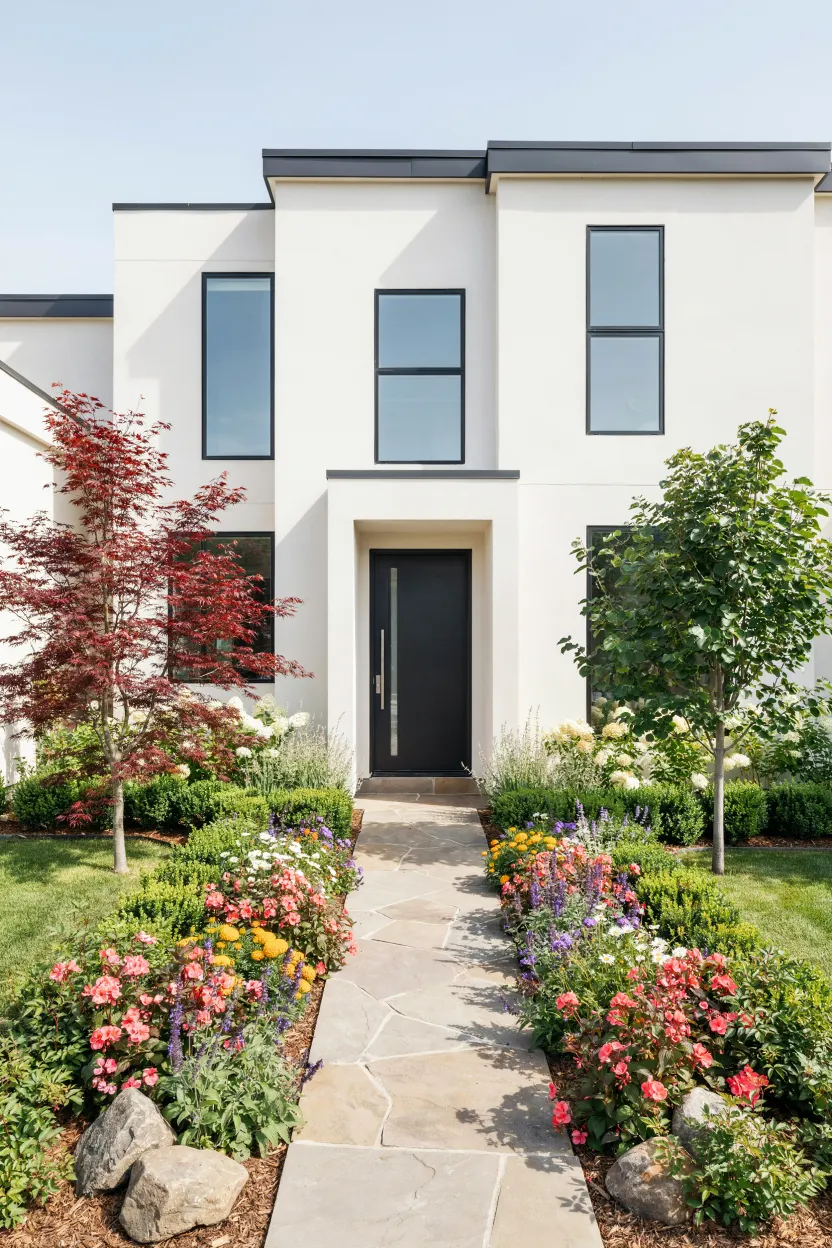
Front yard landscaping is your home’s outdoor introduction, so it deserves thoughtful planning. The best landscaping ideas for the front yard usually focus on balance, clean lines, appropriate plant scale, and an entrance that feels welcoming rather than crowded.
- Layered foundation planting: Place taller shrubs closer to the house and shorter plants toward the front of the bed so the planting looks organized.
- A defined walkway: Use flagstone, brick, concrete pavers, or another durable surface to guide visitors toward the entrance.
- Mixed hardscape and greenery: Combine clean edging, planting beds, and lawn to create clear boundaries between different areas.
- Seasonal color pockets: Add annuals or seasonal containers near the entrance for color that can be refreshed throughout the year.
- Strategic tree placement: A well-placed ornamental tree can soften a flat facade and add height to the overall composition.
- Low hedges instead of tall fencing: Boxwood, dwarf yaupon holly, or other suitable shrubs can define the property without completely hiding the house.
Simple Landscaping Ideas for a More Expensive-Looking Front Yard
You do not need expensive materials everywhere to make a front yard look polished. Consistent edging, repeated plant varieties, a clearly defined walkway, and a restrained material palette can create a more intentional appearance. The key is cohesion rather than adding more features.
Backyard Landscaping Ideas for Everyday Living

Backyard landscaping ideas tend to be more personal because the backyard is often where homeowners spend the most outdoor time. Start by deciding what you want the space to do, then organize the landscape around those activities.
Landscaping Ideas for Outdoor Entertaining
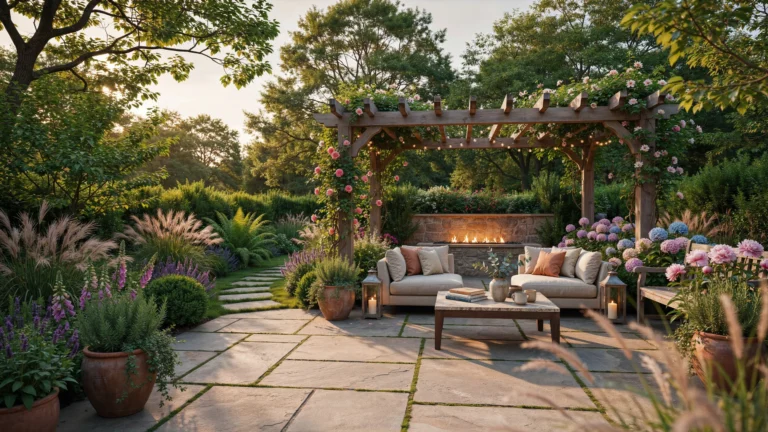
- Build a practical patio: Choose a paver, concrete, or gravel patio large enough for a dining table and enough room to move around it comfortably.
- Add outdoor lighting: String lights, pathway lights, or low-voltage landscape lighting can make seating areas more useful after sunset.
- Create a fire pit area: A properly positioned fire pit surrounded by suitable hardscape can become a natural gathering point.
Landscaping Ideas for Relaxation
- Add a shaded pergola: A pergola can define an outdoor room and provide support for suitable climbing plants.
- Install a small water feature: A compact fountain or similar feature can add movement and a gentle background sound.
- Create a private reading nook: Place a comfortable chair or bench behind ornamental grasses, shrubs, or other plants that provide a sense of separation.
Landscaping Ideas for Families
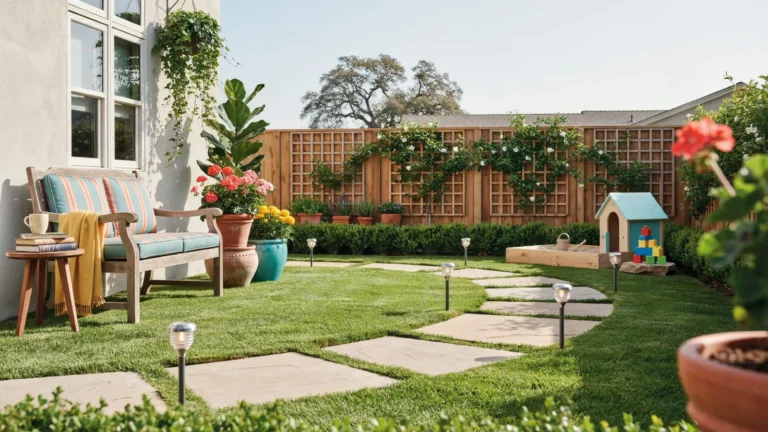
- Define a play zone: Keep children’s play equipment within a clearly planned area with an appropriate ground surface.
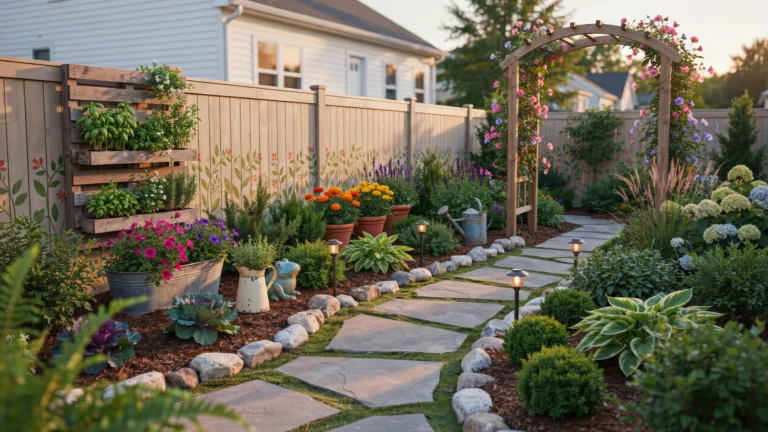
- Plant an edible garden: Raised beds, herbs, vegetables, or fruit trees can give children an opportunity to participate in gardening.
- Keep open lawn space: A simple area of turf can remain useful for games, pets, and other everyday activities.
Landscaping Ideas for Small Yards
- Use vertical planting: Trellises and wall-mounted planters add greenery without taking much ground space.
- Choose multifunctional furniture: Seating with built-in storage can serve two purposes in a compact yard.
- Use containers: Pots and planters can create flexible garden areas on decks, patios, balconies, and other spaces where traditional beds are not practical.
Choosing a Landscaping Style
| Style | Best For | Maintenance Level | Approximate Cost Level |
| Xeriscape or rock garden | Dry climates and water-conscious yards | Low | Moderate |
| Traditional lawn and beds | Classic curb appeal and family yards | Medium to high | Low to moderate |
| Hardscape forward | Entertaining spaces and smaller yards | Low to moderate | Moderate to high |
| Naturalistic or woodland | Shaded lots and wildlife-friendly landscapes | Medium | Moderate |
| Edible landscaping | Homeowners who enjoy growing food | Medium to high | Moderate |
Low Maintenance Landscaping Ideas

Not everyone wants a yard that demands attention every weekend. A low-maintenance landscape can still have strong curb appeal when plants and materials are selected according to the local climate and the amount of time you realistically want to spend maintaining them.
- Replace high-water turf where appropriate: Consider drought-tolerant native grasses or suitable ground covers for areas that do not need traditional lawn.
- Use rock strategically: Landscaping rocks and river rock can reduce the need for annual mulch replacement in suitable planting areas.
- Install drip irrigation: A properly designed drip system can deliver water efficiently to individual plants and can be connected to a timer.
- Choose more perennials: Perennial shrubs and flowers return year after year, reducing the need for repeated seasonal planting.
- Use landscape fabric selectively: It can help suppress weeds beneath rock or gravel, although it is generally less useful beneath organic mulch that continually breaks down.
- Group plants by water needs: Hydrozoning places plants with similar watering requirements together, making irrigation easier to manage.
Budget-Friendly and DIY Landscaping Ideas
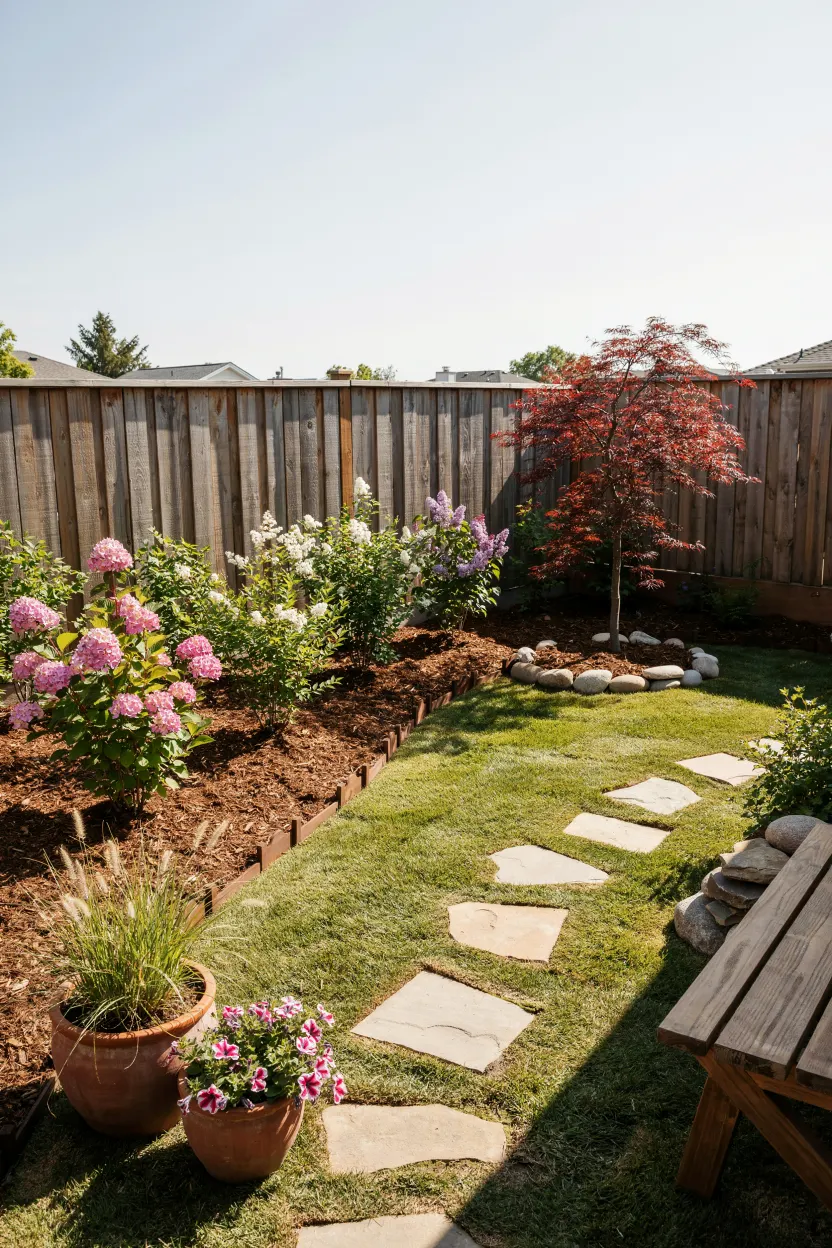
Landscaping on a budget is realistic when you prioritize the work that matters most. Instead of trying to transform the entire yard at once, focus your spending on drainage, soil, structural features, and a few high-impact areas.
Where to Spend Your Landscaping Budget
- Soil quality and drainage: These are foundational improvements that can affect how well the entire landscape performs.
- Structural hardscape: Retaining walls, drainage features, and other difficult-to-replace structures deserve careful planning and appropriate materials.
- A few larger plants or trees: Strategically placed mature or semi-mature plants can create immediate visual impact.
Where to Save Money
- Buy smaller plants: Smaller perennials often cost less and can fill out over several growing seasons.
- Divide established perennials: Suitable plants can sometimes be divided from existing garden beds rather than purchased again.
- Do your own edging and mulching: These projects require labor but usually do not require advanced construction skills.
- Buy bulk materials: Rock, mulch, compost, and soil can sometimes cost less when purchased by volume rather than in small bags.
- Shop seasonal plant sales: End-of-season sales at local nurseries can be a useful way to find suitable plants at reduced prices.
Easy Landscaping Ideas for Beginners
DIY landscape design for beginners does not require a design degree. Start with one planting bed instead of the whole property. Repeat a few plant varieties, group plants in natural-looking numbers, and leave enough room for everything to reach its mature size. A smaller number of repeated plants usually creates a more polished appearance than buying one of every plant you like.
Landscaping Materials: Rocks, Edging, and Fabric

Materials play a major role in how a landscape looks and functions. The right material depends on drainage, climate, foot traffic, maintenance, budget, and the overall style of the property.
Landscaping rocks and stones can provide both practical and decorative benefits. River rock works well in suitable dry creek beds and drainage areas, while crushed stone or decomposed granite can be useful for certain paths and informal surfaces. Larger landscape stones can also create natural-looking borders or informal seating.
Edging creates a visual boundary between lawn and planting beds. It can also make maintenance easier by reducing the amount of grass that spreads into garden areas.
- Metal edging: Durable and clean-looking, although generally more expensive than basic plastic options.
- Poly or plastic edging: Affordable and easy to install, but durability varies by product and climate.
- Natural stone or brick edging: Offers a substantial appearance and can last for many years when installed properly.
- Trenched edging: A simple, low-cost option created by cutting a narrow trench between the lawn and planting bed, although it needs periodic maintenance.
Landscaping fabric can suppress weeds when installed correctly, but it is not a permanent solution. Soil and organic debris can eventually accumulate above the fabric, allowing weeds to establish in the new layer. For that reason, landscape fabric is often more useful beneath rock or gravel than beneath planting beds that will be regularly amended and replanted.
Seasonal Landscaping for All Four Seasons

Four season landscaping means planning the yard so that it continues to provide visual interest throughout the year rather than looking impressive only during peak summer bloom.
- Spring: Bulbs such as tulips and daffodils, along with flowering trees and early shrubs, can bring color back into the landscape.
- Summer: Perennials, annual flowers, ornamental grasses, and full tree canopies provide the strongest combination of color and texture.
- Fall: Ornamental grasses, mums, berries, and trees with strong autumn foliage can extend seasonal interest.
- Winter: Evergreens, interesting bark, branches, seed heads, and berry producing shrubs can keep the landscape from looking completely bare.
A well planned landscape does not need every plant to look impressive in every season. Instead, aim to have at least one or two elements providing interest during each part of the year.
Landscaping Near Me: Hiring a Company or Doing It Yourself

Searching for landscaping near me or landscaping companies near me can produce many different types of services. Some companies focus on lawn maintenance, while others handle landscape design, installation, irrigation, hardscape construction, or complete outdoor renovations.
When to Hire a Landscaping Company
- Grading, drainage, or retaining walls: Structural problems can become expensive when they are installed incorrectly, so professional help is often worthwhile.
- Large property redesigns: A designer or landscape contractor can help coordinate multiple areas into one cohesive plan.
- Limited time or physical ability: Professional installation can reduce the physical workload and shorten the project timeline.
When DIY Landscaping Makes Sense
- Individual planting beds: Small sections are easier to plan and complete without becoming overwhelming.
- Basic maintenance projects: Mulching, planting, simple edging, and suitable container gardens can often be handled by homeowners.
- Learning over time: Completing the landscape in stages allows you to gain experience and adjust your approach before investing in larger projects.
Landscaping costs vary significantly according to region, project size, materials, labor, site conditions, and the amount of hardscape involved. Basic installation may cost several dollars per square foot, while larger backyard renovations involving patios, retaining walls, drainage, lighting, or other construction can reach much higher totals. Always request multiple written estimates and confirm exactly what materials, labor, preparation, cleanup, and follow up services are included.
If you are interested in landscaping as a career rather than as a homeowner project, opportunities range from lawn and garden maintenance to installation, landscape design, project management, and landscape architecture. Requirements and compensation vary considerably by role, experience, location, and education.
Why Landscaping Matters
Landscaping is not purely cosmetic. A thoughtfully designed outdoor space can improve how a property functions while also making it more enjoyable to use.
- Improved curb appeal: Clean planting beds, healthy plants, defined paths, and consistent materials can make a property look more cared for.
- Better stormwater management: Appropriate grading, planting, and drainage features can help manage runoff and reduce erosion.
- Support for local ecosystems: Suitable native plants can provide food and habitat for pollinators, birds, and other wildlife.
- Access to green space: Gardens and outdoor spaces can provide a relaxing environment and encourage time outside.
- Potential energy benefits: Strategically positioned shade trees can reduce direct summer sun around some parts of a home and may help lower cooling demand.
Common Landscaping Mistakes to Avoid

- Skipping the plan: Buying plants impulsively can create a yard with inconsistent scale, color, and maintenance requirements.
- Ignoring mature plant size: A small shrub can eventually become much larger than the space available for it.
- Overlooking drainage: Water that repeatedly pools near a foundation or in planting beds can create serious long term problems.
- Overplanting: Filling every space immediately can create crowding as plants mature.
- Mismatching scale: Tiny plants can disappear beside a large house, while oversized trees can overwhelm a small yard.
- Ignoring maintenance needs: A beautiful plant is not necessarily a good choice if its watering, pruning, or seasonal care does not fit your routine.
Best Practices and Expert Recommendations
The strongest landscaping results usually come from working with the property rather than constantly fighting its natural conditions.
- Work with the yard’s existing sunlight, soil, drainage, and climate.
- Repeat a limited selection of plants instead of using one of everything.
- Install irrigation before completing major planting whenever irrigation is needed.
- Leave enough room for plants to reach their mature size.
- Layer bloom periods so different plants provide seasonal interest at different times.
- Photograph the yard throughout the year before making major changes so you understand how the space behaves in every season.
Landscaping Inspiration Before You Start
Before beginning a major project, spend some time looking at real landscaped yards rather than relying only on highly edited or computer generated images. Home and garden publications, university extension resources, local garden centers, and landscape design portfolios can help you understand plant combinations, material choices, proportions, and realistic maintenance requirements.
Save examples that match your property’s climate, size, architecture, and budget. Instead of copying one yard exactly, identify the elements you like and combine them into a plan that works for your own space.
FAQ: Landscaping Ideas
What is the cheapest way to landscape a yard?
Start with basic improvements such as mulch, simple edging, a small number of suitable perennials, and well planned planting beds. Buying smaller plants and purchasing soil, rock, or mulch in bulk can also help reduce costs.
What is the difference between landscaping and gardening?
Landscaping covers the broader design and structure of an outdoor space, including plants, hardscape, paths, patios, grading, and other features. Gardening usually focuses more specifically on growing and caring for plants within that landscape.
How much does landscaping cost on average?
There is no single average that applies to every property. Costs depend on location, yard size, labor, materials, preparation, drainage, planting, and hardscape. Small planting projects can be relatively affordable, while complete landscape renovations can cost considerably more.
What landscaping rocks are best for drainage?
Coarse river rock, gravel, and crushed stone can allow water to move through spaces between the pieces and are commonly used in suitable drainage features such as dry creek beds and swales. The correct material depends on the drainage design and site conditions.
Is landscaping fabric worth it?
It can be useful for weed suppression beneath rock or gravel, but it is not a permanent weed prevention solution. Organic debris can accumulate above the fabric over time, especially in planting beds that receive regular soil disturbance.
What is the best low maintenance landscaping option?
A combination of suitable native or climate adapted plants, efficient irrigation, appropriate ground cover, and strategically placed rock or gravel can create a relatively low maintenance landscape. The best combination depends on your local growing conditions.
When is the best time to start a landscaping project?
Planting seasons vary by climate, but fall and early spring are often favorable for establishing many trees, shrubs, and perennials in temperate areas. Hardscape and construction work can have a wider seasonal window depending on local weather and soil conditions.
Do I need a professional for backyard landscaping?
Not necessarily. Planting beds, containers, mulching, and basic edging are manageable DIY projects for many homeowners. Grading, drainage, major retaining walls, electrical work, and complex hardscape projects may require qualified professionals.
What edging material lasts the longest?
Natural stone and properly installed metal edging can provide long service lives, although durability depends on the material quality, installation, climate, soil movement, and maintenance.
How do I make my front yard look more expensive?
Focus on clean edging, layered plant heights, a defined walkway, healthy plants, and a consistent material palette. A cohesive design often looks more refined than a yard filled with many unrelated decorative features.
Bringing It All Together

A good landscape rarely happens in one weekend, and it usually does not happen by accident. The most successful landscaping ideas begin with understanding your yard’s sunlight, soil, drainage, climate, and the way you actually want to use the space.
Whether you are planning a complete backyard transformation or simply replacing tired mulch with clean edging and a few new shrubs, the same principle applies: start with a clear plan, prioritize the features that matter most, choose plants and materials that suit your conditions, and build the landscape in manageable stages.
A landscape should not only look good in a photograph. It should work for your daily life, remain realistic to maintain, and continue to provide interest through changing seasons. With thoughtful planning and the right landscaping ideas, even a basic yard can gradually become an outdoor space that feels finished, functional, and genuinely yours.