45 Stylish Breakfast Nook Ideas for Every Kitchen and Small Space
A breakfast nook can be much more than a small table tucked into a kitchen corner. It can become one of the most inviting spaces in your home—a comfortable place for morning coffee, family breakfasts, homework, casual conversations, and quiet moments before a busy day begins.
In many American homes, formal dining rooms sit unused for much of the year. A thoughtfully designed breakfast nook offers a more practical alternative, creating a relaxed dining area that feels welcoming and useful every day.
The best part? You don’t need a large kitchen or an expensive renovation to create one.
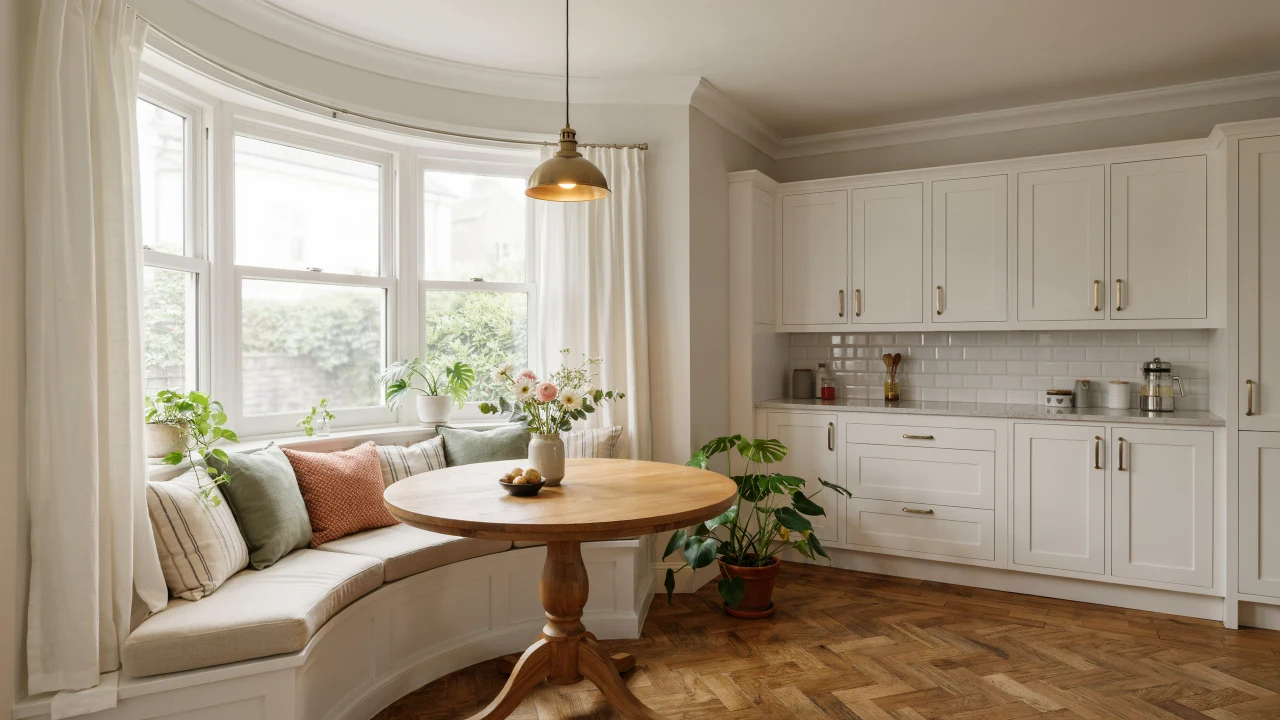
From compact apartments and cozy cottage kitchens to spacious suburban homes, these breakfast nook ideas offer inspiration for every layout, budget, and decorating style. You might prefer a built-in breakfast nook with hidden storage, a charming bay window breakfast nook, a modern dining corner, or a simple breakfast nook bench paired with a small round table.
This guide explores 45 stylish breakfast nook ideas, along with practical advice on furniture, seating, lighting, storage, DIY projects, budgeting, and decorating. Whether you’re starting from scratch or refreshing an existing space, you’ll find ideas to help you create a breakfast nook that looks beautiful and works for everyday life.
1. What Is a Breakfast Nook?
A breakfast nook is a small dining area located inside or next to the kitchen. Unlike a formal dining room, it is designed for casual meals and everyday activities in a comfortable, often space-saving setting.
Most breakfast nooks include a small table, comfortable seating, and a few decorative touches that make the area feel connected to the rest of the home. Some feature built-in benches or window seating, while others use freestanding tables and chairs.
A breakfast nook can occupy a dedicated alcove, an unused corner, a bay window, or a small section of an open-concept kitchen. With the right furniture and layout, even a compact kitchen can accommodate a practical dining spot without feeling overcrowded.
2. Why Breakfast Nooks Are So Popular
Breakfast nooks combine everyday convenience with the warmth of a dedicated gathering space.
They make better use of overlooked kitchen corners, provide an alternative to crowded kitchen islands, and give families a comfortable place to eat without setting up a formal dining room.
A well-planned nook can also serve several purposes throughout the day. It might function as a breakfast area in the morning, a homework station in the afternoon, and a quiet place to enjoy tea or read in the evening.
For smaller homes, multifunctional furniture and built-in seating can make the space especially valuable. In larger kitchens, a breakfast nook can create a natural transition between cooking, dining, and living areas.
45 Breakfast Nook Ideas for Every Kitchen and Small Space
1. Create a Built-In Breakfast Nook
A built-in breakfast nook gives your kitchen a custom, finished appearance while making excellent use of available space. An L-shaped bench fitted into a corner can provide generous seating without requiring several separate chairs.
Choose painted cabinetry, natural wood, or upholstered bench cushions to complement your kitchen. If you need extra organization, add lift-up seats or drawers underneath.
Best for: Families, corner kitchens, and homeowners who want permanent seating with additional storage.
2. Design a Charming Bay Window Breakfast Nook
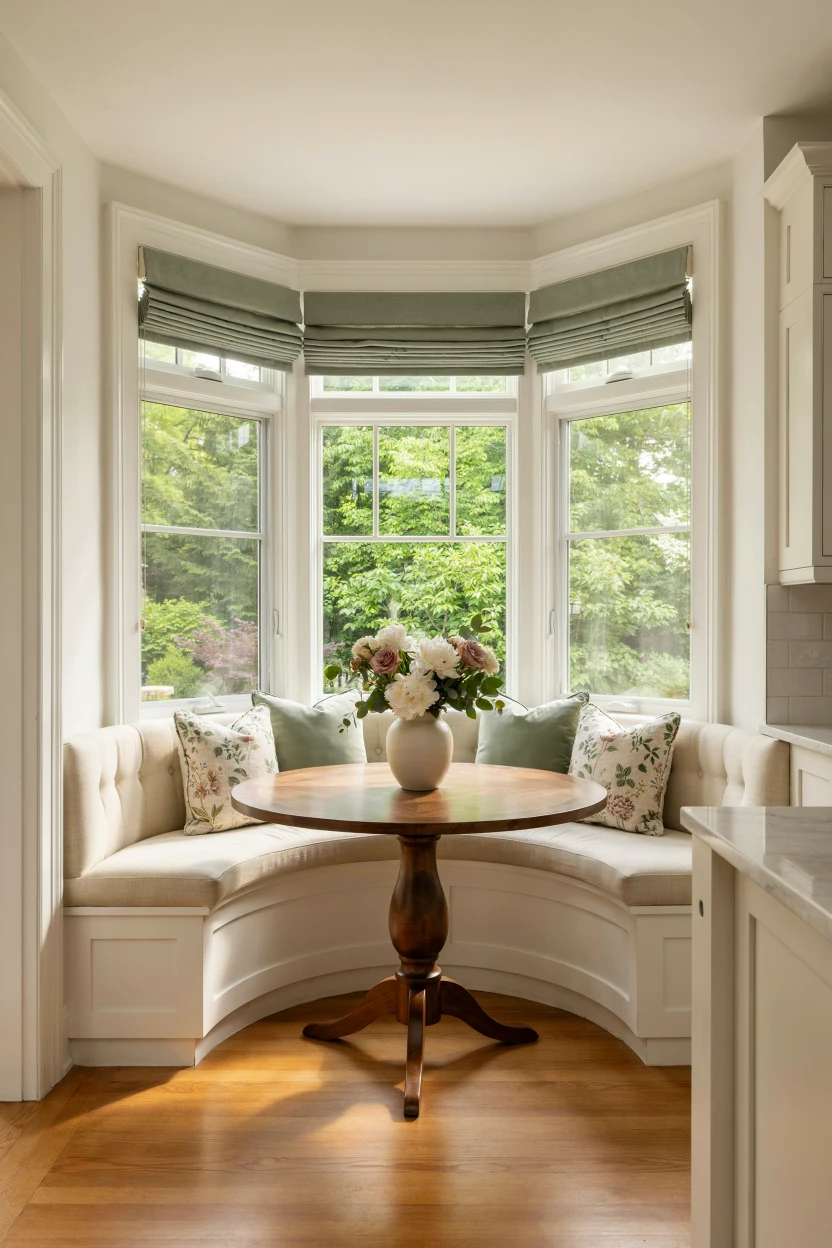
A bay window can provide the perfect setting for a bright and inviting breakfast nook. Position a bench along the window, add comfortable cushions, and place a round table in front to create a natural gathering spot.
Soft Roman shades, a few throw pillows, and a small vase of fresh flowers can make the area feel complete without blocking the view.
Best for: Kitchens with bay windows and homes that receive plenty of natural light.
3. Make the Most of a Kitchen Corner
An unused kitchen corner can become a functional dining area with an L-shaped bench and a compact table. This arrangement uses the walls efficiently while leaving more room for movement through the kitchen.
Choose a round pedestal table to make getting in and out easier. A bench with hidden storage can provide another practical benefit.
Best for: Small kitchens, awkward layouts, and homes where floor space is limited.
4. Choose a Round Wooden Table
A round wooden table brings warmth and a relaxed feel to almost any breakfast nook. Its curved edges make movement around the table easier, particularly in narrow kitchens or compact dining corners.
Oak, walnut, and other wood finishes pair beautifully with white cabinets, neutral upholstery, and natural textures.
Best for: Small kitchens, farmhouse interiors, and everyday family meals.
5. Add a Cozy Upholstered Breakfast Nook Bench
An upholstered bench makes a breakfast nook feel more comfortable and inviting. Choose a durable fabric in a neutral shade, then add a few cushions in complementary colors or patterns.
For busy households, washable covers or performance fabrics can make maintenance easier. A supportive backrest is especially useful if you plan to spend time reading, working, or enjoying longer meals.
Best for: Families, cozy interiors, and breakfast nooks used throughout the day.
6. Embrace Modern Farmhouse Style
A modern farmhouse breakfast nook combines natural materials with clean, simple finishes. Picture a rustic oak table, a white bench, soft linen cushions, black metal lighting, and a few carefully chosen decorative accents.
The goal is to balance warmth and simplicity without making the space feel overly rustic or cluttered.
Best for: Farmhouse kitchens, cottage homes, and interiors that mix traditional and contemporary elements.
7. Create a Minimalist Modern Nook
For a contemporary kitchen, keep the breakfast nook streamlined and uncluttered. Choose a light oak table, simple seating, neutral upholstery, and a pendant light with a clean geometric shape.
Avoid unnecessary accessories and oversized furniture. A few well-chosen pieces can make a small nook feel more open and sophisticated.
Best for: Modern homes, minimalist interiors, and compact open-plan kitchens.
8. Turn a Small Apartment Corner Into a Breakfast Nook
You don’t need a dedicated dining room to enjoy a breakfast nook. A small round table, two lightweight chairs, and a narrow bench can transform an unused apartment corner into a practical eating area.
Choose furniture with slim legs and a visually light design. If space is especially limited, consider a wall-mounted table or chairs that can be tucked away when not needed.
Best for: Studio apartments, rental homes, and compact kitchens.
9. Install an L-Shaped Banquette
An L-shaped banquette follows two adjoining walls, creating a comfortable seating area that uses corner space efficiently.
Pair it with a rectangular or round table, depending on your layout. Add cushions and a few coordinating pillows to soften the appearance, and consider storage beneath the seats if the design allows.
Best for: Family kitchens, corner layouts, and households that need extra seating.
10. Brighten the Space With White and Natural Wood
White and natural wood create a timeless combination that works especially well in a breakfast nook. White seating and walls keep the area feeling bright, while a wood tabletop adds warmth and texture.
Introduce personality through green plants, woven baskets, patterned cushions, or a colorful centerpiece.
Best for: Scandinavian interiors, farmhouse kitchens, and small spaces that benefit from a light appearance.
11. Add a Statement Pendant Light
A pendant light helps define the breakfast nook and makes it feel like an intentional part of the kitchen design.
Choose a woven shade for a relaxed natural look, a glass pendant for a lighter appearance, or a metal fixture for a more contemporary style. Position the light centrally over the table and follow the fixture manufacturer’s installation guidance.
Best for: Open-concept kitchens, dining corners, and breakfast nooks that need a visual focal point.
12. Decorate With Soft Sage Green
Sage green brings a gentle touch of color to a breakfast nook without overwhelming the space. Use it on bench cushions, painted seating, wall accents, or decorative accessories.
Pair sage with cream, warm white, natural oak, and brass details for a balanced and inviting look.
Best for: Cottage kitchens, nature-inspired interiors, and homeowners who want subtle color.
13. Use a Glass Table to Keep the Space Open
A glass tabletop allows more light to pass through the breakfast nook, helping the area feel visually less crowded.
Pair it with compact chairs, a simple upholstered bench, or a sculptural pedestal base. Keep nearby decorations understated so the transparent surface remains a defining feature.
Best for: Small kitchens, apartments, and contemporary interiors.
14. Build a Breakfast Nook With Hidden Storage
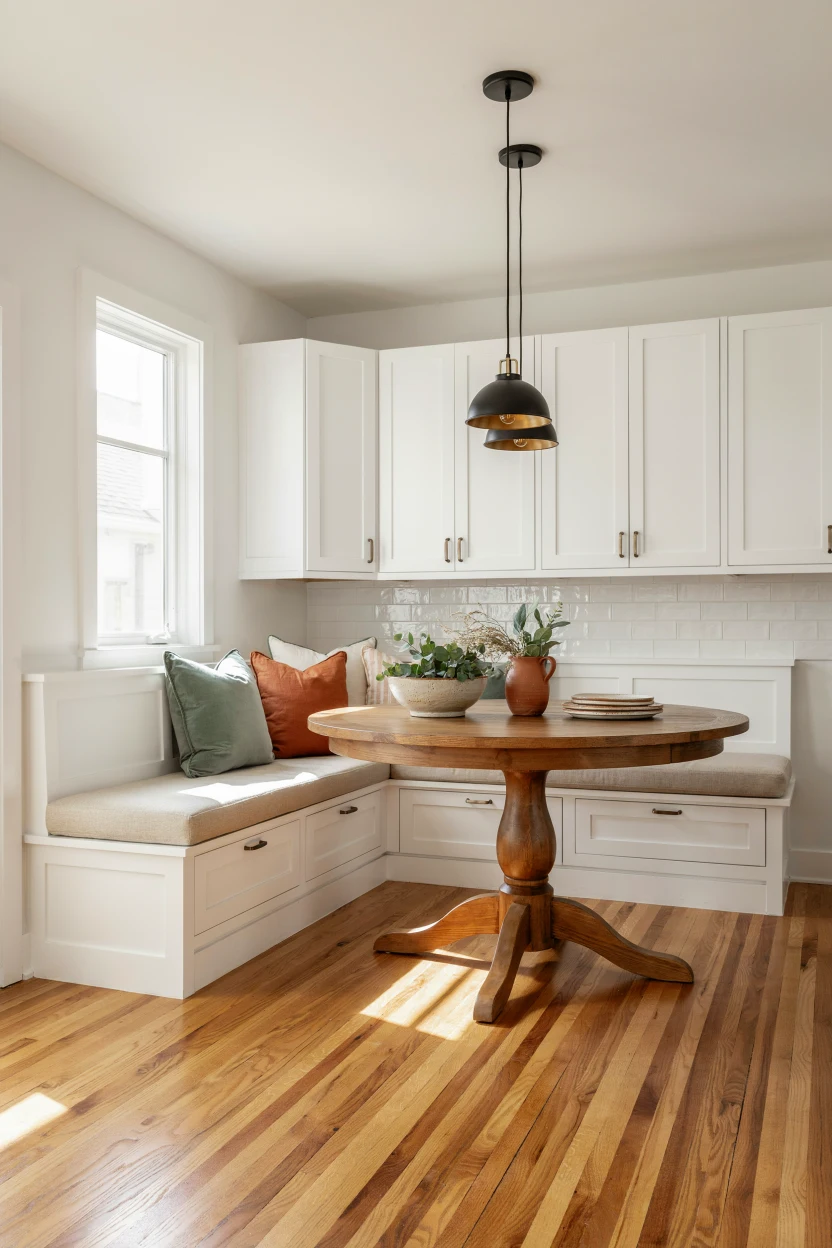
A storage breakfast nook is especially useful when kitchen cabinets are already full. Built-in benches can include lift-up seats or pull-out drawers for table linens, cookbooks, games, and other household essentials.
Plan the storage around items you use regularly. Frequently accessed belongings are easier to manage in drawers, while less-used items can go inside deeper compartments.
Best for: Small homes, busy families, and kitchens that need additional organization.
15. Create a Scandinavian-Inspired Breakfast Corner
Scandinavian design emphasizes natural materials, simple forms, and practical comfort. A light wood table, white walls, understated seating, and soft textiles can create a bright and peaceful breakfast nook.
Add a small plant, a neutral rug, and warm lighting to prevent the space from feeling too stark.
Best for: Minimalist homes, compact kitchens, and interiors that favor a calm atmosphere.
16. Add a Built-In Bench Beneath a Window
A window bench can turn an otherwise overlooked area into a comfortable place to eat, read, or enjoy a morning coffee.
Use a seat cushion that fits the bench securely, and select window treatments that provide privacy without unnecessarily blocking natural light.
If the bench is intended for dining, make sure its height and depth work comfortably with the table.
Best for: Kitchens with unused windows, cottage interiors, and homes with limited floor space.
17. Mix a Bench With Dining Chairs
Combining a bench on one side of the table with individual chairs on the other creates a balanced, flexible arrangement.
This setup can make a small breakfast nook feel less formal while allowing you to adjust seating when guests arrive. Choose materials and finishes that coordinate without needing to match perfectly.
Best for: Family homes, flexible dining areas, and homeowners who like a layered interior style.
18. Bring in Coastal Breakfast Nook Style
A coastal breakfast nook feels fresh, relaxed, and naturally bright. Combine white or pale blue upholstery with light wood, woven textures, and subtle nautical-inspired details.
You can introduce the coastal look without filling the room with seashells or obvious beach decorations. A few natural textures and soft colors are often enough.
Best for: Bright kitchens, beach-inspired homes, and relaxed contemporary interiors.
19. Create a Cute Café-Style Breakfast Nook
A small café-style nook can make an ordinary kitchen corner feel charming and personal. Choose a round bistro table, two comfortable chairs, and a compact pendant light.
Complete the look with a framed print, fresh flowers, or a small vase. A patterned cushion or colorful table runner can add personality without taking up extra space.
Best for: Apartments, breakfast corners for two, and homes with a casual European-inspired style.
20. Use an Oval Table in a Narrow Space
An oval table offers the longer surface of a rectangular table with softer corners. It can be a useful choice when you need seating for several people but want to maintain a comfortable circulation path.
Pair it with a wall-side bench to reduce the number of chairs that extend into the walkway.
Best for: Narrow kitchens, longer breakfast nooks, and families who need additional table space.
21. Add Floating Shelves Above the Bench
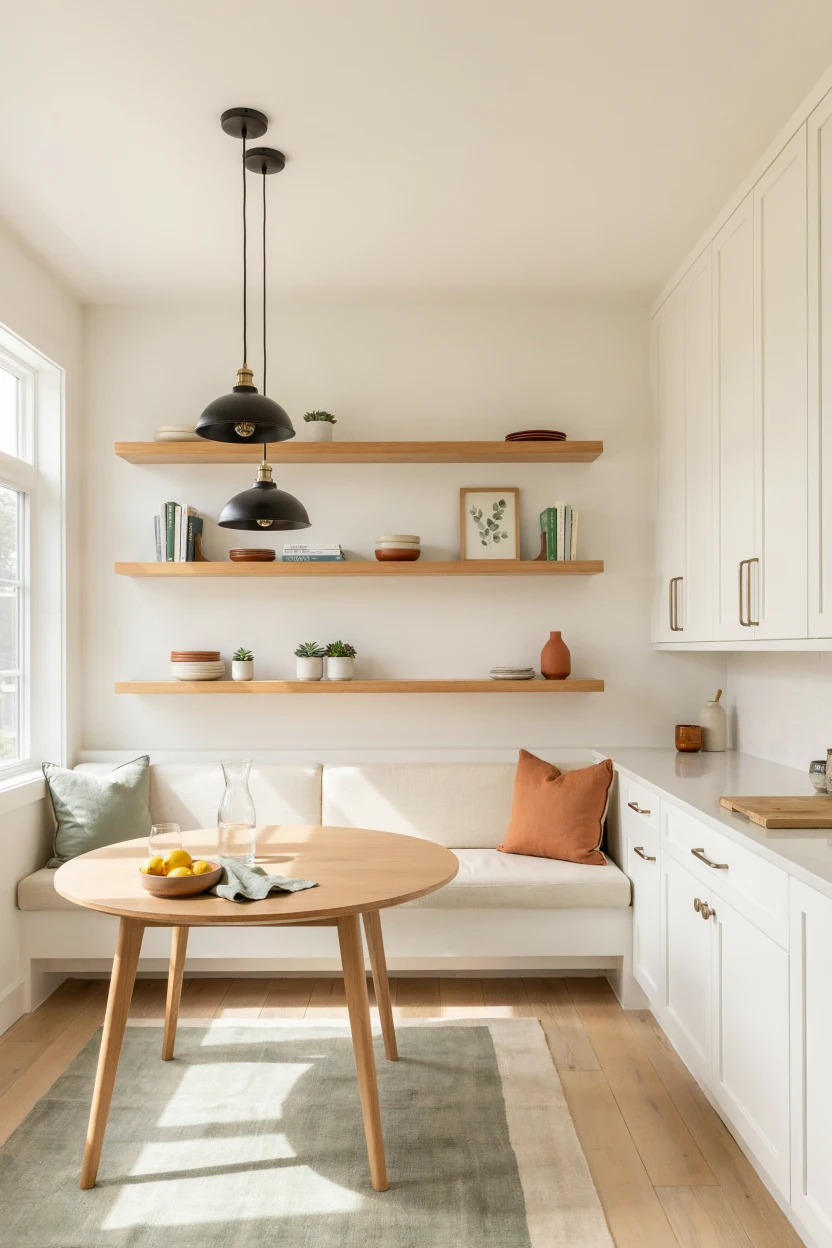
Floating shelves provide storage and display space without taking up floor area. Use them for a few cookbooks, small plants, framed artwork, or attractive everyday dishes.
Avoid placing heavy objects where they could fall onto seated occupants, and install shelves securely according to the manufacturer’s instructions.
Best for: Small kitchens, simple DIY updates, and breakfast nooks that need vertical storage.
22. Make a Statement With a Colorful Banquette
A colorful banquette can turn the breakfast nook into a standout feature. Consider deep blue, forest green, terracotta, or warm mustard upholstery, depending on the surrounding kitchen palette.
Balance stronger colors with neutral walls, a simple table, and understated accessories so the seating remains the focal point.
Best for: Eclectic homes, colorful kitchens, and homeowners who want a distinctive design.
23. Use a Pedestal Table for More Legroom
A pedestal table has a central base instead of four traditional legs. This design can make it easier for people to move their chairs and find comfortable legroom around a compact table.
Choose a base that remains stable and provides enough clearance for your seating arrangement.
Best for: Small breakfast nooks, banquette seating, and round-table layouts.
24. Add a Textured Area Rug
A washable area rug can visually separate the breakfast nook from the surrounding kitchen. Woven patterns, subtle stripes, and low-pile textures work well because dining chairs can move more easily across them.
Choose a rug large enough to accommodate the table and chairs without creating a tripping hazard. In areas prone to spills, select a material that is easy to clean.
Best for: Open-concept homes, breakfast corners without built-in boundaries, and spaces that need added warmth.
25. Decorate With Plants and Fresh Flowers
Plants and flowers bring natural color and life to a breakfast nook. A small vase on the table, a plant on a nearby shelf, or greenery on a windowsill can make the space feel more welcoming.
Keep the tabletop arrangement low enough for comfortable conversation. If you have pets or young children, choose plant varieties and containers appropriate for your household.
Best for: Nature-inspired kitchens, bright window nooks, and simple seasonal decorating.
26. Design a Compact Two-Person Breakfast Nook
A breakfast nook for two can be both stylish and practical. Start with a small round or square table and two comfortable chairs, then add a wall sconce or pendant to establish a cozy atmosphere.
Keep decorations minimal so the table remains useful for meals, coffee, or working on a laptop.
Best for: Couples, studio apartments, and narrow kitchen corners.
27. Create a Family-Friendly U-Shaped Nook
A U-shaped breakfast nook can provide generous seating for a family. The three-sided bench arrangement creates a defined dining area and can accommodate several people around a central table.
Because this layout occupies more space, measure carefully before building. Make sure everyone can enter and leave the seating area comfortably.
Best for: Larger kitchens, family homes, and households that regularly eat together.
28. Add a Touch of Traditional Elegance
A traditional breakfast nook can feel timeless with a wood dining table, upholstered chairs, classic wall art, and refined lighting.
Choose warm wood finishes and fabrics that coordinate with the existing kitchen cabinetry. A small centerpiece or framed botanical print can complete the design without making it feel overly formal.
Best for: Traditional homes, transitional kitchens, and interiors with classic architectural details.
29. Try a Black-and-White Breakfast Nook
Black and white create a crisp, high-contrast look that suits both modern and farmhouse kitchens.
Use white walls and seating as the foundation, then introduce black through pendant lighting, chair frames, window hardware, or table legs. Add wood accents or greenery to soften the overall effect.
Best for: Contemporary kitchens, monochrome interiors, and homeowners who prefer a clean, graphic style.
30. Build a Breakfast Nook With Stock Cabinets
Stock cabinets can provide a practical base for a custom-looking breakfast nook. With careful planning, a cabinet base and suitable countertop or benchtop can create seating with accessible storage.
Choose cabinet dimensions that work with the finished seat height, and ensure the structure is designed to support people safely. Secure the installation properly and use a suitable cushion for comfort.
Best for: DIY enthusiasts, homeowners seeking storage, and projects with a controlled budget.
31. Make a Rental-Friendly Freestanding Nook
Renters can create a stylish breakfast nook without permanent construction. A small table, movable bench, and two chairs can establish a dining area that can be rearranged or taken to another home.
Use removable wall decorations, washable cushions, and freestanding shelves to personalize the area without major alterations.
Best for: Rental apartments, temporary living arrangements, and people who prefer flexible furniture.
32. Create a Breakfast Nook With a Coffee Station
Combine your breakfast nook with a nearby coffee station to make mornings more convenient. Place a coffee maker, mugs, and essential supplies on a nearby counter or dedicated shelf.
Keep electrical appliances away from spills and leave enough workspace for safe use. A small tray, matching containers, and a few decorative details can make the coffee area feel coordinated with the nook.
Best for: Coffee lovers, busy households, and kitchens with an underused counter or shelf.
33. Use Warm Walnut and Cream
Walnut and cream create a rich, welcoming palette that works well in traditional and contemporary kitchens.
Choose a walnut table or bench frame, then soften the darker wood with cream upholstery, warm white walls, and brass or bronze accents.
The combination creates visual depth without requiring a large number of decorative accessories.
Best for: Transitional interiors, elegant breakfast nooks, and kitchens with warm finishes.
34. Add a Window Seat With Pull-Out Drawers
A window seat with pull-out drawers combines comfortable seating with accessible storage. Unlike a lift-up lid, drawers allow you to retrieve everyday items without removing cushions or clearing the seat.
Use the drawers for table linens, small household supplies, or children’s activities. Make sure the drawer design allows sufficient clearance for opening and closing.
Best for: Busy family kitchens, window alcoves, and homeowners who value practical storage.
35. Choose a Rustic Wood Table
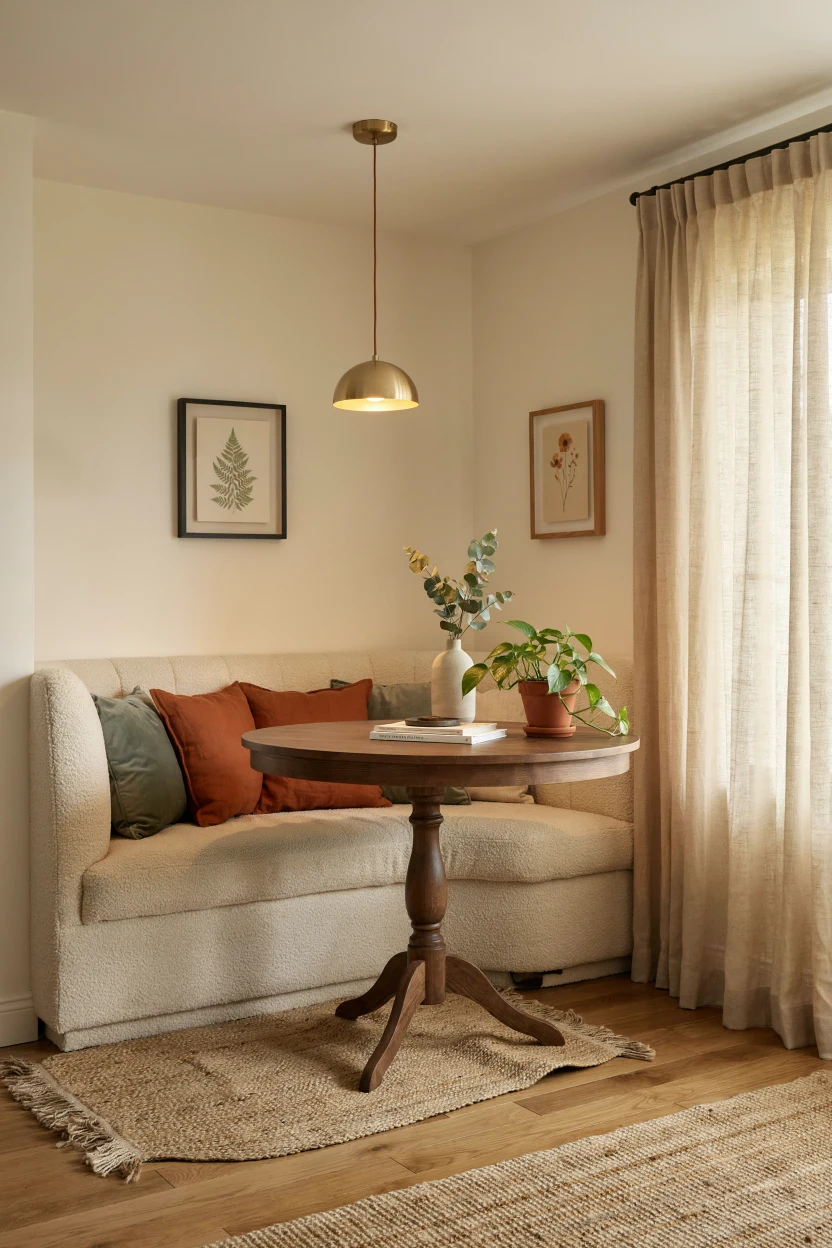
A rustic wood table brings character and natural texture to a breakfast nook. Visible grain, warm tones, and a gently aged finish pair beautifully with simple benches and neutral cushions.
Balance the rustic surface with modern lighting or clean-lined chairs to keep the space from feeling too heavy.
Best for: Farmhouse kitchens, cottage homes, and interiors that emphasize natural materials.
36. Design a Small Breakfast Nook for an L-Shaped Kitchen
An L-shaped kitchen often leaves a corner or adjoining wall that can accommodate a small dining area. Place a compact table near the open side of the kitchen and use a bench against the wall to minimize the footprint.
Keep refrigerator doors, cabinet drawers, and major walkways clear when planning the layout.
Best for: L-shaped kitchens, suburban homes, and compact family dining spaces.
37. Use Mirrors to Make the Nook Feel Brighterhttps://thedecoriumhub.com/kitchen-decoration-ideas/
A well-placed mirror can reflect daylight and make a breakfast nook feel visually more open. Consider hanging one on a nearby wall opposite a window or using a decorative mirror as a focal point.
Choose a secure mounting method and avoid positioning the mirror where direct glare will make dining uncomfortable.
Best for: Small kitchens, darker dining corners, and apartments with limited natural light.
38. Add Patterned Cushions and Pillows
Patterned cushions offer an easy way to introduce personality without replacing your furniture. Stripes, botanical prints, checks, and subtle geometric designs can all work beautifully in a breakfast nook.
Choose two or three coordinating colors and repeat them in small accents around the room. Removable, washable covers are particularly useful in dining spaces.
Best for: Neutral kitchens, seasonal updates, and homeowners who enjoy changing their decor.
39. Turn an Unused Nook Into a Reading Corner
Not every breakfast nook needs to remain a dining area. If you rarely eat there, consider transforming it into a comfortable reading corner with a cushioned bench, a small side table, and a nearby reading light.
Add a basket for books or blankets, and keep the arrangement simple enough that the area remains easy to maintain.
Best for: Homes with unused dining corners, book lovers, and multifunctional living spaces.
40. Create a Homework and Work-From-Home Nook
A breakfast nook can double as a homework station or occasional workspace. Choose supportive seating, a table with enough room for a laptop, and convenient access to power outlets.
Keep chargers and supplies organized in a nearby drawer or basket. If several people use the space, choose durable surfaces that are easy to clean.
Best for: Families with school-age children, remote workers, and homes without a separate office.
41. Refresh the Nook With Seasonal Decor
Seasonal accessories can refresh your breakfast nook without requiring a complete redesign. In spring, try fresh flowers and light fabrics. In summer, use greenery and woven textures. During autumn, introduce warm earth tones, and in winter, add cozy textiles and simple evergreen arrangements.
Keep seasonal decorations away from cooking hazards and use safe alternatives to open flames when appropriate.
Best for: Homeowners who enjoy decorating throughout the year and anyone who wants an easy, low-cost update.
42. Create a Budget-Friendly DIY Breakfast Nook Bench
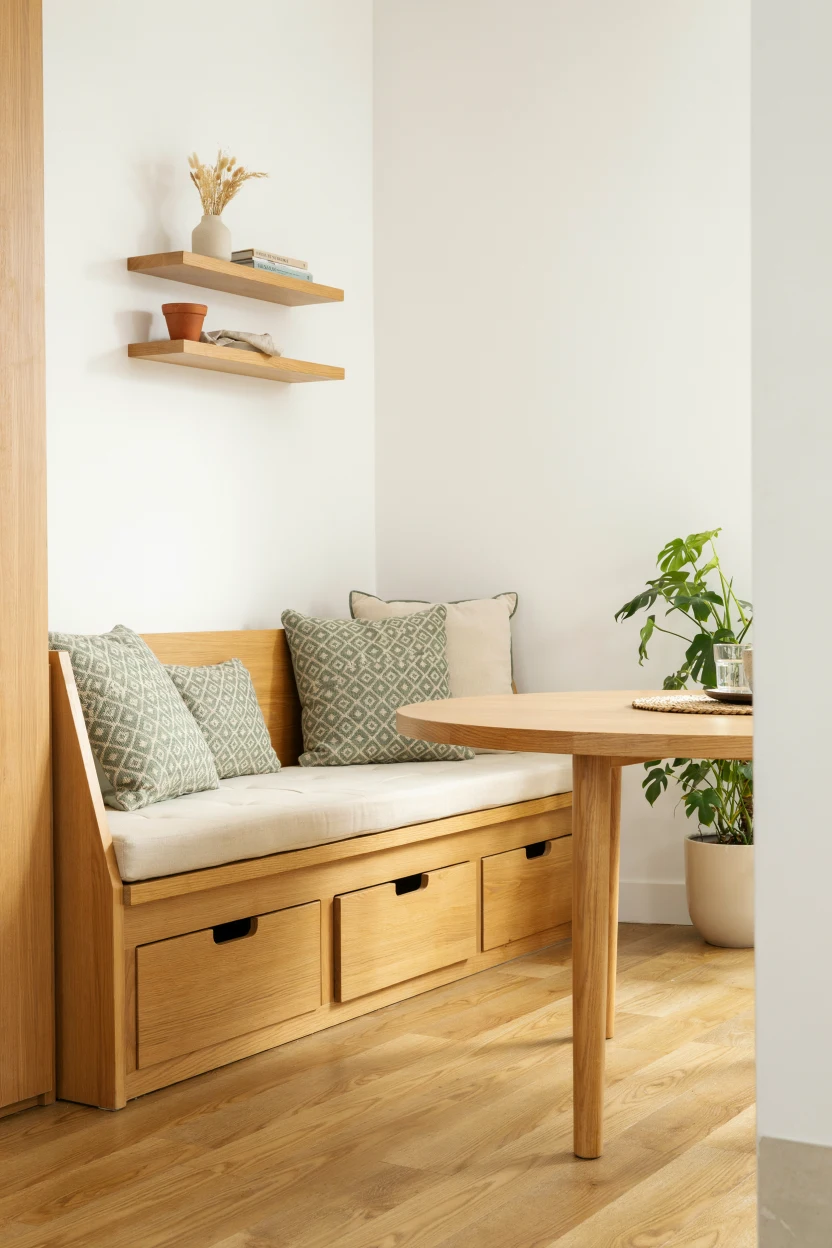
A DIY breakfast nook bench can deliver a custom look without the cost of a professionally built installation. Depending on your skills and layout, you might use suitable lumber, plywood, a finished seat, and a comfortable cushion.
Plan the dimensions before buying materials, and ensure the completed structure is stable, securely anchored where needed, and strong enough for its intended use.
A basic DIY project may cost a few hundred dollars, but the final amount depends on material quality, storage features, tools, and whether you already have the necessary supplies.
Best for: DIY enthusiasts, budget-conscious homeowners, and kitchens with an awkward corner.
43. Try an IKEA-Inspired Breakfast Nook
Modular furniture can help create a practical breakfast nook without a fully custom design. Consider combining a compact dining table, storage cabinets, a freestanding bench, and cushions that coordinate with the rest of your kitchen.
Before purchasing, verify that the furniture dimensions, seat height, and load ratings are appropriate for the intended setup. Not every storage cabinet is designed to support seating.
Best for: Budget-conscious decorators, renters, and homeowners who prefer modular furniture.
44. Design an Elegant Marble-Top Breakfast Nook
A marble or marble-look table can give a breakfast nook a refined appearance. Pair the tabletop with upholstered seating, a sculptural pendant light, and a restrained color palette.
Natural marble requires appropriate care because some foods and drinks can stain or etch its surface. A quality marble-look alternative may be more practical for households that prefer lower-maintenance materials.
Best for: Contemporary homes, elegant kitchens, and homeowners who want a polished focal point.
45. Create a Bright and Airy Breakfast Nook
A bright breakfast nook combines natural light, simple furniture, and a calm color palette to create an inviting everyday dining space.
Use light walls, a natural wood table, comfortable white or cream seating, and a few green plants. Sheer window treatments can soften the daylight while maintaining an open feel.
Keep furniture proportional to the room and leave enough space for people to move comfortably. A few thoughtful details will usually have more impact than a crowded collection of accessories.
Best for: Small kitchens, modern farmhouse homes, and anyone who wants a fresh, timeless look.
How to Choose the Right Breakfast Nook Furniture
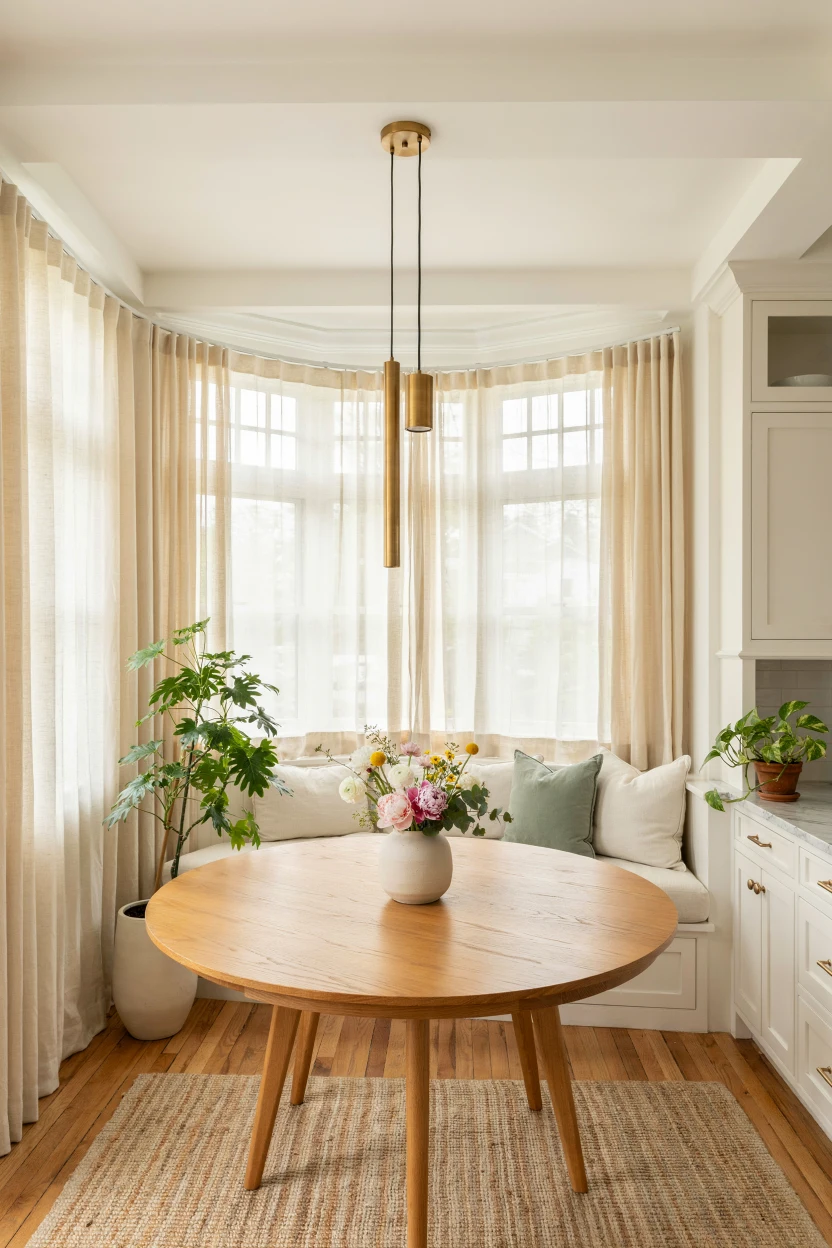
Once you’ve chosen a design, select furniture that suits your available space, household, and daily routine.
Choosing the Best Breakfast Nook Table
The table affects how easily people can sit down, move around, and use the kitchen.
- Round tables: Useful in compact kitchens because they have no corners and can improve circulation.
- Oval tables: Offer a longer dining surface with softer edges.
- Square tables: Work well in compact, balanced layouts, particularly for two people.
- Rectangular tables: Provide more usable surface area for larger families and longer nooks.
- Pedestal tables: Can improve legroom and make seating arrangements more flexible.
For many small breakfast nook layouts, a round table around 30–36 inches in diameter is a practical starting point. The ideal size depends on the number of seats and the clearance available.
Selecting Comfortable Breakfast Nook Seating
Comfortable seating makes the difference between a nook that looks attractive and one that gets used every day.
Built-in benches are excellent for maximizing seating, while freestanding chairs offer greater flexibility. Upholstered benches can feel especially inviting, and storage benches provide an additional place to keep household items.
For a balanced arrangement, consider combining a wall-side bench with two chairs. This setup offers the cozy feel of a banquette without requiring permanent construction.
Before purchasing furniture, check the seat height, seat depth, table height, and available legroom together. A beautiful table and bench may not be comfortable if their dimensions do not work well as a set.
Breakfast Nook Lighting Ideas
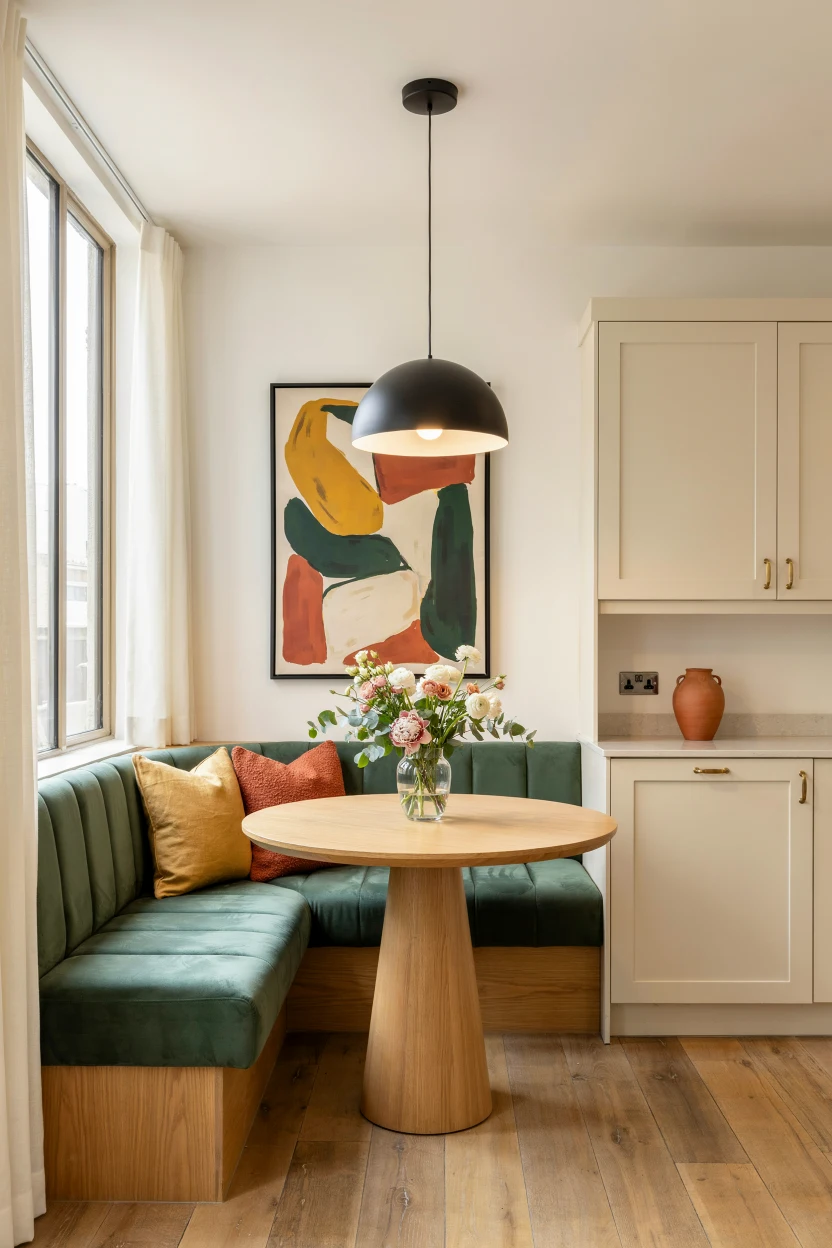
Good lighting helps define the dining area and makes it more comfortable to use throughout the day.
Pendant lights are a popular choice because they create a focal point directly above the table. Mini chandeliers can add a decorative touch, while wall sconces provide useful lighting without taking up tabletop space.
If the nook receives plenty of daylight, choose window treatments that provide privacy without blocking too much natural light. In darker kitchens, combine general room lighting with a pendant or wall light to reduce shadows.
As a general starting point, pendant lights are often positioned about 30–36 inches above the tabletop, measured from the table surface to the bottom of the fixture. Adjust the height to suit the fixture, ceiling height, sightlines, and manufacturer’s guidance.
Breakfast Nook Decor Ideas That Feel Inviting
Decorating helps a breakfast nook feel like a deliberate part of the kitchen rather than an area where spare furniture happens to sit.
Start with a few elements that add comfort and personality:
- Cushions and pillows: Introduce softness, color, and texture.
- Washable rugs: Define the dining area and make it feel warmer.
- Wall art: Add interest without taking up table space.
- Plants and flowers: Bring natural color into the room.
- Floating shelves: Provide display space for selected accessories.
- Ceramic vases and bowls: Create simple decorative accents.
- Roman shades or curtains: Add texture and help manage light.
- Table centerpieces: Make the space feel finished without overcrowding it.
Try to keep the tabletop mostly clear so it remains practical for breakfast, homework, and everyday activities.
Best Colors for a Breakfast Nook
The right color palette should complement your kitchen while creating the atmosphere you want.
White and oak offer a timeless, airy combination. Beige and walnut create a warmer, richer appearance. Sage green and natural wood feel relaxed and nature-inspired, while navy with brass accents adds depth and sophistication.
For small spaces, lighter colors can help the nook feel visually open. Darker colors can also work beautifully when balanced with sufficient lighting and lighter materials.
Rather than introducing too many unrelated shades, choose a small palette and repeat its colors in the upholstery, lighting, artwork, and accessories.
Breakfast Nook Ideas With Storage
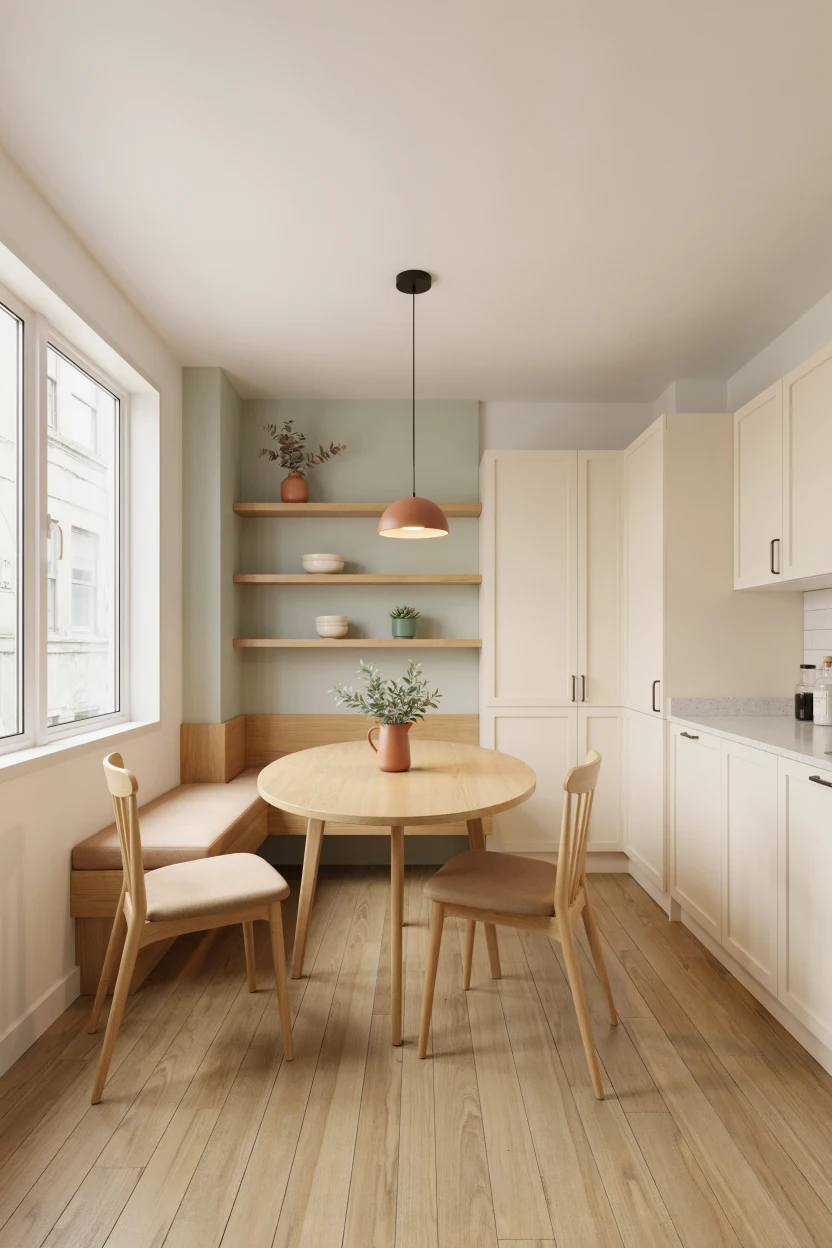
Storage is one of the biggest advantages of a thoughtfully designed breakfast nook, especially when kitchen cabinets are already full.
Lift-Up Bench Seats
A hinged bench seat can conceal items you don’t need every day, such as seasonal linens, board games, or spare cushions. Use suitable hinges and a safe opening mechanism, especially in households with children.
Pull-Out Drawers
Drawers make frequently used items easier to access. They can hold lunch containers, napkins, craft supplies, and other small household essentials.
Open Shelving
Open shelves provide a place for cookbooks, attractive dishes, baskets, and a few decorative objects. Avoid overfilling them, as crowded shelves can make a compact nook feel cluttered.
Shallow Wall Cabinets
Wall-mounted cabinets can add useful storage above the bench when enough clearance is available. Choose a depth that does not make the seating area feel enclosed, and install the cabinets securely.
Multi-Purpose Furniture
A freestanding storage bench, nesting side tables, or a compact extendable dining table can make the nook more adaptable. Multi-purpose furniture is especially useful in apartments and smaller homes.
DIY Breakfast Nook Ideas on a Budget
You don’t always need a major renovation to improve your breakfast nook. Several small projects can make an existing area feel more polished and functional.
Consider painting an old bench, replacing worn cushions, installing removable wallpaper, adding floating shelves, or updating an outdated pendant light.
If you’re building a bench from scratch, measure the area carefully and decide whether you need open storage, drawers, or a hinged seat. Select materials suitable for the intended load and make sure the completed bench is stable and securely installed.
Estimated DIY Breakfast Nook Bench Costs
Costs vary by location, materials, and project complexity. The following figures are illustrative planning estimates in US dollars, not guaranteed prices.
| Item | Estimated Cost |
| Lumber and framing | $100–$250 |
| Plywood or suitable seat material | $60–$150 |
| Paint or wood stain | $40–$80 |
| Hinges and hardware | $30–$60 |
| Foam cushions and upholstery | $100–$300 |
| Estimated total | $330–$840 |
You may spend less if you already have tools or can reuse existing furniture. More elaborate designs with custom cabinetry, premium upholstery, or professional installation will generally cost more.
Breakfast Nook Budget Guide
Your total budget depends on the size of the nook, the materials you choose, and whether you hire a professional.
| Project | Illustrative Cost (USD) |
| New dining table only | $200–$700 |
| Freestanding bench seating | $300–$1,000 |
| Complete breakfast nook setup | $800–$3,500 |
| Custom built-in nook | $2,500–$8,000+ |
| DIY built-in project | $400–$1,200 |
| New lighting | $100–$600 |
| Decorative refresh | $150–$500 |
These are broad budgeting ranges rather than verified market averages. Local labor rates, furniture quality, construction requirements, and material choices can change the final price considerably.
If you’re decorating on a tight budget, begin with the essentials: a suitably sized table, comfortable seating, and good lighting. You can add artwork, cushions, plants, and other decorative touches over time.
Common Breakfast Nook Design Mistakes to Avoid
Even a beautiful breakfast nook can become frustrating if the layout doesn’t support everyday use.
Choosing a Table That’s Too Large
An oversized table can block kitchen walkways, interfere with cabinet doors, and make seating uncomfortable. Measure the available space before purchasing furniture, including the area needed to pull out chairs and move around the table.
Where possible, aim for approximately 36 inches of clearance around the dining area, adjusting the layout to account for doors, appliances, and existing walkways.
Ignoring Storage Needs
A breakfast nook can become cluttered when there is nowhere to put napkins, table linens, or everyday supplies. If your kitchen lacks storage, consider a bench with drawers or a nearby cabinet.
Using Inadequate Lighting
A single ceiling light may leave the table in shadow, especially in a corner or beneath cabinets. Consider a suitable pendant, wall sconces, or additional ambient lighting to improve visibility and atmosphere.
Choosing Style Over Comfort
A stylish bench isn’t useful if it is too shallow, too hard, or poorly matched to the table height. Test seating where possible and prioritize supportive backrests, comfortable cushions, and enough legroom.
Forgetting Electrical Access
If the breakfast nook doubles as a homework area or workspace, access to power can be useful. Plan the location of outlets before construction, and keep electrical connections away from spills and other hazards.
Overdecorating the Table
Too many centerpieces, vases, and decorative objects reduce the surface available for meals. Choose one simple centerpiece or a small arrangement that can be moved easily when needed.
Expert Design Tips for a Better Breakfast Nook
A successful breakfast nook should feel connected to the kitchen while still having its own identity.
- Match at least one furniture finish to an existing kitchen element, such as cabinetry or flooring.
- Combine a bench with chairs when you want both efficient seating and flexibility.
- Use washable performance fabrics in busy family homes.
- Choose a round table when corners or chair legs would interfere with circulation.
- Introduce texture through cushions, rugs, wood, and woven accessories.
- Use vertical storage instead of filling every available floor area.
- Measure the table, seating, and clearances before buying anything.
- Keep everyday essentials accessible and decorative accessories simple.
- Plan built-in seating around your household’s actual needs rather than appearance alone.
The best breakfast nook is one that works comfortably on an ordinary weekday, not just one that looks attractive in photographs.
Family-Friendly Breakfast Nook Tips
If children regularly use the nook, choose durable materials and practical furniture.
Rounded table edges can help reduce the risk of bumps, while washable cushion covers make cleaning easier. Use sturdy furniture and secure any built-in seating appropriately.
Keep fragile decorations away from busy seating areas, and choose a table surface that can handle regular cleaning.
Pet-Friendly Breakfast Nook Tips
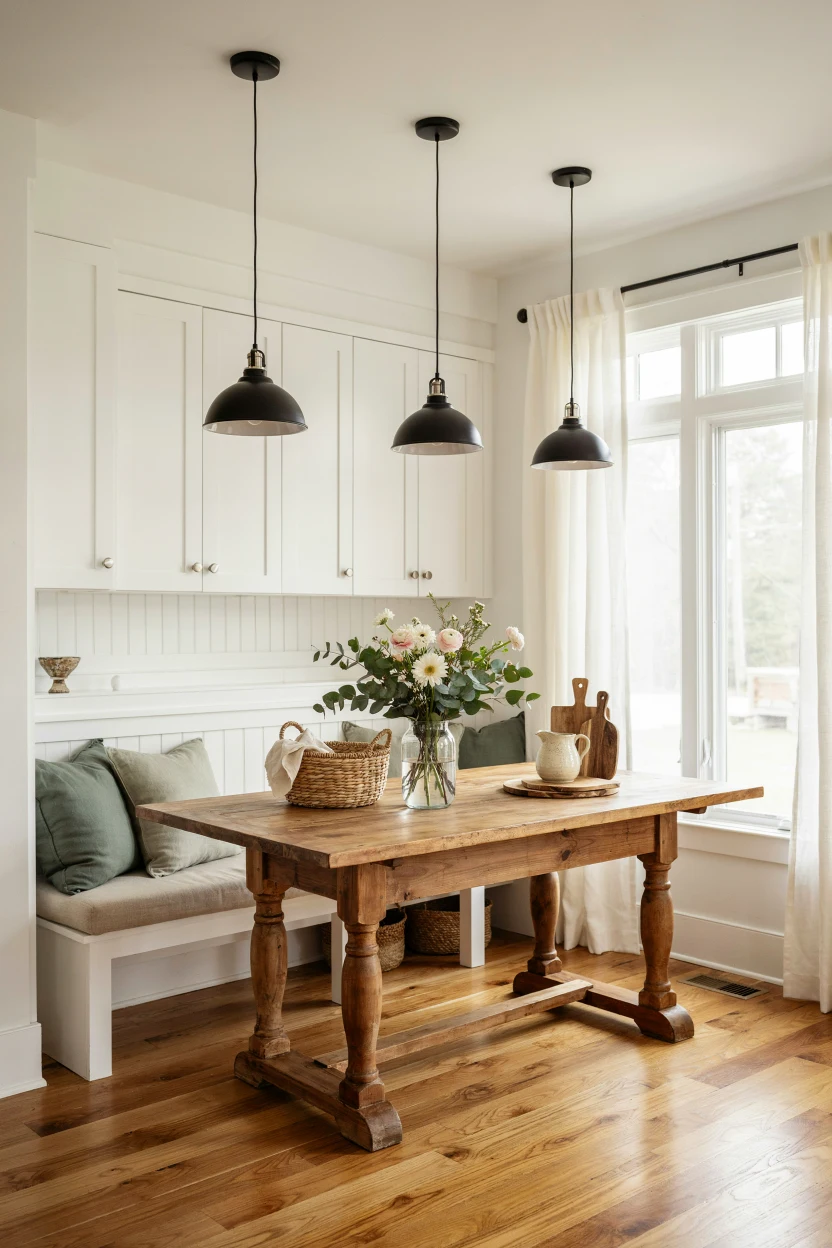
Households with pets can still create a beautiful and comfortable breakfast nook.
Choose durable, easy-to-clean upholstery and rugs that can tolerate everyday wear. Bench storage can keep pet supplies out of sight, while washable cushion covers simplify maintenance.
Check that any houseplants in the area are safe for your pets, and keep food, cleaning products, and small objects out of reach when necessary.
Breakfast Nook Maintenance Tips
Regular care helps keep the nook looking attractive and functioning properly.
Weekly
- Wipe the tabletop and bench surfaces.
- Vacuum crumbs from cushions and corners.
- Clean the floor beneath the table.
- Remove food spills promptly.
Monthly
- Wash removable cushion covers according to their care labels.
- Check bench hardware and hinges.
- Clean light fixtures and nearby shelves.
- Treat wood surfaces according to the manufacturer’s instructions.
Seasonally or annually
- Touch up paint where needed.
- Inspect the seating for loose fittings or signs of wear.
- Replace worn cushions or damaged upholstery.
- Review storage areas and remove unnecessary clutter.
For natural stone surfaces, use cleaning products appropriate to the material. Regular maintenance helps preserve both the appearance and practicality of your breakfast nook.
Frequently Asked Questions About Breakfast Nook Ideas
1. What Is a Breakfast Nook?
A breakfast nook is a small dining area located inside or beside the kitchen. It usually includes a table and comfortable seating, often with a bench or banquette. It is designed for casual meals, morning coffee, homework, and everyday gatherings.
2. Are Breakfast Nooks Still Popular?
Breakfast nooks remain a practical design option for homeowners who want a comfortable everyday dining area. They work in traditional and contemporary kitchens, and they can be especially useful in homes where a formal dining room is rarely used.
3. How Much Space Do I Need for a Breakfast Nook?
The space required depends on the number of seats, table size, and furniture arrangement. Some compact designs fit into a small corner, while larger banquettes require more room.
As a starting point, consider a 30–36-inch round table for a compact nook, a bench depth of approximately 18–20 inches where appropriate, and sufficient clearance for people to sit down and move around safely. Always measure the actual furniture and room before finalizing your layout.
4. Is Built-In Seating Better Than Dining Chairs?
Built-in seating is useful when you want to maximize corner space or add hidden storage. Freestanding chairs are easier to rearrange, replace, and move to another room.
A combination of a wall-side bench and two chairs can provide a useful balance between space efficiency and flexibility.
5. What Is the Best Table Shape for a Breakfast Nook?
Round tables are often a good choice for small kitchens because they have no corners and can make movement easier. Oval tables suit narrow layouts, square tables work well in compact spaces, and rectangular tables offer more surface area for larger groups.
A pedestal base may also provide more legroom, depending on the table design.
6. Can I Create a Breakfast Nook Without Remodeling?
Yes. A freestanding table, compact bench, two chairs, and a few coordinating accessories can create a breakfast nook without permanent construction.
Renters can also use removable wall decorations, lightweight furniture, and freestanding storage to personalize the space.
7. What Colors Work Best for a Breakfast Nook?
White and oak create a bright, timeless look. Beige and walnut feel warm and sophisticated, while sage green and natural wood create a relaxed atmosphere. Navy with brass accents can add contrast and elegance.
Choose colors that complement your kitchen cabinets, flooring, and lighting.
8. How Can I Make a Breakfast Nook Feel Cozy?
Start with comfortable seating, soft cushions, warm lighting, and natural materials. Add a washable rug, a few throw pillows, plants, or curtains to introduce texture.
Keep the decor simple and leave enough room on the table for everyday activities.
9. What Should I Avoid When Designing a Breakfast Nook?
Avoid oversized furniture, uncomfortable seating, poor lighting, excessive decorations, and layouts that block kitchen walkways. Remember to consider storage, electrical access, and the clearance needed to open cabinets and move chairs.
Planning the arrangement before purchasing furniture can prevent costly mistakes.
10. Does a Breakfast Nook Increase Home Value?
A thoughtfully designed breakfast nook may improve a home’s functionality and appeal, particularly when it uses space efficiently and includes attractive, well-built seating. However, its effect on resale value depends on the local market, the quality of the work, and buyer preferences. There is no guaranteed financial return.
Final Thoughts
A well-designed breakfast nook is more than a place to eat. It can become a welcoming part of your daily routine a spot for morning coffee, family breakfasts, homework, casual conversations, or a quiet moment with a book.
Whether you’re planning a custom built-in, updating an existing breakfast nook bench, or searching for breakfast nook ideas for small spaces, begin with the way you want to use the area. Choose a layout that fits your kitchen, seating that feels comfortable, and furniture that allows people to move around easily.
From charming bay window breakfast nooks and modern farmhouse designs to compact apartment dining corners and practical DIY projects, there are plenty of ways to create a space that feels personal without requiring a complete renovation.
Focus on comfort, function, and a few carefully chosen decorative details. With thoughtful planning, even an overlooked kitchen corner can become one of the most useful and inviting spaces in your home.